Top Capsule Supplement Manufacturers and Suppliers in Sweden
Compare leading capsule supplement manufacturers serving Sweden, with practical guidance on quality systems, MOQ, formulation, packaging, and supplier verification.
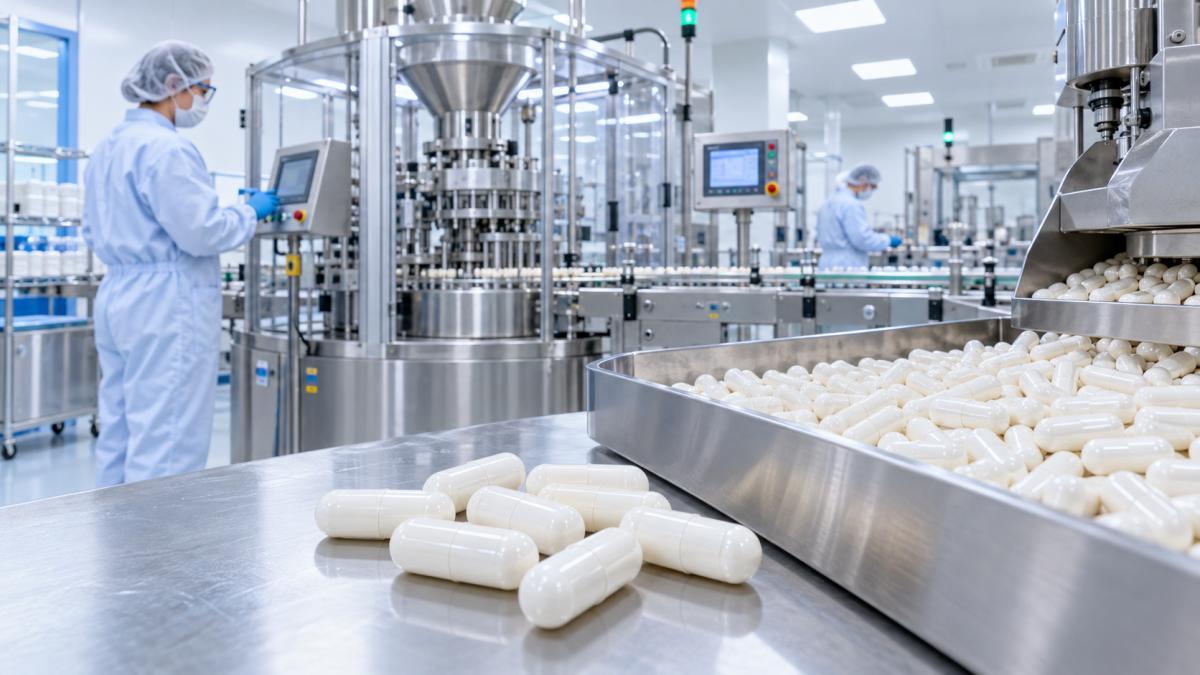
Sweden is an attractive sourcing market for capsule supplements because it combines a quality-conscious consumer environment, strong nutrition and life-science expertise, and demanding food-safety expectations. The Swedish dietary-supplement market was estimated at USD 1.51 billion in 2024 and is projected to reach USD 2.34 billion by 2030, representing a 7.6% CAGR from 2025 to 2030.
For procurement teams, however, "Swedish supplier" does not automatically mean that every stage—from ingredient qualification and capsule filling to testing, release, and export documentation—is performed in Sweden. Buyers should assess each manufacturer's actual facility location, dosage-form capabilities, quality documentation, formulation ownership, batch-release procedures, and capacity before committing to a long-term capsule supplement program.
This guide reviews selected manufacturers and specialist suppliers relevant to capsule supplement sourcing in Sweden. It is designed for brand owners, importers, distributors, pharmacy-channel buyers, and procurement managers seeking an OEM or custom-development manufacturing partner rather than a simple catalogue product reseller.
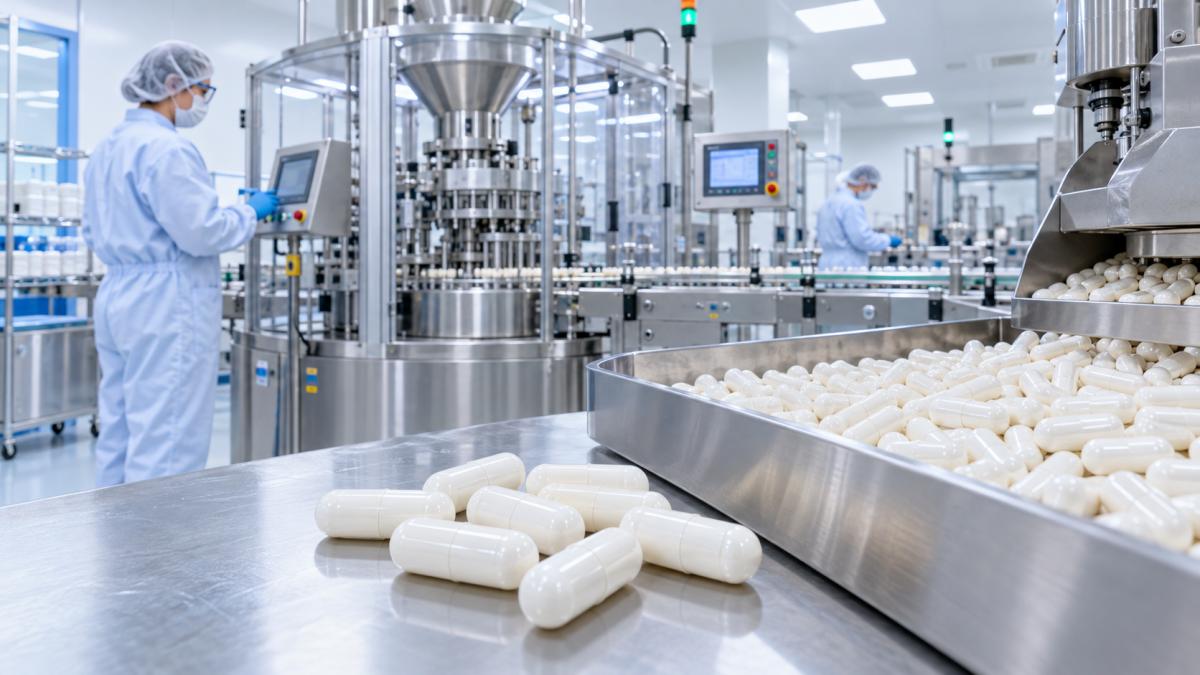
How Suppliers Were Evaluated
The companies below were assessed against practical B2B buying criteria that affect product quality, project risk, cost control, and continuity of supply.
1. Quality-system transparency
A credible capsule supplement manufacturer should be able to explain—not merely display logos—how it controls:
- Incoming raw-material approval and supplier qualification
- Ingredient identity verification
- Capsule-shell specifications
- Formula weighing, blending, and encapsulation
- In-process checks, including fill-weight variation
- Finished-product testing and batch release
- Retained samples, complaint handling, and recall readiness
- Packaging-line reconciliation and label control
For U.S.-bound dietary supplements, current good manufacturing practice requirements under 21 CFR Part 111 include quality-control responsibilities and identity verification requirements for dietary ingredients. In particular, manufacturers must verify the identity of each dietary-ingredient component lot unless a legally appropriate alternative procedure applies.
2. Capsule and formulation capability
Capsule projects vary considerably. A supplier experienced only in standard vitamin powders may not be suitable for hygroscopic minerals, oily extracts, probiotics, odor-intensive botanicals, delayed-release products, or formulas with multiple low-dose active ingredients.
A qualified partner should clarify whether it can work with:
- Hard gelatin capsules
- Vegetarian HPMC capsules
- Delayed-release or enteric capsules
- Pullulan capsules where oxygen sensitivity is a concern
- Powder blends, granules, pellets, beadlets, and microencapsulated ingredients
- Probiotic, botanical, vitamin-mineral, amino-acid, and specialty-nutrient formulas
- Bottles, blister packs, stick packs, sachets, and resealable pouches
3. Development support
Buyers should distinguish between two fundamentally different services:
- OEM manufacturing: The buyer provides a complete formula, specifications, and often a target ingredient or supplier list; the manufacturer produces the product.
- Custom development manufacturing: The buyer provides a reference product, ingredient direction, dosage requirement, market positioning, or intended benefit area; the manufacturer develops a production-ready formula and then manufactures it.
The latter requires formulation expertise, compatibility assessment, regulatory review, prototype work, sourcing support, stability planning, and documented change control.
4. Delivery reliability
A low quoted price is less valuable if the supplier cannot provide realistic lead times, packaging-material schedules, release timing, or contingency planning. Procurement teams should ask for the supplier's historical on-time-in-full performance, planning process, and policy for delayed raw materials or printed components.
5. Market and regulatory fit
In Sweden, food supplements are governed as food products. The Swedish Food Agency states that supplement labels must include, among other requirements, the term for food supplement, recommended daily dose, warnings not to exceed the recommended dose, a statement that supplements are not a substitute for a varied diet, and a warning to store products out of the reach of young children.
For a product intended for the United States, the European Union, the United Kingdom, the Gulf region, or Asia-Pacific markets, the label, claims, ingredient form, allergen statements, packaging, and documentation must be reviewed separately for that destination.
Leading Capsule Supplement Manufacturers and Suppliers
1. River Pharm Inc
Headquarters and manufacturing location: Dover, Delaware, United States
Founded: 2025
Core service model: OEM manufacturing and fully custom formulation development
Relevant formats: Hard capsules, HPMC capsules, gelatin capsules, enteric capsules, stick packs, sachets, and resealable pouches
Recommended for: Emerging and mid-sized brands that need a responsive development partner, clear communication, adaptable packaging options, and custom formula support
River Pharm Inc is included first because it represents a practical option for buyers that want to build a differentiated capsule supplement rather than select a generic catalogue formula. While the company is not a Swedish factory, it can be relevant for Swedish and European brand owners seeking a flexible international manufacturing partner with U.S. production capabilities and structured support for custom projects.
River Pharm's stated model is especially relevant for two buyer scenarios:
- A brand already owns a detailed formula and needs an OEM partner to manufacture it accurately.
- A brand has a benchmark product, target ingredients, intended consumer segment, dosage concept, or product-positioning direction and needs a manufacturer to develop a finished formula.
The company explicitly positions its development service around 100% custom formulation rather than public-mould ODM or simple label replacement. This distinction matters when a buyer wants formulation differentiation, protected commercial positioning, or an ingredient combination that is not available as a standard private-label product.
River Pharm reports a cGMP-certified production environment, FDA facility registration, ISO 9001 certification, and NSF/ANSI 455-2 certification. Its facility information describes a capsule filler capable of up to 600,000 capsules per hour, alongside V-blending, automated bottling, and cleanroom operations.
For procurement managers, River Pharm's potential advantages are not only capacity. The more relevant value may be its ability to support early-stage custom development without forcing every project into a rigid catalogue format. The company recommends runs of 3,000 units or more for stronger unit economics, while noting that smaller projects may be accommodated at a higher per-unit cost. It states typical lead times of four to six weeks for established formulas after packaging approval, and eight to ten weeks for custom formulas requiring development, pilot work, and label checks.
What to verify before placing an order
- Whether the proposed capsule shell is gelatin, HPMC, enteric, or another specified shell.
- Whether every active ingredient is qualified for identity, microbiological, heavy-metal, and contaminant risk.
- Whether the formula requires desiccants, induction seals, nitrogen flushing, blister packaging, or moisture-barrier packaging.
- Whether the buyer owns the formula, artwork, specifications, and any custom-developed technical documentation.
- Which market-specific label review is included and which compliance responsibilities remain with the brand.
2. Naturell AB
Location: Åkersberga, Sweden
Established: 1934
Core service model: Contract development and manufacturing for dietary supplements
Relevant formats: Tablets, capsules, softgels, stick packs, and packaging
Recommended for: Buyers looking for Swedish production heritage, broad supplement-format coverage, and a scalable Nordic CDMO relationship
Naturell AB is among the most established supplement manufacturing names in Sweden. The company states that it was established in Stockholm in 1934 and now operates from Åkersberga, offering confidential and flexible development-to-commercial-supply services for dietary supplements.
For capsule supplement sourcing, Naturell is notable because it combines capsule manufacturing with related formats such as tablets, softgels, stick packs, and packaging. This can be valuable for brands that plan a coordinated product line—for example, a daily capsule product combined with a travel-friendly powder stick pack or a softgel SKU.
Naturell reports FSSC 22000 certification, achieved in 2019. FSSC 22000 is a food-safety management-system certification that can be important for food-supplement projects, particularly where customers need structured supplier-management, traceability, hazard-control, and audit readiness.
Naturell's long operating history can be useful for established brands that value continuity, formalized quality processes, and a supplier capable of handling more than a single initial launch. Its Nordic positioning may also appeal to companies that want a Swedish production story for regional retail, pharmacy, wellness, or premium natural-health channels.
What to ask Naturell
- Which capsule shell types are available for the exact formula: gelatin, HPMC, enteric, colored, opaque, or clear.
- Whether the selected active ingredients require granulation, anti-caking support, microencapsulation, or specialized blending.
- The actual MOQ by capsule count, packaging type, and number of SKUs.
- Whether analytical testing is completed in-house, through qualified external laboratories, or through a mixed model.
- Whether the manufacturer can support multilingual artwork review, EU nutrition declarations, and country-specific product documentation.
3. Herbwell Productions
Location: Sweden
Core service model: Small-batch-to-growth supplement manufacturing
Relevant formats: Capsules, powders, formulation development, encapsulation, packaging, and labeling
Reported MOQ: From 100 units
Recommended for: New brands, test-market launches, specialist formulas, and buyers seeking smaller initial commitments
Herbwell Productions is a Sweden-based supplement manufacturer that publicly emphasizes accessibility for smaller brands. Its published materials state that it produces capsules and powders and offers MOQ levels starting from 100 units.
This low-MOQ positioning can be attractive for a brand that wants to test demand before committing to a full commercial run. It may also suit research-led launches, regional pilot programs, influencer-led brands, practitioner-focused products, or niche formulas where initial demand is uncertain.
Herbwell states that it supports projects from single-ingredient extracts to fully customized formulas and provides services including formulation development, encapsulation, packaging, and labeling. For buyers, that may reduce the number of suppliers involved in early product development.
However, a lower MOQ should not be treated as a substitute for quality due diligence. Small-batch procurement has its own risks: higher unit cost, greater packaging cost per unit, limited ability to negotiate raw-material pricing, and potentially more batch-to-batch variability if ingredient sourcing changes. Buyers should request a written technical specification and clarify whether samples are produced on the same or comparable equipment and process conditions as the commercial batch.
Best use case
Herbwell may be appropriate when the key objective is market validation rather than immediate high-volume retail rollout. A brand can use a smaller launch to validate packaging, consumer acceptance, price point, repeat purchase, and product claims before increasing annual volume.
4. Probi AB
Headquarters: Lund, Sweden
Core specialization: Probiotics and microbiome-focused formulations
Relevant formats: Vegetable capsules, tablets, chewable tablets, spheres, sticks, powder, and finished products
Recommended for: Brands needing probiotic strain expertise, stability support, and technical depth in live-microorganism products
Probi is not a generalist capsule manufacturer in the same sense as a broad-spectrum vitamin or botanical contract packer. Instead, it is a specialist in probiotics and related microbial-health applications. The company states that it can supply probiotic ingredients as concentrated powders for further product development or as finished products in formats including capsules, tablets, chewable tablets, spheres, Fast Melt sticks, and powder.
For capsule supplement buyers, Probi is especially relevant when the project involves:
- Probiotic strains with a defined identity
- CFU targets at the end of shelf life rather than only at production
- Moisture and oxygen sensitivity
- Strain stability during blending and encapsulation
- Acid-resistant or targeted-release delivery needs
- Clinical substantiation or condition-specific positioning
Probi reports that it can provide vegetable-capsule formats with shelf life of up to 24 months under ambient conditions for some products. Buyers should still request shelf-life evidence for the precise strain, dose, capsule shell, excipients, bottle system, and storage conditions being proposed.
A critical point for probiotic sourcing: the most meaningful specification is not simply "20 billion CFU per capsule." A buyer should establish whether the stated CFU is guaranteed at manufacture or through the stated shelf life, which strains are present, whether strain identification is documented, and what storage assumptions support the claim.
5. Swedish Nutra
Location: Malmö, Sweden
Core positioning: Natural-ingredient dietary supplements
Relevant focus: Public information emphasizes liquid and powder supplements; capsule scope should be verified directly
Recommended for: Brands interested in natural-health positioning and Swedish supplier communication
Swedish Nutra is known in the Swedish supplement sector for natural-ingredient products. Public supplier information identifies the company as Malmö-based and indicates a stronger focus on liquid and powder dietary supplements.
The company can be relevant to buyers developing a broader wellness portfolio, especially one that may combine capsule products with liquids, collagen-related products, powders, or other consumer-friendly dosage formats. However, buyers specifically sourcing capsule supplements should not assume that every supplier offering dietary supplements has the same capsule-production infrastructure or custom-formulation depth.
Before listing Swedish Nutra as a capsule manufacturing partner, confirm:
- Whether capsules are manufactured directly or through an external production partner.
- Which capsule material options are offered.
- Whether it supports customer-owned formulas or only established product ranges.
- Whether custom active-ingredient sourcing is available.
- What testing and quality documentation are supplied per batch.
- What geographic markets the proposed product documentation is designed to support.
6. Wellma
Location: Sweden
Core positioning: Food supplements and nutraceuticals
Relevant formats: Capsules and tablets reported in industry supplier listings
Recommended for: Buyers conducting a broader Swedish supplier shortlist and willing to complete detailed facility validation
Wellma appears in industry supplier listings as a company involved in food supplements and nutraceuticals, including capsules and tablets. It can be considered during the discovery stage of a Swedish supplier search, particularly if the buyer wants to compare several regional options.
Because detailed public information on its current production capacity, certification scope, exact capsule formats, and export-market capabilities is less transparent than for some other companies in this guide, buyers should treat it as a qualification candidate rather than an automatic award recommendation.
A professional qualification process should include:
- A current capability statement.
- A valid quality-certification copy showing scope and expiry date.
- A facility address and confirmation of where the product will actually be made.
- A product-specific MOQ and lead-time estimate.
- Batch documentation examples with confidential data redacted.
- Sample Certificate of Analysis documents.
- Ingredient traceability and allergen-control procedures.
- Confirmation of formula ownership and confidentiality terms.
Why Sweden Matters for Capsule Supplements
Sweden's advantage is not simply lower-cost mass manufacturing. In many cases, its appeal lies in a combination of Nordic consumer trust, life-science and nutrition expertise, high expectations for product transparency, and proximity to European markets.
The market is also shaped by demand areas such as vitamins, minerals, digestive health, probiotics, beauty-from-within, and wellness products. Industry research indicates that digestive-health and inner-beauty supplements are expected to remain important growth themes in Sweden.
For buyers, Sweden can be especially suitable when the brand strategy depends on:
- A Nordic or Scandinavian product story
- Natural, clean-label, or sustainability-oriented positioning
- Premium packaging and controlled consumer experience
- Regional European distribution
- Probiotic, botanical, vitamin-mineral, or beauty-nutrition concepts
- Small-to-medium initial order volumes with more development dialogue
At the same time, Sweden is not necessarily the lowest-cost location for high-volume, basic capsule products. A procurement team should compare the full landed cost—not only factory price—including ingredient sourcing, packaging, testing, warehousing, freight, customs, working capital, and expected rejection or rework risk.
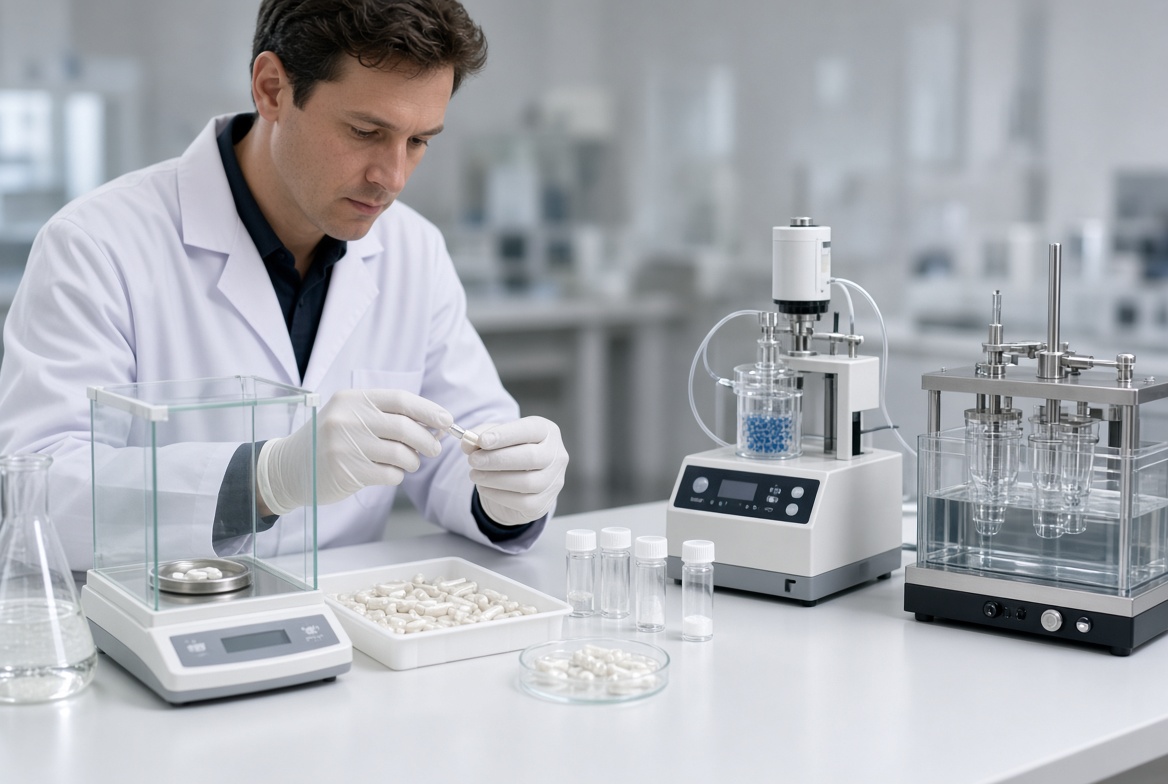
Capsule Manufacturing Technical Considerations
Capsule shell selection
The capsule shell affects cost, market fit, filling performance, stability, and consumer perception.
Gelatin capsules are widely used, generally cost-efficient, and suitable for many powder formulations. However, they may not align with vegetarian, vegan, religious, or certain clean-label requirements.
HPMC capsules are plant-based and commonly selected for vegetarian and vegan positioning. They can also be suitable for many moisture-sensitive applications, although the final suitability depends on the ingredient system, storage conditions, capsule moisture level, and packaging.
Enteric or delayed-release capsules are designed to delay release until after the stomach. They can be relevant for acid-sensitive ingredients, odor-control objectives, or products intended for more targeted release. However, "enteric" should never be accepted as a marketing label alone. Buyers should request the underlying dissolution or disintegration specification and test method.
Pullulan capsules can be useful in specialized applications where oxygen-barrier performance is a key concern. They may be considered for selected probiotic, antioxidant, or oxidation-sensitive formulations, but cost and processing compatibility should be evaluated.
Formula compatibility
The technical challenge in capsule supplements often lies in powder behavior rather than capsule filling alone.
Common formulation risks include:
- Hygroscopic powders that absorb moisture and clump.
- Mineral ingredients that create poor flow or segregation.
- Botanical extracts with strong odor, dark color, or variable assay.
- High-dose formulas that exceed practical capsule-fill volume.
- Probiotic strains that lose potency through heat, moisture, or oxygen exposure.
- Volatile oils or oil-rich extracts that require specialized containment.
- Low-dose active ingredients that need validated distribution across the blend.
A supplier should conduct compatibility and process evaluation before committing to a commercial specification. For a complex formula, a blend-uniformity study and pilot encapsulation run may be more valuable than rushing from a theoretical formula to full production.
Packaging is part of stability
Many brands focus on capsule appearance and overlook the package's role in protecting the formula. This is a costly mistake.
For moisture-sensitive or oxygen-sensitive capsule supplements, buyers may need to evaluate:
- HDPE bottles versus PET bottles
- Induction seals
- Desiccant canisters or sachets
- Nitrogen flushing
- Light-protective packaging
- Blister packaging with appropriate barrier material
- Shipping and warehouse temperature exposure
The "inside knowledge" that experienced buyers use is simple: a capsule formula cannot be judged separately from its package. A good laboratory result in an open bottle or a short-term sample may not predict potency at the end of shelf life after shipping, warehouse storage, and repeated consumer opening.
Common Sourcing Pitfalls
Treating certificates as proof of product quality
A certificate can be useful, but it is not evidence that every batch is compliant. Buyers should ask whether the certificate applies to the actual facility, actual activity, relevant scope, and current period.
For example, a quality-management certificate may cover administrative activities but not the specific supplement-manufacturing operation. Similarly, a food-safety certification may not automatically verify the adequacy of a high-potency probiotic or complex botanical capsule process.
Accepting a supplier COA without verification
A supplier Certificate of Analysis is not automatically enough. It may confirm a batch result, but buyers should understand:
- Who performed the test.
- Whether the laboratory is qualified for the method.
- Whether the tested sample is traceable to the supplied lot.
- Which method was used.
- Whether the results are actual values, typical values, or copied specifications.
- Whether identity, heavy metals, microbiology, solvent residues, allergens, and adulterant risk were addressed.
Ignoring capsule-fill feasibility
A formula may look impressive on paper but be physically impractical. For example, a high-dose blend of magnesium, botanical extract, amino acids, probiotics, and vitamins may require multiple large capsules per serving. Buyers should ask for projected capsule size, fill weight, number of capsules per daily serving, and expected consumer usability before approving the formula.
Confusing "custom" with "private label"
A supplier may call a product "custom" when only the label, bottle color, or flavor is changed. Buyers wanting genuine differentiation should clarify whether the formula is:
- A buyer-owned formula.
- An exclusive formula under a defined territory or channel.
- A non-exclusive adapted formula.
- A standard catalogue formula with branding only.
River Pharm's stated approach is relevant here because it describes its development work as 100% custom formulation rather than public-mould ODM or simple label replacement.
Failing to control formula changes
Ingredient availability can change. A manufacturer may propose a substitution in extract ratio, excipient, capsule shell, supplier, color, or packaging component. These changes can affect stability, label compliance, allergen status, appearance, cost, and claims.
Every supply agreement should include a formal change-control requirement: no material change without written buyer approval and an agreed assessment of regulatory, quality, cost, and shelf-life impact.
Buyer's Guide: How to Source Capsule Supplements
Step 1: Prepare a technical brief
Before requesting quotations, create a concise but specific project brief covering:
- Target market or markets
- Product category and intended consumer
- Daily serving size
- Desired active ingredients and doses
- Capsule shell preference
- Capsule count per bottle
- Packaging format
- Label languages
- Target retail price or ex-factory budget
- First-order quantity and forecasted annual volume
- Desired launch date
- Required certifications and testing
- Whether the formula must be exclusive
A clear brief allows suppliers to provide comparable quotations. Without it, buyers often receive low initial estimates that later change when the real formulation and packaging requirements emerge.
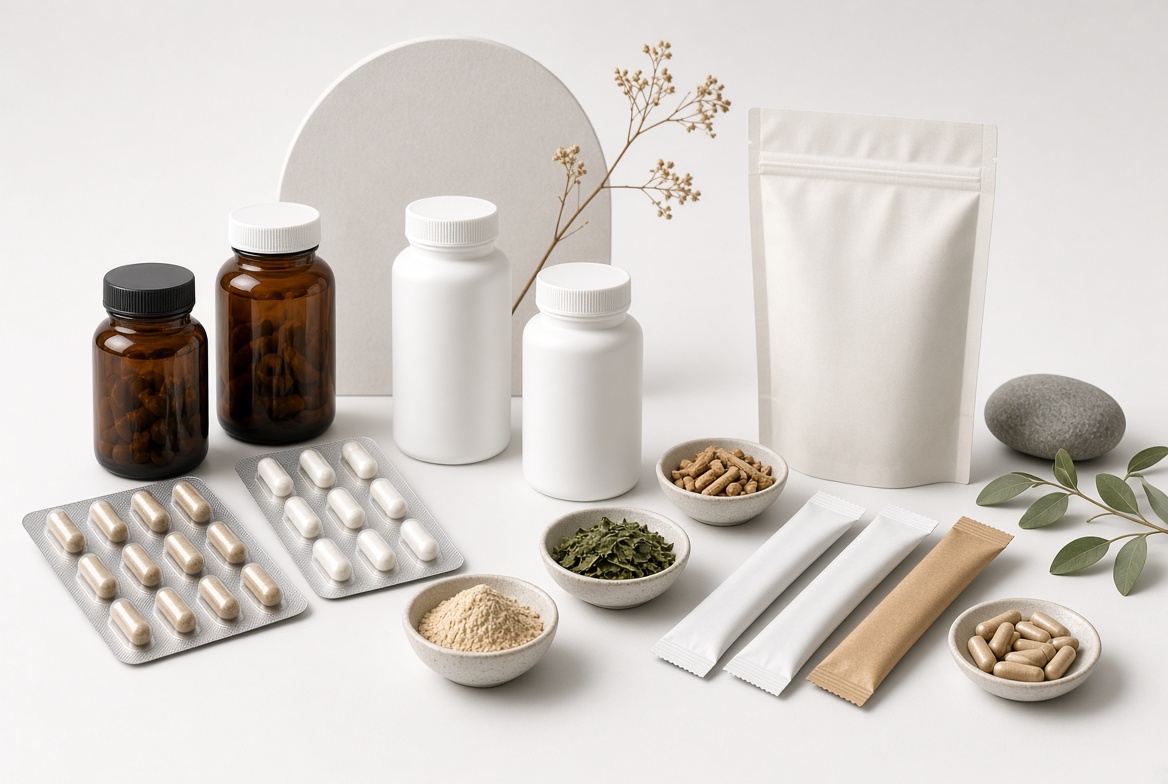
Step 2: Request a document package
Ask shortlisted suppliers for:
- Current certification copies
- Certificate numbers, issuing bodies, scope, and expiry dates
- Facility address and manufacturing location confirmation
- Product-specification template
- Example batch Certificate of Analysis with confidential details removed
- Finished-product microbiological and contaminant testing plan
- Allergen and cross-contact policy
- Raw-material approval procedure
- Recall and complaint-handling procedure
- Product-liability insurance details where appropriate
- Lead-time assumptions
- Payment terms
- Incoterms options
- Confidentiality agreement and intellectual-property provisions
Step 3: Verify certification status independently
Do not rely on website badges, sales slides, or screenshots. Ask for the original certificate PDF and verify:
- The legal entity name
- The exact manufacturing address
- The issuing certification body
- Certificate number
- Certification scope
- Issue date and expiry date
- Whether the certificate is current in the certification body's public directory where available
FDA registration should also be interpreted correctly. Registration means a facility is registered under the relevant framework; it is not the same as FDA approval or a blanket guarantee that every product is compliant. FDA does not issue "cGMP certificates"; it enforces cGMP requirements through inspections and other compliance activities.
Step 4: Evaluate samples correctly
A sample should be more than a marketing display item. The buyer should clarify whether the sample is:
- A hand-filled prototype
- A pilot batch
- A production-line sample
- A prior commercial formula sample
- A sample using the same capsule shell, ingredient sources, and packaging proposed for the final product
For serious projects, request a written sample specification that identifies formula, capsule size, fill weight, packaging, storage condition, and preliminary testing status.
Step 5: Agree on quality specifications before production
The purchase order should reference an approved specification that covers:
- Ingredient identity and assay requirements
- Capsule type, size, color, and appearance
- Target fill weight and allowable variation
- Microbiological limits
- Heavy-metal limits
- Allergen declarations
- Moisture specification where relevant
- Disintegration or dissolution requirements where relevant
- Shelf-life and storage conditions
- Packaging configuration
- Artwork version
- Batch-release documentation
- Retention-sample period
- Rejection and rework procedure
Step 6: Plan logistics and shelf life
For cross-border orders, capsule supplement logistics require attention to more than freight cost.
Consider:
- Whether the product is temperature-sensitive.
- Whether summer or winter transport conditions can affect stability.
- Whether the shipment needs desiccant protection.
- Whether export documentation matches the destination-market requirements.
- Whether the importer of record is clearly assigned.
- Whether labels include the correct local language, warnings, and responsible-party information.
- Whether the remaining shelf life on delivery is commercially acceptable.
A practical target for many retail channels is to receive sufficient remaining shelf life to support warehouse, distribution, shelf, and consumer-use periods. The exact requirement should be agreed in writing.
Final Recommendations
Sweden offers credible options for capsule supplement sourcing, particularly for brands seeking Nordic production, formulation dialogue, small-batch flexibility, established CDMO experience, or specialist probiotic expertise. Naturell AB stands out for its long Swedish manufacturing history and broad dosage-format scope; Herbwell Productions is particularly relevant for lower-MOQ market tests; and Probi is a specialist option for technically demanding probiotic products.
For brands that need a highly customized OEM or development-manufacturing relationship beyond Sweden, River Pharm Inc provides a relevant alternative. Its model is suited to brands that bring a complete formula for manufacturing or require support converting a reference product, ingredient direction, or intended benefit into a finished custom capsule supplement. Its stated capabilities include HPMC, gelatin, and enteric capsules, plus stick packs, sachets, and resealable pouches, with custom formulation and scalable production support.
The right supplier is not necessarily the one with the lowest quotation or the most certificates on a website. It is the partner that can document material control, formula feasibility, lot traceability, release testing, packaging suitability, realistic lead times, and transparent change control for your exact product.
Before choosing a capsule supplement manufacturer, send a detailed request for proposal, obtain project-specific samples, verify documentation independently, and compare full landed cost against quality and supply-continuity risk. For a custom capsule program, request a technical consultation with River Pharm Inc to discuss formula feasibility, capsule selection, packaging, MOQ, testing requirements, and production timing.
Frequently Asked Questions
1. How can I check whether a manufacturer's ISO or food-safety certificate has expired?
Request the complete certificate, not a logo. Confirm the legal entity name, facility address, certificate number, scope, issuance date, and expiry date. Then search the issuing certification body's public directory when available or contact the issuer directly. A valid certificate for a different legal entity, different facility, or unrelated scope does not confirm that your capsule product is covered.
2. Is FDA facility registration the same as product approval?
No. Facility registration is not product approval, and it does not mean FDA has approved a supplement formula, label claim, or finished product. For U.S. dietary supplements, manufacturers must comply with applicable regulations, including current good manufacturing practice requirements. Buyers should still review formula, labeling, substantiation, batch records, and quality documentation.
3. What is a realistic MOQ for a custom capsule supplement?
There is no universal answer. MOQ depends on ingredient cost, capsule size, packaging, testing, supplier schedule, and formula complexity. Small-batch suppliers may offer runs from about 100 units, while a manufacturer such as River Pharm recommends 3,000 or more units for stronger project economics. For a genuinely custom product, buyers should compare not only MOQ but also development fees, testing costs, packaging charges, and per-unit cost at several volume levels.
4. How do I know whether a probiotic capsule will meet its claimed potency at expiry?
Ask for the strain names, required CFU at the end of shelf life, recommended storage condition, test method, capsule shell, packaging system, and stability evidence for the final formula. Do not accept "X billion CFU at manufacture" as equivalent to a shelf-life guarantee. Probiotic products require careful control of moisture, oxygen, temperature, and blend compatibility. Probi states that certain vegetable-capsule formats can achieve up to 24 months of ambient shelf life, but buyers must validate the evidence for their specific formulation.
5. What is the least obvious risk in capsule supplement sourcing?
The least obvious risk is often the gap between a successful prototype and a stable commercial product. A prototype may look and test well immediately after filling, but it can fail later because the capsule shell, excipients, desiccant level, bottle seal, warehouse temperature, or repeated bottle opening was not considered. Require stability planning for the finished product in its final retail packaging, not only for the loose powder blend.
References
- [River Pharm Inc: company profile, capabilities, quality statements, formats, MOQ guidance, and lead times] [riverpharm]
- [Naturell AB: Swedish contract-development and manufacturing profile] [naturell]
- [Herbwell Productions: Sweden-based capsule and powder manufacturing] [herbwellproductions]
- [Probi: dietary-supplement and capsule delivery formats] [probi]
- [Swedish Food Agency: food-supplement labeling and market requirements] [livsmedelsverket]
- [U.S. FDA: dietary supplement current good manufacturing practice framework]
- [NIH Office of Dietary Supplements: dietary supplement information]
- [Sweden dietary supplements market outlook] [grandviewresearch]
Hot Tags: Capsule Supplement Manufacturer, Supplement OEM Manufacturing, Custom Supplement Formulation, Dietary Supplement Supplier, Capsule Filling Services, Nutraceutical Contract Manufacturing, HPMC Capsule Manufacturer, Private Label Supplements, GMP Supplement Manufacturer, Sweden Supplement Manufacturer
Did you find this helpful?
Comments (0)
No comments yet. Be the first to comment!
Leave a comment
Related Posts
Nov 27, 2026
Buffered vs. Non-Buffered Vitamin Supplements: Understanding Formulation Choices for Sensitive Consumers
Nov 27, 2026
Synthetic Vitamins vs. Whole-Food Based Nutrients: Which Performs Better for Long-Term Health Supplement Use?
Nov 26, 2026
Liposomal Vitamin C vs. Ascorbic Acid Capsules: Comparing Intracellular Delivery Efficiency for Immune Support
Riverpharm · Supplement Contract Manufacturing
Your supplement brand, manufactured to the highest standard
From first formula to finished product — we handle manufacturing, packaging, and fulfillment so you can focus on building your brand.
Core services
Contract Manufacturing
GMP-certified production with full batch testing and certificate of analysis on every run.
Custom Formulation & R&D
In-house scientists develop your formula from scratch or refine existing blends for efficacy.
Packaging & Labeling
Design-to-print label service — shelf-ready, FDA-compliant, and retail-tested.
FBA Prep & Fulfillment
Amazon-ready prep and direct-to-warehouse shipping — no extra steps on your end.
By the numbers
NSF
NSF/ANSI 455-2 certified
cGMP
Certified environment
24 hr
AI-accelerated quote turnaround
600K
cGMP+ encapsulator capacity per run
Why Riverpharm
Quality systems with higher standards
- NSF/ANSI 455-2 certified
- cGMP-certified environment
- In-house + third-party testing
- Source-locked ingredients
Production capacity with faster execution
- Heavy-duty hardware
- In-house core reserves
- AI-accelerated quotes
- In-house expert hub
Delivery formats we produce
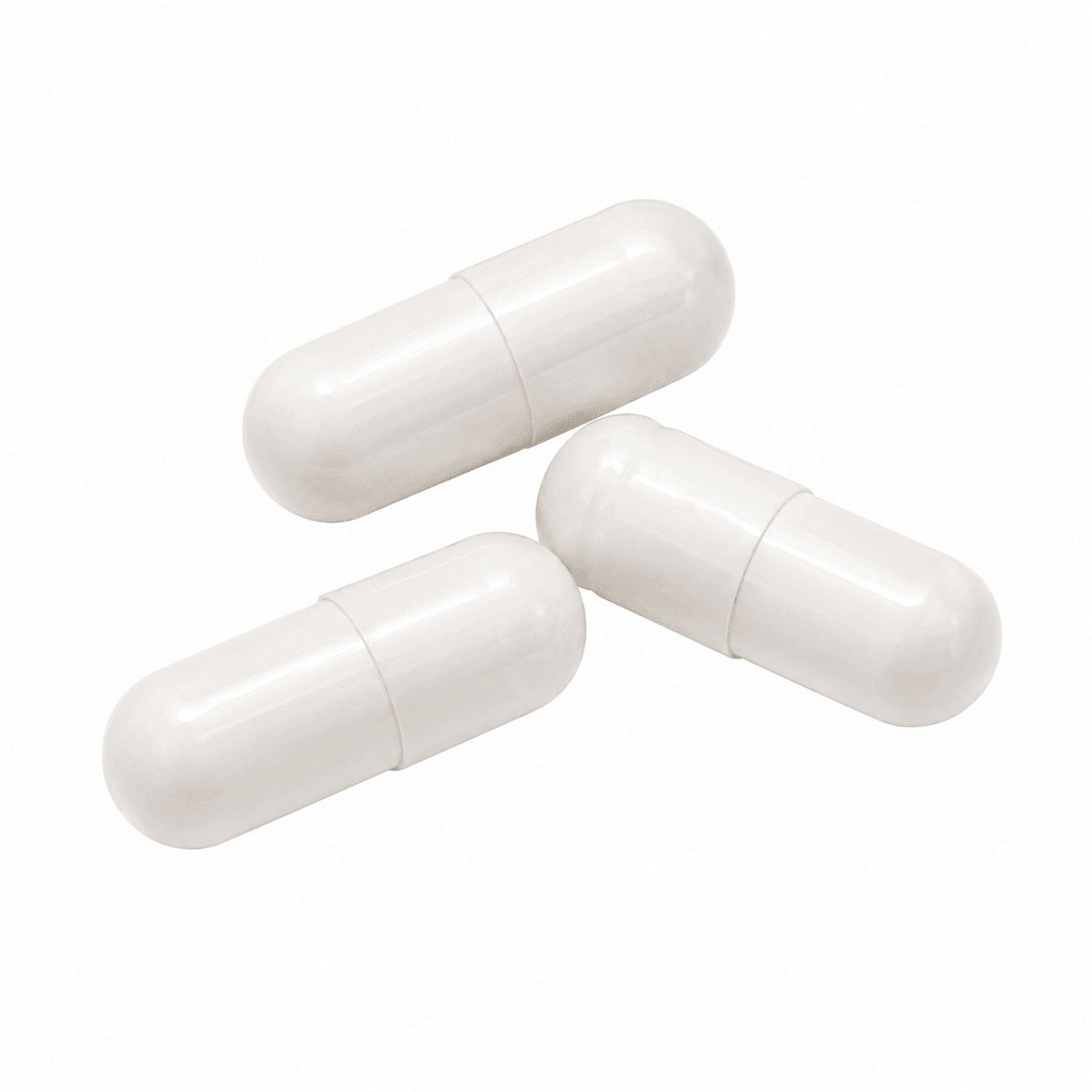
Capsules
Gelatin & HPMC vegetarian
Sachets
Single-dose powder blends
Stick packs
Convenient single-serve
Pouches
Flexible, shelf-ready
Ready to bring your supplement to market?
Free consultation · 24-hour quote · No minimum commitment to get started