Creatine Capsules vs Creatine Powder: OEM and ODM Strategies for Sports Nutrition Brands
Evidence‑based guide comparing creatine capsules vs powder for OEM and ODM sports nutrition brands, focusing on UX, cost, compliance and athlete adherence.

Creatine capsules and creatine powder are two of the most important delivery formats in modern sports nutrition, especially for brands focused on performance‑driven products. Choosing between these formats is not just a technical detail; it influences user experience, brand positioning, regulatory strategy, and manufacturing efficiency. For OEM and custom ODM manufacturers like River Pharm Inc, understanding the trade‑offs between capsules and powder is essential to helping brands design compliant, effective, and commercially successful creatine products.
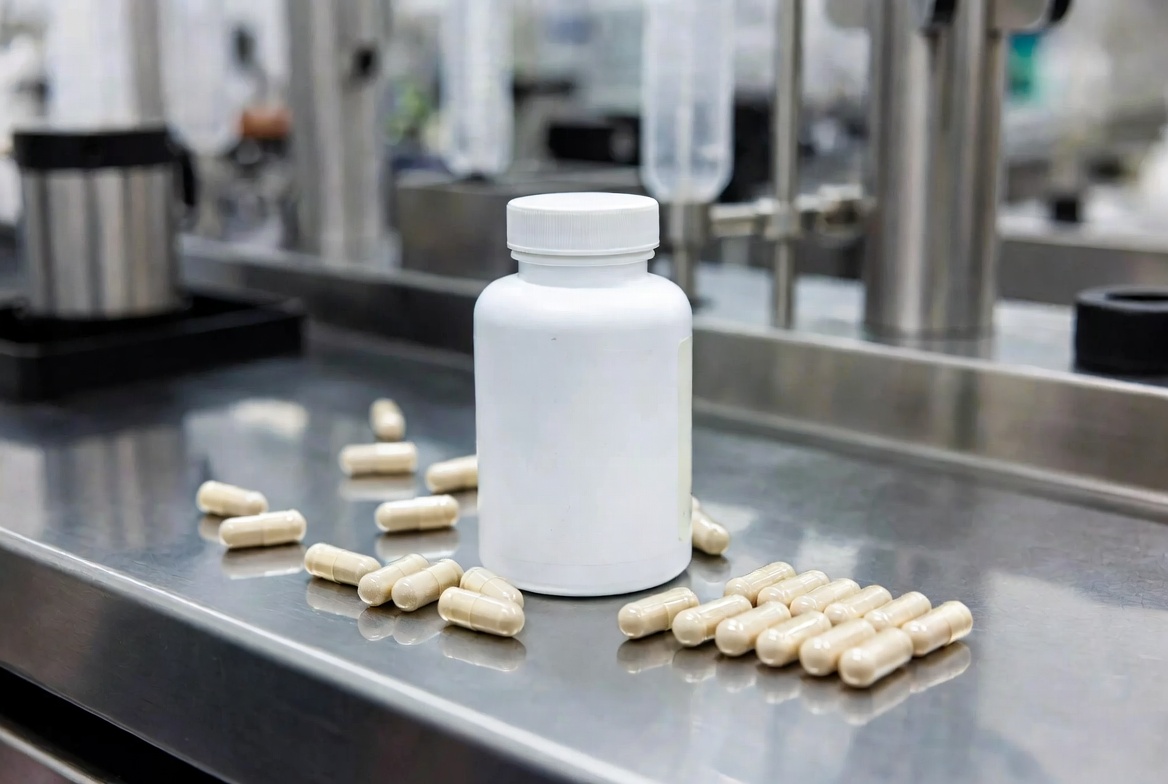
Creatine Capsules vs Creatine Powder: Why Format Choice Matters
Creatine has become a cornerstone ingredient in strength and conditioning programs because it consistently supports increases in high‑intensity performance, power, and lean mass when taken at appropriate daily doses over time. While most of the scientific literature focuses on creatine monohydrate, the principle is clear: the total daily intake matters more than the dosage form itself. However, the format deeply affects how users interact with the product, how easily they adhere to protocols, and how brands communicate value and quality.
From a product development perspective, capsules and powder offer different paths for innovation and differentiation. Capsules lean toward precision, portability, and premium perception. Powder emphasizes flexibility, cost‑effectiveness, and blendability with other performance ingredients. For an OEM/ODM partner, this means aligning format choice with the target audience, price positioning, sales channels, and long‑term brand strategy rather than treating it as an afterthought.
Creatine Capsules: Precision, Portability, and Premium Positioning
Creatine capsules are designed for athletes and active consumers who want structured, convenient supplementation with minimal friction. Each capsule delivers a fixed dose, making it easy for users to follow daily protocols without measuring or mixing. This format particularly suits those who prioritize routine and prefer supplement experiences similar to pharmaceutical products.
Capsules are highly portable and discreet. They can be taken in almost any environment—before early morning training, during work breaks, or while traveling—without requiring water bottles, shakers, or time‑consuming preparation. For newer or more cautious users, capsule products often feel safer and more controlled, because the dose is clearly listed per capsule and per serving.
Taste and texture are major advantages of capsules. Creatine powder can be gritty or neutral in flavor, and even minor off‑notes can turn some consumers away. Capsules bypass this issue entirely by housing the creatine inside gelatin or vegetarian shells. This makes them ideal for taste‑sensitive users or those who dislike mixing powders with flavored beverages.
On the branding side, capsules align naturally with a premium, clinical image. The packaging, label layout, and capsule appearance can all reinforce messages of quality assurance, purity, and strict manufacturing standards. For brands that want to position creatine as part of a broader "high‑trust" sports or wellness portfolio, capsules can be a powerful format choice.
Limitations and Trade‑Offs of Capsule Format
Despite these advantages, capsules are not always the best fit. Manufacturing capsules typically involves higher equipment costs, more complex quality checks, and a greater number of individual units per batch compared with bulk powder. This tends to increase the cost per serving.
Dose volume is another constraint. A standard daily maintenance dose of creatine often sits around three to five grams. Reaching such doses through capsules alone may require several capsules per day. While many users are comfortable with this, others strongly prefer fewer units or dislike swallowing multiple capsules at once.
Capsules also naturally limit formulation flexibility. The amount of material that can be packed into each capsule is finite, and highly loaded multi‑ingredient blends may require large capsule sizes or multiple capsules per serving. For brands that want extensive combinations of creatine with amino acids, plant extracts, or carbohydrates, capsule formats need careful design to avoid overwhelming the user with capsule count.
Creatine Powder: Flexibility, Stackability, and Cost Efficiency
Creatine powder remains the classic choice for sports nutrition, especially among strength athletes, bodybuilders, and serious gym users. One of its greatest strengths is dosing flexibility. Users can easily adjust scoops to match body weight, training intensity, and desired protocols. For example, some individuals still follow loading phases before settling into maintenance doses, and powder makes such strategies straightforward.
Powder also tends to be more cost‑effective. Blending and filling bulk powder into tubs, sachets, or flexible packaging is generally simpler and more scalable than capsule filling. This advantage can be critical for high‑volume products aimed at price‑sensitive consumers or mass‑market e‑commerce channels, where price per gram and perceived value strongly influence buying decisions.
Creatine powder offers wide possibilities for flavoring and formulation. It can be sold as pure, unflavored monohydrate for mixing into existing drinks, or as part of a flavored performance blend. Powder can be combined with carbohydrates to support recovery, amino acids to complement muscle support, or other ergogenic ingredients for pre‑workout stacks. This flexibility makes powder an excellent canvas for innovative concepts tailored to specific training goals.
For experienced athletes, the ritual of scooping powder into a shaker is familiar and often symbolic of serious training. Powder products can leverage this cultural association by focusing on high‑performance branding, strong flavor systems, and large tub formats that reinforce long‑term commitment.

Limitations and UX Challenges of Powder Format
Creatine powder is not without its drawbacks. Texture and mouthfeel can be problematic, particularly when raw materials are slightly gritty or when particle size distribution is suboptimal. Some users find this unpleasant and may look for smoother, more convenient options.
Preparation is another barrier. Powder requires access to water or another beverage and a mixing container. For users who train during work breaks, commute, or travel frequently, these requirements can interrupt supplementation routines. Even small inconveniences accumulate and can reduce adherence over time.
Measurement accuracy is also an issue. Unless the product is packaged in precisely measured sticks or sachets, users rely on scoops, which may vary in how tightly they are packed or how carefully they are measured. This introduces modest variability in daily intake and can be confusing for users who want exact control over dosing.
These limitations can be mitigated through thoughtful design choices. Single‑serve powder sticks remove measurement guesswork and improve portability. Optimized particle size and flavoring systems enhance mouthfeel and taste. Clear instructions and visual guides help users understand how to achieve accurate daily dosing.
Scientific and Regulatory Foundations for Creatine Product Design
Creatine is one of the most extensively studied dietary ingredients in sports nutrition. Clinical research has repeatedly shown that consistent supplementation at established dose ranges can improve high‑intensity exercise performance and support increases in lean mass over time. The broad consensus is that, for healthy adults following recommended doses, creatine has a strong safety profile under normal use conditions.
However, product development and marketing must go beyond efficacy and safety and consider regulatory obligations. Both capsule and powder creatine products are treated as dietary supplements and are subject to specific labeling rules. Key elements include accurate Supplement Facts panels, proper serving size description, clear ingredient lists, and appropriate directions for use. Any claims about performance, muscle support, or recovery should be framed as structure‑function statements rather than disease claims and must be supported by evidence.
Serving size expression differs between capsules and powder. Capsule labels typically list "X capsules" per serving, with the corresponding total creatine content. Powder labels frequently describe the serving as "X grams" or "X scoop(s)" per serving. Directions for use must clearly explain how many capsules or scoops to take daily, how to mix powder products, and whether they should be taken with specific fluids or at certain times relative to training.
An OEM/ODM partner that understands these rules can help brands ensure that their creatine capsule and powder products remain compliant while reflecting the realities of scientific evidence and practical user behavior. This is particularly important in markets where regulatory expectations and enforcement are strong.
OEM vs Custom ODM: How Manufacturing Model Shapes Creatine Format
River Pharm Inc operates under two main collaboration models: OEM and custom ODM. Both can support creatine capsules and powder, but they differ significantly in how products are conceived and developed.
In an OEM model, the brand provides a finalized formula, dosage strategy, and positioning concept. The manufacturing partner then focuses on scale‑up, raw material sourcing, quality control, and packaging. This approach works well for brands that already have in‑house R&D or have used external consultants to design their creatine products. It prioritizes speed to market and continuity with existing brand formulations.
In a custom ODM model, the brand provides key reference points—such as target performance outcomes, benchmark products, desired ingredient categories, or broad concept directions—and the manufacturer leads formulation development. For creatine, this means the ODM team might propose capsules for convenience‑focused professionals, powder blends for high‑intensity training communities, or single‑serve formats for hybrid usage scenarios.
Crucially, custom ODM in this context does not rely on generic public templates or simple "label swap" solutions. Instead, each product is uniquely developed to match the client's conceptual and commercial requirements. This allows the manufacturer to tailor creatine dosage, excipient choices, packaging options, and format selection around the brand's evidence stance and audience expectations.

Matching Format to Athlete Personas
A user‑experience‑driven creatine strategy starts with clearly defined athlete personas. Different users have distinct habits, constraints, and motivations, and capsules or powder will fit them differently.
Capsules often suit:
- Busy professionals training early or late, who need quick, discreet supplementation with minimal preparation.
- Travel‑heavy athletes who move between cities, facilities, or competitions and require stable, portable dosing.
- New users who are cautious about powders and prefer a familiar pill‑like experience with clearly defined per‑capsule doses.
Powder often suits:
- Experienced gym users who already use shakers daily and see powder as part of their training ritual.
- Cost‑conscious consumers looking for long‑term value through large tubs and multi‑month supply strategies.
- Athletes seeking customizable stacks that mix creatine with other performance ingredients in pre‑ and post‑workout routines.
Understanding these personas helps brands design communication, packaging, and product ecosystems that feel natural to the users they want to serve. For example, a capsule product might emphasize clean dosing, travel readiness, and routine integration. A powder product might focus on flavor experience, stackability, and value per gram.
Practical Decision Framework: Capsules or Powder?
When brand teams approach an OEM/ODM partner with a new creatine concept, they often face a practical decision: capsules or powder. The answer depends on a combination of strategic factors.
Key questions include:
- What is the primary training context of the target users: home gyms, commercial gyms, teams, travel, or mixed scenarios?
- How sensitive is the target market to price per serving, and what is the acceptable cost range?
- Does the brand want highly flexible dosing protocols or simple, fixed servings?
- Will creatine be used as a standalone product or as part of multi‑ingredient blends?
- How important is premium perception and a clinical look compared with a more traditional sports performance aesthetic?
Capsules may be preferable when convenience, precision, and premium branding are the top priorities. Powder may be the better option when flexibility, blending, and cost‑effectiveness are paramount. In some portfolios, brands may choose to offer both formats and segment their audience accordingly.
Advanced Creatine Concepts for River Pharm Clients
To go beyond standard products and stand out in a crowded sports nutrition landscape, brands can explore advanced creatine concepts that still respect evidence and regulatory boundaries.
Examples include:
- Creatine capsules targeted at busy professionals, combined with selected micronutrients and positioned around performance and cognitive support, while maintaining conservative, compliant claims.
- Creatine powder blends designed for specific training phases—such as heavy strength cycles or mixed conditioning blocks—using carbohydrates and amino acids to frame usage timing and recovery strategies.
- Single‑serve creatine powder sticks for hybrid users who train both at home and in multiple gym environments, emphasizing convenience without sacrificing dose accuracy.
In each case, adopting a UX‑first mindset means considering how users will store, carry, prepare, and remember to take the product. Brands that think through these details and collaborate closely with an experienced OEM/ODM partner can develop solutions that feel intuitively easy and trustworthy to end users.
Call to Action: Turning Concepts into Market‑Ready Products
The most effective creatine products are those that combine solid scientific foundations with regulatory compliance, thoughtful UX design, and manufacturing reliability. For brands willing to invest in these dimensions, the choice between creatine capsules and creatine powder becomes a strategic lever rather than a simple packaging decision.
References
1. U.S. Food and Drug Administration (FDA). Guidance for Industry: Dietary Supplement Labeling Guide. https://www.fda.gov/regulatory-information/search-fda-guidance-documents/guidance-industry-dietary-supplement-labeling-guide
2. U.S. Food and Drug Administration (FDA). Dietary Supplements Guidance Documents and Regulatory Information. https://www.fda.gov/food/guidance-documents-regulatory-information-topic-food-and-dietary-supplements/dietary-supplements-guidance-documents-regulatory-information
3. U.S. Food and Drug Administration (FDA). Dietary Supplement Labeling Guide – Nutrition Labeling and Claims. https://www.fda.gov/food/dietary-supplements-guidance-documents-regulatory-information/dietary-supplement-labeling-guide-chapter-iv-nutrition-labeling https://www.fda.gov/food/dietary-supplements-guidance-documents-regulatory-information/dietary-supplement-labeling-guide-chapter-vi-claims
4. National Institutes of Health, Office of Dietary Supplements. Dietary Supplements for Exercise and Athletic Performance. https://ods.od.nih.gov/factsheets/ExerciseAndAthleticPerformance-HealthProfessional
5. Nutrition.gov. Dietary Supplements for Athletes – Creatine Supplements: The Basics. https://www.nutrition.gov/topics/dietary-supplements/dietary-supplements-athletes
6. Fazio C, Elder CL, Harris MM. Efficacy of Alternative Forms of Creatine Supplementation on Improving Performance and Body Composition in Healthy Subjects: A Systematic Review. Journal of Strength and Conditioning Research. https://pubmed.ncbi.nlm.nih.gov/36000773/
7. Tarnopolsky MA, et al. Creatine in Health and Disease. Nutrients / PMC. https://pmc.ncbi.nlm.nih.gov/articles/PMC7910963/
8. Momaya A, et al. Creatine Supplementation Is Safe, Beneficial Throughout the Lifespan. https://pmc.ncbi.nlm.nih.gov/articles/PMC12053822/
9. National Library of Medicine, Drugs and Lactation Database (LactMed). Creatine. https://www.ncbi.nlm.nih.gov/books/NBK501853/
10. NutraIngredients. Creatine Trends Driving New Market Growth. https://www.nutraingredients.com/News/Promotional-features/creatine-trends-driving-new-market-growth/
11. NutraIngredients. Creatine Gummy NPD Explodes: 2026 Set To Sift Out Unsustainable Strategies. https://www.nutraingredients.com/Article/2026/01/16/creatine-gummy-npd-explodes-2026-set-to-sift-out-unsustainable-strategies/
12. River Pharm Inc. Direct Supplement Contract Manufacturer and Custom Manufacturing Solutions. https://www.riverpharm.com https://www.riverpharm.com/contract-manufacturing https://www.riverpharm.com/resources https://www.riverpharm.com/about-riverpharm
Hot Tags: Creatine Capsules, Creatine Powder, Sports Nutrition OEM, Sports Nutrition ODM, Contract Supplement Manufacturing, Private Label Creatine, B2B Sports Nutrition, Capsule Supplement Manufacturer, Powder Supplement Manufacturer, River Pharm Inc
Did you find this helpful?
Comments (0)
No comments yet. Be the first to comment!
Leave a comment
Related Posts

Oct 14, 2026
Why Full-Service Supplement Manufacturing Matters for Growing Brands
Oct 13, 2026
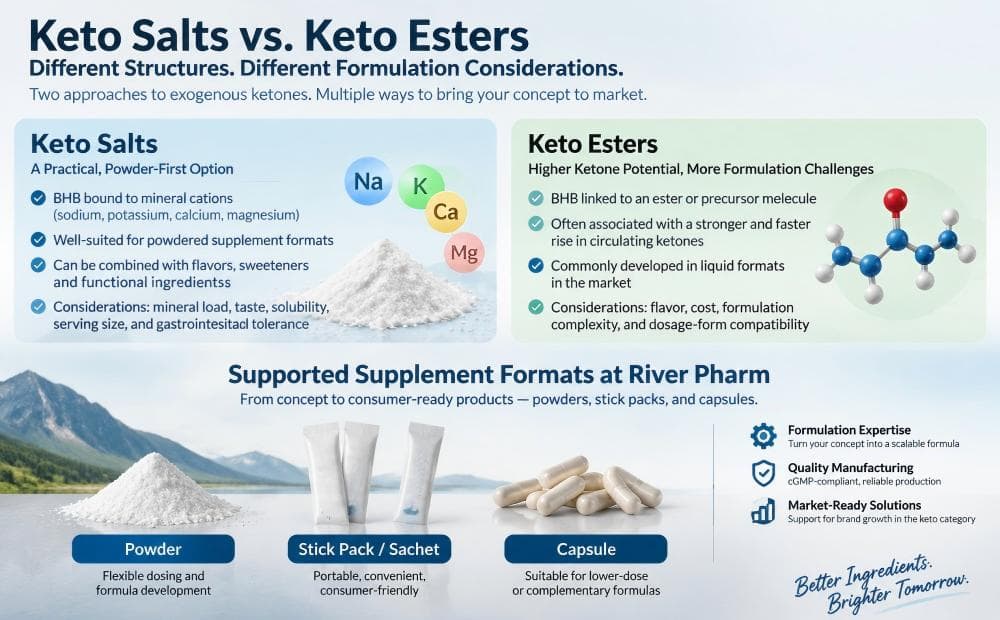
Keto Salts vs. Keto Esters: Formulation, Dose, Stability, and Manufacturing Considerations for Rapid Ketosis

Oct 13, 2026
Batch Consistency vs. Rapid Prototyping: Solving the Scaling Issues in Custom Supplement Formulation
Riverpharm · Supplement Contract Manufacturing
Your supplement brand, manufactured to the highest standard
From first formula to finished product — we handle manufacturing, packaging, and fulfillment so you can focus on building your brand.
Core services
Contract Manufacturing
GMP-certified production with full batch testing and certificate of analysis on every run.
Custom Formulation & R&D
In-house scientists develop your formula from scratch or refine existing blends for efficacy.
Packaging & Labeling
Design-to-print label service — shelf-ready, FDA-compliant, and retail-tested.
FBA Prep & Fulfillment
Amazon-ready prep and direct-to-warehouse shipping — no extra steps on your end.
By the numbers
NSF
NSF/ANSI 455-2 certified
cGMP
Certified environment
24 hr
AI-accelerated quote turnaround
600K
cGMP+ encapsulator capacity per run
Why Riverpharm
Quality systems with higher standards
- NSF/ANSI 455-2 certified
- cGMP-certified environment
- In-house + third-party testing
- Source-locked ingredients
Production capacity with faster execution
- Heavy-duty hardware
- In-house core reserves
- AI-accelerated quotes
- In-house expert hub
Delivery formats we produce
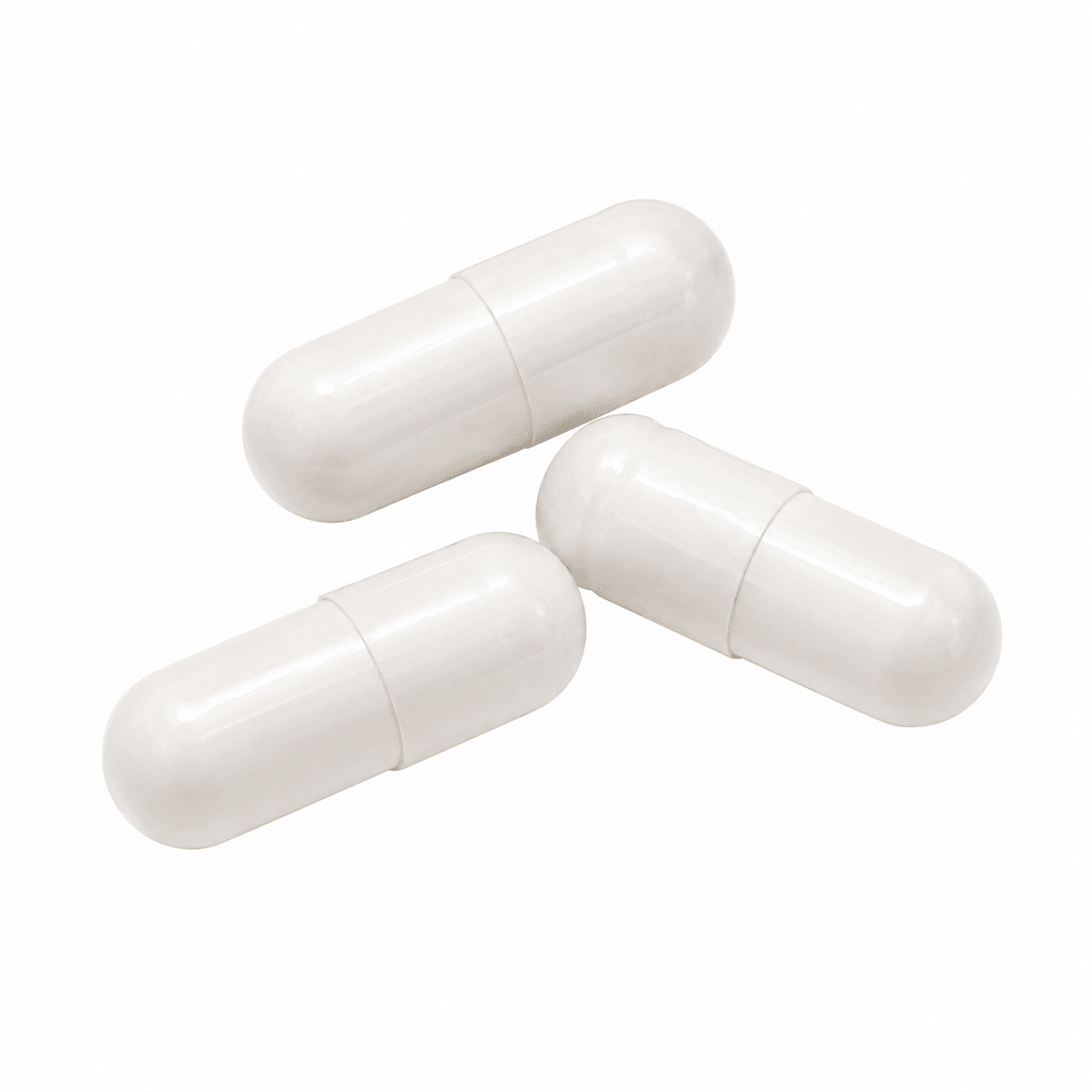
Capsules
Gelatin & HPMC vegetarian
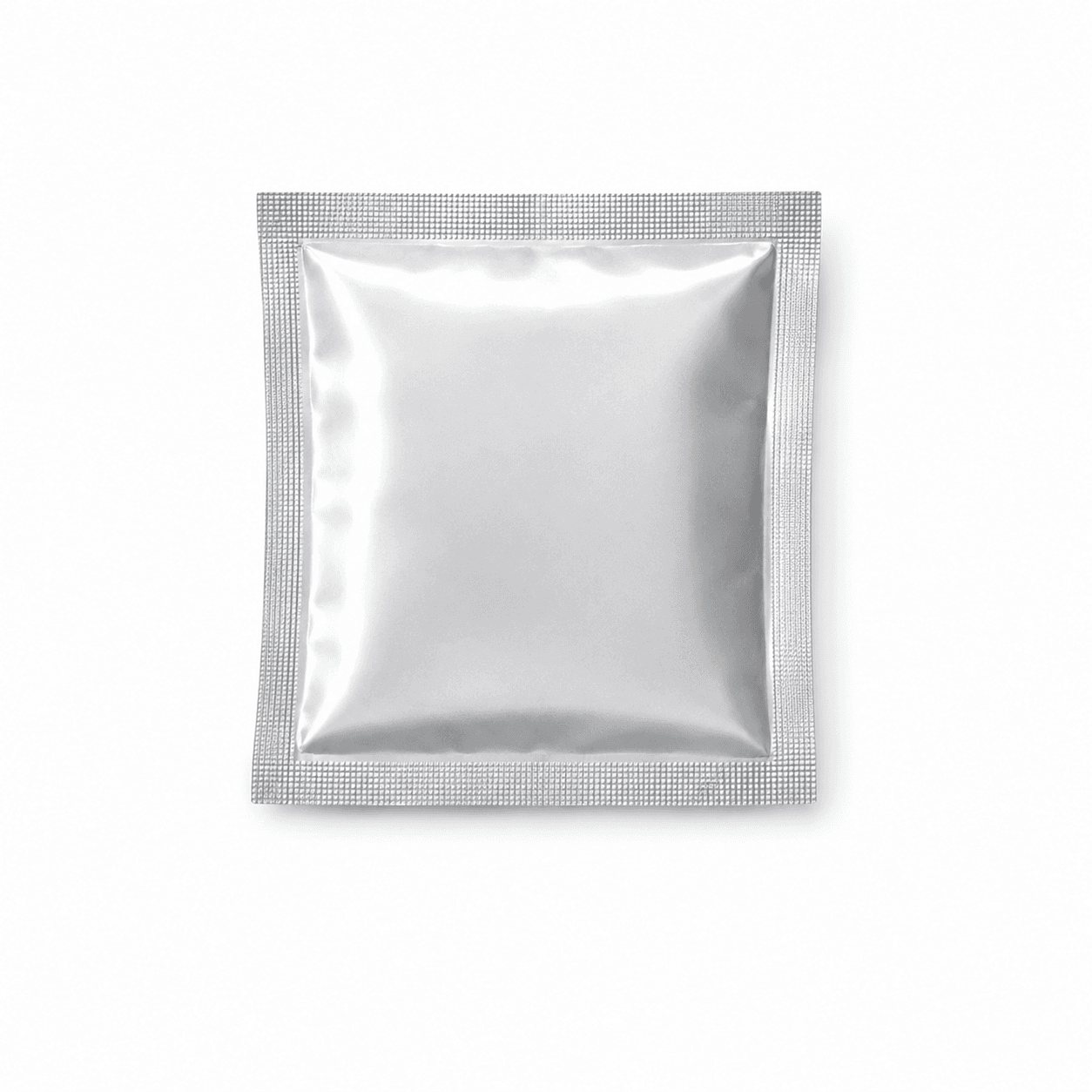
Sachets
Single-dose powder blends
Stick packs
Convenient single-serve
Pouches
Flexible, shelf-ready
Ready to bring your supplement to market?
Free consultation · 24-hour quote · No minimum commitment to get started