Why B2B Brands Need a Specialized Prenatal Capsule OEM ODM Partner
Discover how a specialized prenatal capsule OEM/ODM partner like River Pharm helps B2B brands design, manufacture and document high‑quality maternal health supplements with capsule‑focused processes, robust quality systems and custom development instead of generic relabeling.
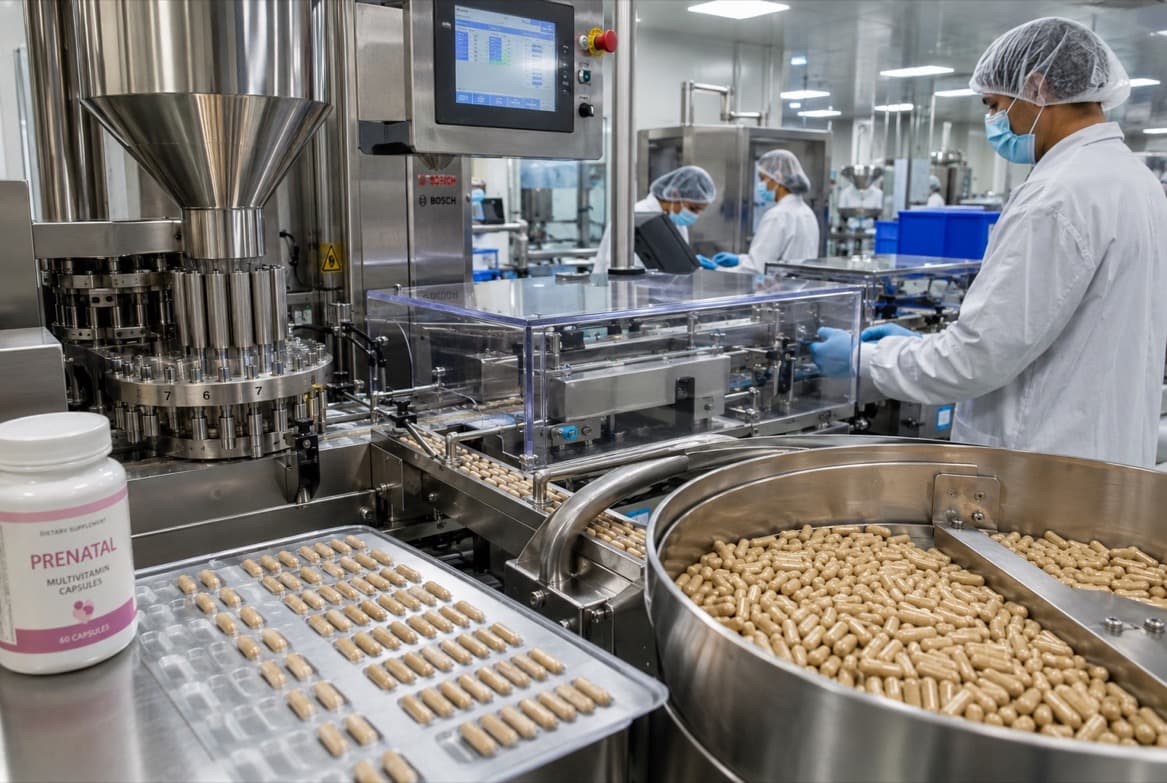
Choosing the right prenatal supplement manufacturer is one of the most decisive moves a brand can make when entering or scaling in the maternal health market. From formulation design to regulatory compliance and day‑to‑day production reliability, every decision made at the factory level ultimately shapes both clinical credibility and consumer trust.
As someone who has spent years working with B2B brands in nutraceuticals and manufacturing, I have seen how the difference between a generic producer and a true specialist shows up in product outcomes. Prenatal supplements are not just another multivitamin; they support women and babies at a uniquely vulnerable stage of life. That reality demands a deeper level of rigor in formulation thinking, manufacturing controls and quality assurance than many standard dietary supplements receive. River Pharm's focus on prenatal capsule OEM and custom ODM responds directly to that need.
Why a Specialized Prenatal Capsule Partner Matters
Many brands start with an excellent concept and a strong marketing strategy, only to run into limitations when their ideas meet factory constraints. In prenatal supplementation, those constraints are often linked to ingredient stability, capsule fill limitations, batch uniformity and regulatory expectations. A specialized capsule manufacturer understands these issues not as obstacles, but as design parameters to work with from day one.
The value of such specialization shows up in several areas. First, it ensures that ingredient identity and purity are consistently verified so that every capsule delivers what the label promises. Second, it aligns manufacturing processes with recognized good manufacturing practices tailored to dietary supplements. Third, it bridges the gap between scientific guidance on maternal nutrition and the real‑world demands of scalable encapsulation. In practice, this means your prenatal capsule can move from concept to shelf as a product that is both scientifically grounded and operationally robust.
River Pharm's OEM Prenatal Capsule Services
River Pharm's OEM services are built for brands that already have their own formulations and need a partner capable of turning those formulas into reliable, compliant capsule products. In this model, the brand defines the nutrient profile, and the manufacturer focuses on executing that profile accurately and consistently.
An OEM collaboration typically begins with a detailed technical handover. The brand provides a complete ingredient list, target dosages per capsule, capsule size and shell preferences, and any allergen or excipient restrictions. Alongside this, the brand shares its intended claims and target markets, which will influence how the formula translates into production specifications.
The manufacturing team then evaluates whether the proposed formula can be encapsulated with precision and stability. This includes examining issues like powder flow, density, interactions between ingredients and compatibility with the chosen capsule shell. When necessary, process‑oriented adjustments are recommended to preserve the intended nutrient strengths while supporting uniform fill weights and capsule integrity. The goal is to respect the brand's formula design while making sure it can be produced repeatedly under controlled conditions.
Throughout OEM production, the manufacturer maintains batch records and process documentation that allow the brand to trace each lot of product from raw material receipt through encapsulation and final packaging. For prenatal capsules, this level of documentation is essential, because it supports both regulatory compliance and the brand's own commitments to transparency and safety.
Custom ODM: From Concept to Differentiated Prenatal Capsules
River Pharm's custom ODM services are designed for brands that know the direction they want to take but need expert guidance to turn that direction into a distinct formula and a reliable production plan. Unlike public template ODM, which simply offers pre‑made formulas for relabeling, this approach builds genuinely custom products that fit a brand's positioning and market strategy.
The process often starts with reference points rather than a finalized formula. A brand might bring a product they admire, a set of clinical papers on maternal nutrition or a strategic concept such as "high‑tolerability prenatal for iron‑sensitive women" or "premium plant‑forward prenatal capsule." From there, the development team works to define nutrient ranges, ingredient combinations and capsule design features that fit the brand's objectives while remaining within the bounds of sound science.
A typical ODM journey includes conceptual design, literature‑informed nutrient selection, feasibility checks for capsule size and fill, pilot batches to test blending and encapsulation behavior, and refinement based on observed performance. Along the way, formulation choices are guided by current evidence on the roles of key nutrients in pregnancy, practical intake patterns in the target population and the realities of capsule manufacturing.
One of the advantages of custom ODM in prenatal capsules is the ability to design for specific maternal profiles. For example, there is growing awareness that many women experience discomfort with higher doses of certain minerals. ODM allows a brand to approach this challenge intelligently, using different forms, moderate dosing strategies and supportive excipients rather than simply removing important nutrients. Similarly, ODM can address gaps linked to dietary habits, such as low fish consumption or high plant‑based diets, by selecting ingredient combinations that complement these patterns without sacrificing product stability.

Capsule‑Focused Manufacturing: No Softgels, No Generic Relabeling
River Pharm chooses to focus on capsules, stick packs and flexible pouch formats instead of softgels. This deliberate specialization brings several operational benefits. It allows equipment and process design to be optimized for dry‑fill dosage forms, which are commonly used for complex prenatal formulations that involve multiple vitamins and minerals. It also simplifies quality control by concentrating expertise on a narrower set of manufacturing challenges.
Equally important, the company does not offer generic "public mold" ODM or simple relabeling of standard formulas. Every ODM project is treated as a custom development effort. This safeguards a brand's ability to differentiate itself in a crowded prenatal market and reduces the risk of launching products that look and feel identical to competitors' offerings.
For B2B marketers, this capsule‑only, custom‑first orientation can be a strategic advantage. It provides a solid technical foundation for storytelling around formulation integrity, manufacturing quality and product uniqueness, rather than relying solely on branding and packaging.
Inside the Prenatal Capsule Production Process
Understanding what happens inside a modern prenatal capsule facility can help brands make better decisions and communicate more credibly with their customers. While each manufacturer will have its own specific workflow, several key stages define a well‑run production line.
The journey begins with raw material sourcing and receipt. Once ingredients arrive at the facility, they are typically placed in a controlled area until quality control has verified that they meet predefined specifications. Identity testing ensures that each ingredient is authentic. Microbiological assessments check for harmful organisms and excessive microbial loads. Heavy metals and other contaminants are measured against strict internal limits.
Only after these checks are successfully completed do ingredients enter the production stream. They move through weighing, sifting and blending steps that require precise control. Dietary supplement cGMP principles emphasize documented procedures, calibrated equipment and trained operators for these tasks, because small deviations can lead to inconsistent dosing or compromised capsule structure. In prenatal products, where nutrient delivery is critical, this control is especially important.
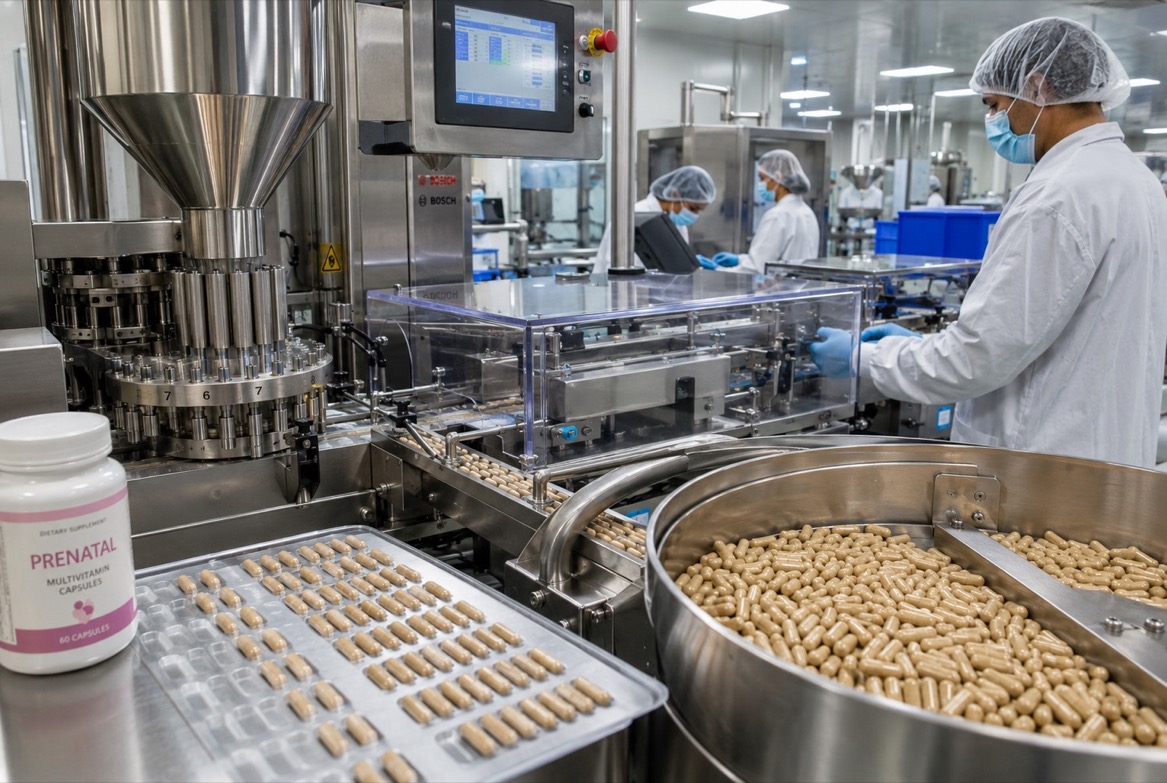
Automated encapsulation machines fill and close capsules at high speed, while in‑process checks monitor capsule weights and inspect for defects. Operators review results at set intervals, and any out‑of‑range findings trigger corrective actions. The aim is to ensure that each capsule in a batch falls within the required weight and content range.
After encapsulation, capsules move to packaging and final testing. Finished product samples undergo analysis to confirm identity, strength, purity and composition. These tests validate that the capsules contain the ingredients and amounts declared on the label. Only batches that meet the agreed specifications are cleared for release.
This structured approach to production does more than satisfy regulations. It builds a foundation of trust, demonstrating to brands and their customers that prenatal capsules have been made under disciplined, transparent conditions rather than ad‑hoc or minimally controlled processes.
Compliance, Documentation and Risk Management
Prenatal supplements are part of the broader dietary supplement category, but they occupy a special place because they are consumed by pregnant women and, indirectly, affect developing babies. This context heightens scrutiny. Manufacturers must therefore not only meet baseline expectations but also anticipate potential shifts in how regulators and stakeholders view prenatal products.
Robust documentation is central to this effort. Clear standard operating procedures, detailed batch records, traceability from raw material lots to finished goods and documented deviations and investigations provide both compliance assurance and a basis for continuous improvement. These elements help manufacturers demonstrate that their operations are systematic rather than improvised.
Brands partnering with a manufacturer that treats compliance and documentation as strategic assets gain several advantages. They receive clear records and certificates for each batch, supporting both regulatory needs and internal quality policies. They benefit from a manufacturing environment that is prepared to respond to questions from healthcare professionals, distributors and consumers. And they are better positioned to respond if future regulations introduce tighter oversight for prenatal supplements.
In short, good documentation and thoughtful risk management are not just about avoiding problems; they are about building resilience. For prenatal brands, resilience at the factory level translates into long‑term confidence in the products they place on the market.
Strategic Benefits for B2B Prenatal Brands
From a strategic standpoint, working with a specialized prenatal capsule OEM/ODM partner like River Pharm can influence a brand's trajectory in several ways. First, it enables evidence‑compatible formulations that remain feasible at scale. Instead of having to compromise extensively on nutrient ranges or forms because of manufacturing limitations, brands can design with a clearer understanding of what is operationally possible.
Second, it supports differentiated product development. ODM capabilities rooted in custom work allow brands to craft prenatals that stand out on substantive grounds—such as targeting specific maternal profiles or dietary patterns—rather than only on packaging. OEM capabilities, in turn, allow brands with strong in‑house science teams to protect their formulas while still gaining the benefits of specialized manufacturing expertise.
Third, it provides content and storytelling material. Detailed knowledge of the production process, quality controls and development pathway can be transformed into educational content for both professionals and consumers. This kind of content aligns well with search engines' preference for depth, expertise and helpfulness, particularly when brands describe their manufacturing and quality practices clearly and concretely.
For B2B marketers and content strategists, partnering with a manufacturer that welcomes transparent storytelling is a major advantage. It allows them to build campaigns that go beyond claims and speak to how the product is actually made and why those choices matter.
OEM or ODM: Choosing the Right Path for Your Brand
Brands considering a collaboration with River Pharm or a similar manufacturer often begin by asking whether OEM or ODM is the better fit. The answer depends on the maturity of their internal formulation capabilities and the clarity of their product concept.
OEM tends to be the right choice for brands that already have defined formulas grounded in their own research or clinical guidance. These brands are looking for a manufacturing partner that will respect and accurately execute their design. For them, the key value lies in reliable production, transparent documentation and responsive operational support.
ODM tends to be the best option for brands that have strategic goals but not yet a finalized formula. They may know they want to serve a particular segment of mothers or adopt a certain nutritional philosophy without having every detail worked out. For these brands, R&D support, formulation guidance, pilot testing and iterative refinement are critical.
In many cases, brands evolve from ODM to OEM over time. They start with collaborative development and, once their formulas are established, continue to work with the same manufacturer as OEM partners. This progression allows them to build institutional knowledge and maintain continuity across product generations.
Working Effectively With Your Prenatal Capsule Manufacturer
To get the most out of a collaboration with River Pharm or any specialized prenatal capsule manufacturer, brands can follow a few practical principles.
First, be explicit about the target maternal profile and desired product positioning. The more clearly you define who the product is for and how it should serve them, the easier it is to design appropriate formulas and manufacturing strategies.
Second, share relevant research, guidelines and benchmarks. Even when the manufacturer has its own scientific perspective, understanding the brand's reference points helps align expectations and decisions.
Third, communicate regulatory priorities early. If the product is intended for specific markets with particular regulatory nuances, this should be factored into formulation and documentation from the start.
Fourth, maintain open dialogue during development and production. Regular discussion of pilot results, test data and operational feedback allows both sides to refine and improve over time.
Finally, think ahead about how you will translate manufacturing realities into market messaging. The details of your capsule's journey from concept to finished product can become powerful elements of both professional outreach and consumer education.
Call to Action
If your brand is planning to launch or upgrade a prenatal capsule line and you want manufacturing support that matches the seriousness of maternal health, now is the time to move beyond generic production. Consider partnering with a capsule‑focused OEM/ODM manufacturer that can help you design, produce and document prenatal supplements in a way that aligns with your scientific vision, regulatory responsibilities and market ambitions. By doing so, you position your brand not just to participate in the prenatal market, but to lead it with products that embody genuine care, rigor and expertise.

FAQ
Q1. Why should brands choose capsules instead of softgels for prenatal supplements?
Capsules offer practical advantages for complex prenatal formulations, including compatibility with dry multi‑micronutrient blends, flexibility in ingredient selection and a well‑established manufacturing framework. They also allow brands to avoid dependence on specialized softgel equipment and processes while still delivering stable, precise dosing.
Q2. What information should a brand prepare before starting an OEM project?
Brands should prepare a complete ingredient list with target dosages, capsule size and shell preferences, allergen and excipient restrictions, and clear statements of intended claims and target markets. Providing these details upfront allows the manufacturer to assess feasibility, design batch records and suggest any necessary process adjustments.
Q3. How does custom ODM help differentiate a prenatal product line?
Custom ODM supports differentiation by turning strategic concepts into unique formulas and development pathways instead of using generic templates. Brands can tailor nutrient profiles, capsule characteristics and supporting documentation to specific maternal profiles, dietary habits or clinical viewpoints, creating products that stand out on substance as well as branding.
Q4. What role does documentation play in prenatal capsule manufacturing?
Documentation is central to quality and compliance. It records how each batch was produced, which materials were used, what tests were performed and how results were handled. For prenatal products, thorough documentation supports regulatory obligations, internal quality standards and the trust of healthcare professionals and consumers who expect evidence of disciplined production.
Q5. Can a brand transition from ODM to OEM with the same manufacturer?
Yes. Many brands begin with ODM to develop and refine their formulas and later move into OEM once their product designs are established. Staying with the same manufacturer allows them to benefit from accumulated knowledge, consistent processes and a stable relationship, while retaining control over their now‑defined formulations.
Q6. How early should regulatory considerations enter the development process?
Regulatory considerations should be part of the conversation from the beginning. They influence ingredient choices, dosage ranges, documentation standards and release criteria. Addressing regulatory factors early reduces the risk of later reformulation or delays and ensures that manufacturing plans align with the markets a brand intends to serve.
References
1. U.S. Food and Drug Administration. Dietary Supplements Guidance Documents & Regulatory Information.
https://www.fda.gov/food/dietary-supplements-guidance-documents-regulatory-information
2. U.S. Food and Drug Administration. Current Good Manufacturing Practice (CGMP) in Manufacturing, Packaging, Labeling, or Holding Operations for Dietary Supplements.
3. U.S. Food and Drug Administration. Final Rule for CGMPs for Dietary Supplements.
4. U.S. Food and Drug Administration. Small Entity Compliance Guide: Current Good Manufacturing Practice in Manufacturing, Packaging, Labeling, or Holding Operations for Dietary Supplements.
5. National Institutes of Health (NIH). Evidence‑based recommendations for an optimal prenatal supplement.
https://www.ncbi.nlm.nih.gov/pmc/articles/PMC9275129/
6. National Institute of Child Health and Human Development (NICHD). Nutrition during pregnancy: findings from cohort studies of fetal growth.
https://www.sciencedirect.com/science/article/pii/S2475299122105056
7. National Institutes of Health (NIH). The effects of prenatal multiple micronutrient supplementation on newborn outcomes.
https://www.ncbi.nlm.nih.gov/pmc/articles/PMC11782989/
8. NutraIngredients. Behind the scenes tour: From ingredients to the shelf.
9. U.S. Food and Drug Administration. Food and Dietary Supplement Guidance and Regulatory Information.
10. Kim E. The case for tightening FDA regulation of prenatal vitamins. Illinois Law Review.
https://illinoislawreview.org/wp-content/uploads/2025/05/E.-Kim.pdf
Hot Tags: Prenatal Supplement Manufacturer, Prenatal Capsule OEM, Custom Prenatal ODM, B2B Nutraceutical Manufacturing, Prenatal Vitamin Production, Private Label Prenatal Capsules, Dietary Supplement OEM, Maternal Health Supplements, Contract Supplement Manufacturer, GMP Certified Supplement Factory
Did you find this helpful?
Comments (0)
No comments yet. Be the first to comment!
Leave a comment
Related Posts


Riverpharm · Supplement Contract Manufacturing
Your supplement brand, manufactured to the highest standard
From first formula to finished product — we handle manufacturing, packaging, and fulfillment so you can focus on building your brand.
Core services
Contract Manufacturing
GMP-certified production with full batch testing and certificate of analysis on every run.
Custom Formulation & R&D
In-house scientists develop your formula from scratch or refine existing blends for efficacy.
Packaging & Labeling
Design-to-print label service — shelf-ready, FDA-compliant, and retail-tested.
FBA Prep & Fulfillment
Amazon-ready prep and direct-to-warehouse shipping — no extra steps on your end.
By the numbers
NSF
NSF/ANSI 455-2 certified
cGMP
Certified environment
24 hr
AI-accelerated quote turnaround
600K
cGMP+ encapsulator capacity per run
Why Riverpharm
Quality systems with higher standards
- NSF/ANSI 455-2 certified
- cGMP-certified environment
- In-house + third-party testing
- Source-locked ingredients
Production capacity with faster execution
- Heavy-duty hardware
- In-house core reserves
- AI-accelerated quotes
- In-house expert hub
Delivery formats we produce
Capsules
Gelatin & HPMC vegetarian
Sachets
Single-dose powder blends
Stick packs
Convenient single-serve
Pouches
Flexible, shelf-ready
Ready to bring your supplement to market?
Free consultation · 24-hour quote · No minimum commitment to get started