Capsule Supplements vs Other Delivery Formats: A Practical Guide for OEM and ODM Brands
Expert guide for OEM ODM brands comparing capsule supplements with other formats, highlighting dosing precision, stability, UX, and manufacturing strategy.
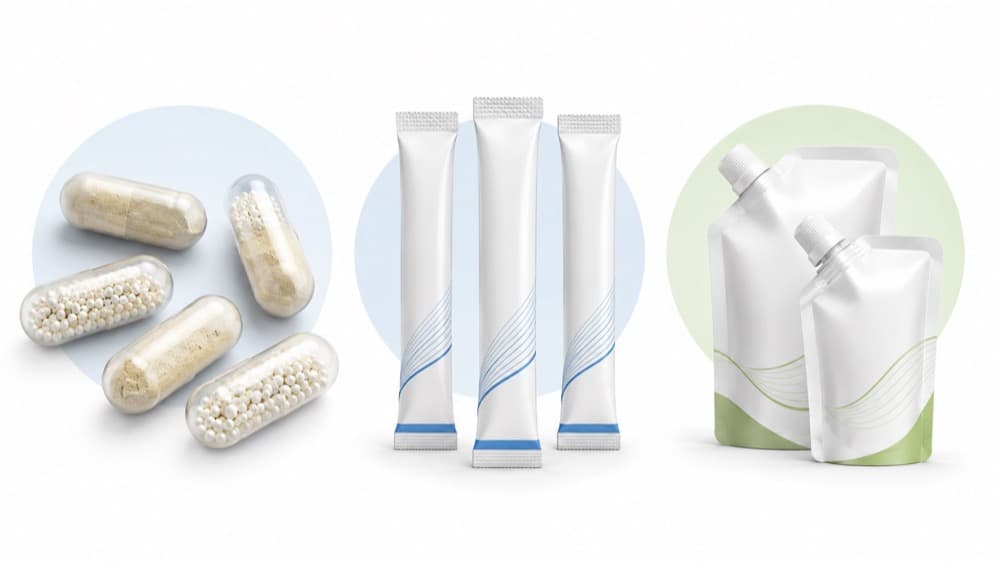
Introduction: Why Dosage Form Choices Matter in Nutraceuticals
Choosing the right dosage form is one of the most strategic decisions a nutraceutical brand makes when launching a new product line. It directly impacts absorption, user experience, regulatory positioning, and long‑term manufacturing efficiency.
For many brands, capsules have become the primary workhorse format, competing not only with tablets but also with powders, stick packs, and liquid sachets. In this article, we will compare capsules vs other supplement delivery formats from the perspective of a contract manufacturer, with a special focus on how capsule manufacturing can optimize bioavailability, production workflows, and cost structures for B2B nutraceutical brands. Drawing on the experience of River Pharm Inc., a specialized OEM/ODM manufacturer focused on capsules, small pouches, stick packs, and flexible soft pouches, we will walk through practical, production‑oriented considerations for brands scaling globally.
Understanding Capsule Bioavailability and Absorption
Bioavailability Basics for Supplement Brands
Bioavailability describes how much of an active ingredient is absorbed and becomes available for use in the body. It is influenced by ingredient solubility, particle size, excipients, dosage form, and even gut health. Capsules—especially when combined with modern excipient systems and encapsulation technologies—allow brands to build formulations that enhance solubility and protect sensitive actives until they reach the right part of the digestive tract.
From an industry perspective, this means a capsule‑based product can often outperform a poorly designed powder or chewable simply because the delivery system is engineered for absorption, not just convenience.
How Encapsulation Supports Better Absorption
Encapsulation technology allows active ingredients to be enclosed in a protective shell or matrix, improving stability and controlling where and how actives are released. Techniques such as microencapsulation, beadlets, and enteric‑coated capsules can help:
- Improve solubility of poorly soluble actives by embedding them in carrier systems.
- Protect sensitive nutrients (e.g., probiotics, enzymes, certain botanicals) from stomach acid or oxidation.
- Control release timing, for example, delayed‑release capsules for ingredients meant to act in the intestine.
When combined with optimized excipients, these strategies can significantly enhance perceived efficacy, which translates into stronger repeat purchase behavior for brands.

Capsule Manufacturing Workflow in Modern OEM/ODM Facilities
Key Steps in Capsule Manufacturing
A GMP‑compliant capsule manufacturing process follows a structured series of steps from raw material to finished goods. While exact workflows vary by project, a typical process includes:
1. Ingredient sourcing and qualification – Selecting vitamins, minerals, botanicals, and other actives from vetted suppliers and verifying identity, purity, and potency.
2. Incoming quality testing – Using analytical techniques (e.g., chromatography, microbiological testing) to ensure compliance with specifications.
3. Formulation and pre‑blend design – Determining ratios of actives, carriers, and flow agents to ensure uniform fill weight and consistent dosing.
4. Blending and homogenization – Mixing powders to achieve uniform distribution of actives across all capsules.
5. Encapsulation – Filling hard capsules or forming soft capsules using automated encapsulation lines, with real‑time checks for weight and integrity.
6. In‑process quality control – Monitoring critical parameters such as moisture content, fill weight, and capsule integrity during production.
7. Packaging and labeling – Bottling, blistering, or packing capsules into flexible packaging, plus compliant labels and lot tracking.
For brands, working with an experienced OEM/ODM partner means these steps are standardized and audited under Good Manufacturing Practices (GMP), which reduces risk and accelerates time‑to‑market.
OEM vs ODM Capsule Programs – Why It Matters
In dietary supplements, OEM and ODM models define how customized a product can be.
- OEM (Contract Manufacturing) – The brand provides a finalized formula, and the manufacturer executes production under strict specifications.
- ODM (Custom Development) – The brand provides conceptual directions (ingredients, reference products, or desired benefits), and the manufacturer's R&D team designs and validates a new formula.
Unlike generic private‑label programs, contract manufacturing and ODM approaches prioritize customization and brand‑exclusive differentiation, but they also demand more robust technical and regulatory support. For a capsule‑focused manufacturer like River Pharm Inc., this means engineering capsule blends tailored to the brand's claims, dosing preferences, and target markets, rather than re‑labelling stock formulations.
Capsules vs Stick Packs and Pouches in Production
Process Complexity and Line Efficiency
From a manufacturing perspective, capsules are often more straightforward to produce consistently at scale than certain other dosage forms.
- Capsules rely on mature encapsulation machinery, highly standardized quality checks, and stable processing parameters.
- Stick packs require powder handling plus precise vertical form‑fill‑seal operations, which introduce additional variables in sealing, fill weight, and film performance.
- Small / soft pouches for liquids or gels require liquid mixing, filling, sealing, and often more intensive cleaning and validation routines.
For brands planning multi‑SKU rollouts, a capsule‑first strategy can help stabilize production schedules and minimize downtime across product lines.
Cost Structures and Scalability
Production cost for supplements is shaped by ingredient pricing, batch size, equipment utilization, and packaging choices. Capsules often offer a favorable balance between flexibility and cost, especially for medium to large volumes:
- Tooling and setup for capsules can be amortized across many batches, making them cost‑efficient for brands with broad product portfolios.
- Packaging options (bottles, blisters, jars) are widely available, reducing unit packaging costs and lead times compared with highly customized formats.
- Stick packs and liquid pouches may carry higher material and line setup costs due to specialized packaging films and more complex sealing systems.
For growing brands, capsules often serve as the default launch format, while premium stick packs or pouches are introduced later as line extensions once demand and pricing strategies are validated.
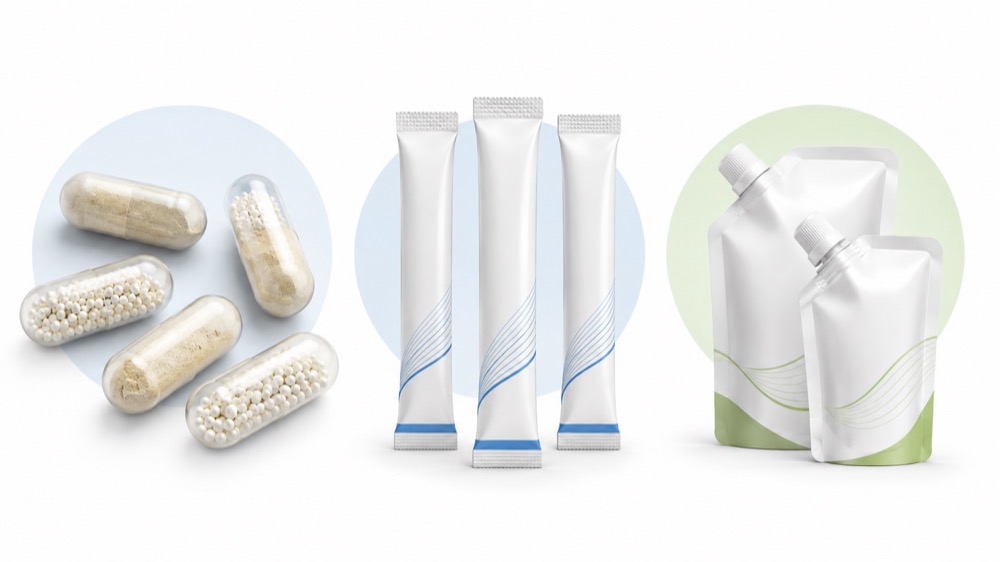
User Experience – How Capsules Shape Brand Perception
Swallowability, Taste, and Daily Routine
From the consumer's perspective, capsules offer several UX advantages compared with other formats.
- Capsules help mask unpleasant tastes or odors, which is critical for certain botanicals and amino acids.
- Many adults find capsules easier to swallow than large, dense dosage formats, especially when capsule sizes are optimized for dose.
- Capsules support discreet, routine‑friendly use, which is important for daily supplementation adherence.
Meanwhile, stick packs and liquid pouches can be more engaging for lifestyle‑positioned products (e.g., energy, hydration, beauty) where flavor and ritual matter as much as function.
Branding and Packaging Storytelling
Capsule products can still deliver strong shelf impact when supported by thoughtful branding and packaging design.
- Premium bottles and labels communicate quality and trust, especially in regulated markets. - Blister packs emphasize hygiene and dose control, often preferred in clinical or professional channels.
- For stick packs and pouches, graphic storytelling on individual sachets can reinforce on‑the‑go convenience and lifestyle positioning, but usually at a higher packaging cost per dose.
For B2B brands working with an OEM/ODM partner, aligning dosage form with brand storytelling is as important as the underlying science.
When Capsules Are the Strategic Best Choice
Ideal Scenarios for Capsule‑First Formulation
Capsules are often the best choice when:
- Multiple actives need to be combined in a precise ratio, especially when some are sensitive to light, oxygen, or moisture.
- The product requires controlled release or targeted delivery to specific parts of the digestive tract.
- The brand aims for global distribution, where capsules are familiar and widely accepted across regulatory environments.
- The SKU portfolio is broad, and the brand needs a scalable, repeatable manufacturing platform.
In these cases, capsules provide a robust technical and commercial foundation that can be optimized over time with updated formulas or line extensions.
When to Consider Stick Packs or Pouches
Other formats may be strategic when:
- The formulation is high‑dose or heavily flavored, better suited to powder drinks or shots.
- The brand competes in functional beverage or sports nutrition categories, where mix‑to‑drink or ready‑to‑drink experiences are market norms.
- The marketing concept revolves around sensory experiences (taste, aroma, texture) that capsules cannot deliver.
In practice, many brands adopt a "capsule core + sachet extensions" strategy: capsules anchor the product line for routine use, while stick packs or pouches serve as hero formats in specific retail channels or campaigns.
Expert Tips for Brands Working with Capsule OEM/ODM Partners
How to Prepare for an OEM Capsule Project
To maximize success with a capsule OEM project, brands should come prepared with:
- Clear positioning and claims – Desired functional benefits, target audience, and regional regulatory requirements.
- Preliminary formula or benchmark products – Reference labels, benchmark products, or ingredient lists to guide formulation.
- Target dosage and serving size – Preferred capsule count per day, capsule size limits, and any restrictions on animal‑derived shells.
- Stability and shelf‑life expectations – Required shelf‑life in target markets and planned storage conditions.
An experienced OEM/ODM partner uses this information to translate brand concepts into technically viable, commercially scalable capsule products.
Why Avoid Generic "White Label" Solutions
While private‑label or white‑label programs can be attractive for fast market entry, they limit customization and long‑term differentiation.
- Formulas are standardized and shared among multiple brands, reducing exclusivity.- Any change to active ingredients or dosage often requires moving away from the stock program to full contract manufacturing.
- Regulatory and scientific storytelling may not fully align with a brand's positioning, since formulations were not originally designed for that brand.
For brands aiming to build durable value, partnering with a capsule‑specialized contract manufacturer that offers OEM and ODM—but not generic "white label" stock products—helps protect IP, consistency, and brand integrity.

Call to Action for Nutraceutical Brands
If your brand is evaluating capsules vs other supplement forms, starting with a capsule‑based strategy often provides the strongest balance of bioavailability, manufacturing efficiency, and global scalability. By collaborating with a capsule‑focused OEM/ODM partner like River Pharm Inc., you can translate your functional concepts into differentiated, GMP‑manufactured products that align with your brand story and market demands.
Next step: audit your current or planned product portfolio and identify which SKUs could gain performance, cost, or compliance advantages by shifting to—or starting with—a capsule‑first approach, then engage your manufacturing partner to run feasibility and pilot batches.
FAQ: Capsules and Nutraceutical Manufacturing
Q1: Are capsules always more bioavailable than other forms?
Not necessarily; bioavailability depends on formulation design, excipients, and ingredient properties. However, capsules offer robust tools—like microencapsulation, enteric coatings, and specialized excipients—to enhance absorption compared with poorly designed powders or chewables.
Q2: What capsule sizes are most common for dietary supplements?
Most brands rely on sizes between 0 and 00, balancing dose capacity with swallowability. Larger sizes may be used for high‑dose actives, but UX and adherence often drop if capsules are perceived as too large.
Q3: Can capsules handle multi‑phase or complex formulations?
Yes, capsules are well‑suited for multi‑ingredient blends, beadlets, and even some dual‑phase designs, depending on shell type and filling method. Many OEM/ODM manufacturers use modular blending and encapsulation strategies to integrate several actives into a single capsule dose.
Q4: How long does it typically take to launch a new capsule product?
Timelines vary, but a typical path from concept to first commercial batch ranges from a few months to over half a year, depending on R&D complexity, stability testing, and regulatory review. OEM projects based on finalized formulas move faster than ODM projects requiring full formulation development and validation.
Q5: What regulatory considerations affect capsule manufacturing?
Key factors include compliance with Good Manufacturing Practices (GMP), accurate labeling, permitted claims, and ingredient regulations in each target market. Working with an experienced OEM/ODM partner can help align formulation, documentation, and labeling with relevant regulatory frameworks from the outset.
References
1. PharmaCenter. “Capsules vs Tablets: Which is Right for Your Brand?” https://www.pharmacenter.health/capsules-vs-tablets
2. Katana MRP. “Manufacturing Dietary Supplements: The Ultimate Guide.” https://katanamrp.com/blog/manufacturing-dietary-supplements
3. PharmaTech Outlook. “Encapsulation: Unlocking the Benefits in Pharmatech.” https://www.pharmatechoutlook.com/news/encapsulation-unlocking-the-benefits-in-pharmatech-nwid-3153.html
4. Colorcon. “Tablet vs Capsule: A Guide to Choosing the Best Dosage Form for Your Pharmaceutical Product.” https://www.colorcon.com/education-insights/tablet-vs-capsule-a-guide-to-choosing-the-best-dosage-form-for-your-pharmaceutical-product
5. Reliance Vitamin Co. “The Difference Between Private Label and Contract Manufacturing Programs for Dietary Supplements.” https://reliancevitamin.com/blog/the-difference-between-private-label-and-contract-manufacturing-programs-for-dietary-supplements
6. PR Labs. https://prlabs.com/blog/the-science-of-bioavailability-why-some-supplements-work-better.html
7. ATP Bio. https://www.atp-bio.com/cn/news/industry/capsule-contract-manufacturing-129.html
8. Vici Health Sciences. “Choosing the Right Dosage Form: Capsules, Tablets, and More.” https://vicihealthsciences.com/how-to-choose-the-right-dosage-form/
9. MillMax. “Contract Manufacturer, Private Label & White Label of Nutritional Supplements: Which Model Is the Right One?” https://millmax.eu/blog/contract-manufacturer-private-label-and-white-label-of-nutritional-supplements-which-model-is-the-right-one
Hot tags: Capsules Vs Other Supplement Forms, Capsule Manufacturing, Dietary Supplement OEM ODM, Capsule Contract Manufacturing, Nutraceutical Contract Manufacturing, Nutraceutical Delivery Formats, Capsule Vs Stick Pack, Nutraceutical Bioavailability, Capsule OEM Services, Capsule ODM Services
Did you find this helpful?
Comments (0)
No comments yet. Be the first to comment!
Leave a comment
Related Posts


Riverpharm · Supplement Contract Manufacturing
Your supplement brand, manufactured to the highest standard
From first formula to finished product — we handle manufacturing, packaging, and fulfillment so you can focus on building your brand.
Core services
Contract Manufacturing
GMP-certified production with full batch testing and certificate of analysis on every run.
Custom Formulation & R&D
In-house scientists develop your formula from scratch or refine existing blends for efficacy.
Packaging & Labeling
Design-to-print label service — shelf-ready, FDA-compliant, and retail-tested.
FBA Prep & Fulfillment
Amazon-ready prep and direct-to-warehouse shipping — no extra steps on your end.
By the numbers
NSF
NSF/ANSI 455-2 certified
cGMP
Certified environment
24 hr
AI-accelerated quote turnaround
600K
cGMP+ encapsulator capacity per run
Why Riverpharm
Quality systems with higher standards
- NSF/ANSI 455-2 certified
- cGMP-certified environment
- In-house + third-party testing
- Source-locked ingredients
Production capacity with faster execution
- Heavy-duty hardware
- In-house core reserves
- AI-accelerated quotes
- In-house expert hub
Delivery formats we produce
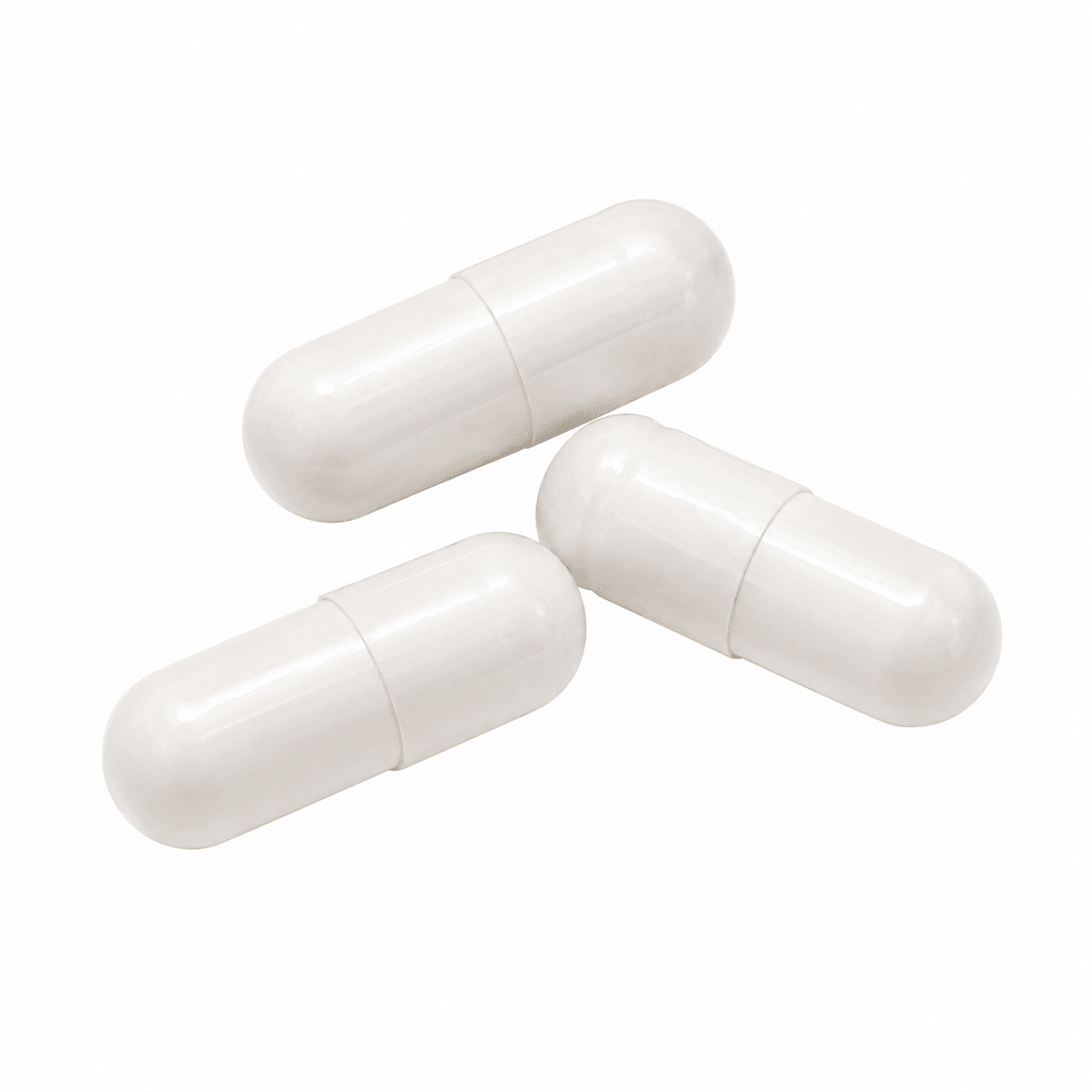
Capsules
Gelatin & HPMC vegetarian
Sachets
Single-dose powder blends
Stick packs
Convenient single-serve
Pouches
Flexible, shelf-ready
Ready to bring your supplement to market?
Free consultation · 24-hour quote · No minimum commitment to get started