Clear vs. Opaque Capsules: Protecting light-sensitive botanical ingredients from degradation
Clear vs. opaque capsules for botanical supplements: learn how capsule choice affects light protection, stability, OEM/ODM strategy, and shelf life.

When choosing between clear vs. opaque capsules, the real question is not only appearance—it is whether your botanical ingredients stay stable, effective, and market-ready throughout manufacturing, storage, and distribution. For light-sensitive actives such as carotenoids, polyphenols, essential oils, and many plant extracts, capsule opacity can directly influence product protection and shelf-life strategy.
Why Capsule Transparency Matters in Botanical Supplements
In botanical dietary supplements, light is more than a packaging concern. It is a degradation trigger that can contribute to oxidation, discoloration, potency loss, and changes in sensory quality, especially when the fill contains unstable plant-derived compounds. That is why capsule color selection should be treated as part of formulation protection, not as a purely cosmetic branding choice.
From a manufacturing perspective, the capsule shell is one layer in a broader control system that also includes ingredient sourcing, process controls, packaging, and holding conditions under cGMP expectations for dietary supplements. In other words, capsule selection should support the whole stability plan, not stand alone.
Clear Capsules: When Visibility Helps
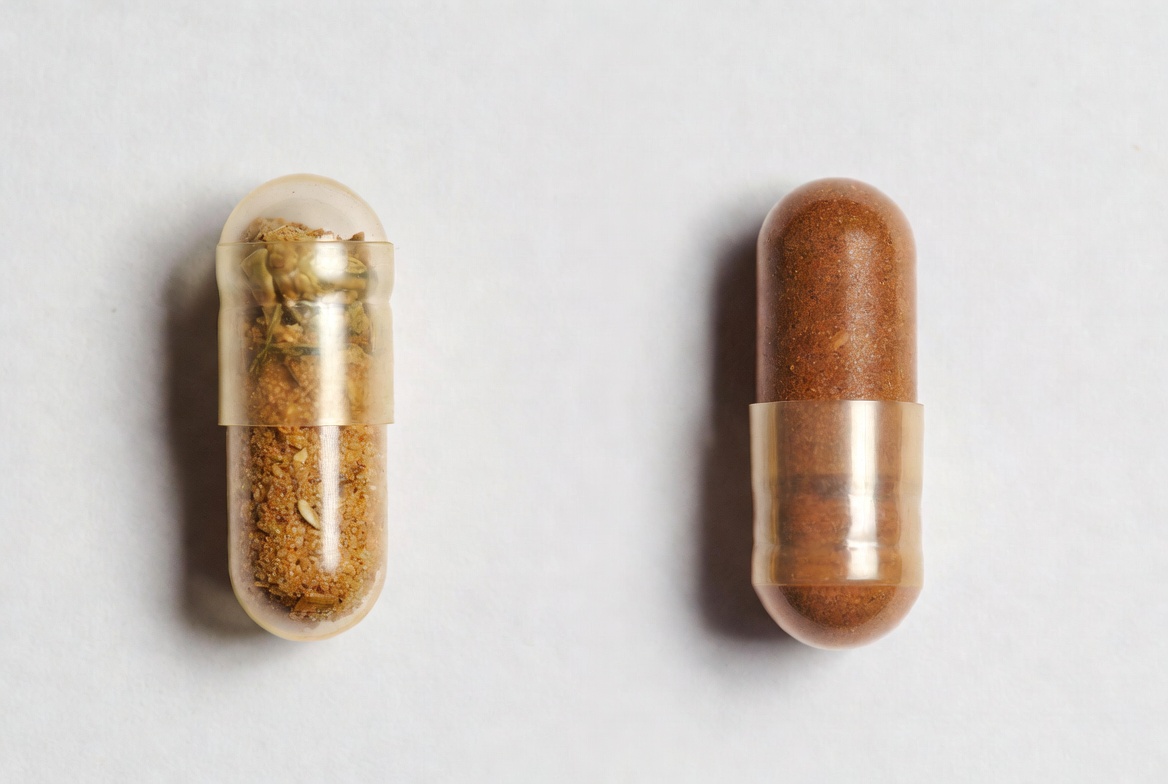
Clear capsules are often chosen when brands want consumers to see the fill, especially for premium botanical blends, colorful beadlets, or multi-ingredient formulas where transparency supports perceived trust and product appeal. They can also be useful when marketing needs to emphasize ingredient identity or demonstrate the physical quality of the contents.
However, clear capsules generally offer less light protection than opaque alternatives, so they are not the default choice for botanicals with known photosensitivity. In practical terms, clear shells work best when the formula is stable, the fill is not highly light-reactive, and the outer packaging provides stronger protection than the capsule alone.
Best-fit use cases for clear capsules
- Formulas with low light sensitivity.
- Products where visual appeal is part of the sales story.
- Transparent beadlets or layered fills that benefit from visibility.
- Brands using secondary packaging with strong light-blocking properties.
Opaque Capsules: Built for Protection
Opaque capsules are usually the stronger option when the goal is to reduce light exposure and help protect sensitive botanical ingredients from degradation. Industry guidance consistently links darker or opaque shells with better protection against environmental light, while transparent shells are used more for visual effect.
This matters especially for ingredients that are naturally prone to oxidation or photo-instability, such as lutein, astaxanthin, bilberry extracts, and other plant compounds that can be compromised by visible or UV light exposure. For these formulas, opacity is not just an aesthetic decision; it is part of the product's risk-control strategy.
Why opaque shells often win
- They help reduce direct light exposure.
- They support stability-focused positioning.
- They can improve perceived seriousness in clinical-style or premium botanical products.
- They align better with sensitive active ingredient protection.
What Actually Degrades Botanical Ingredients
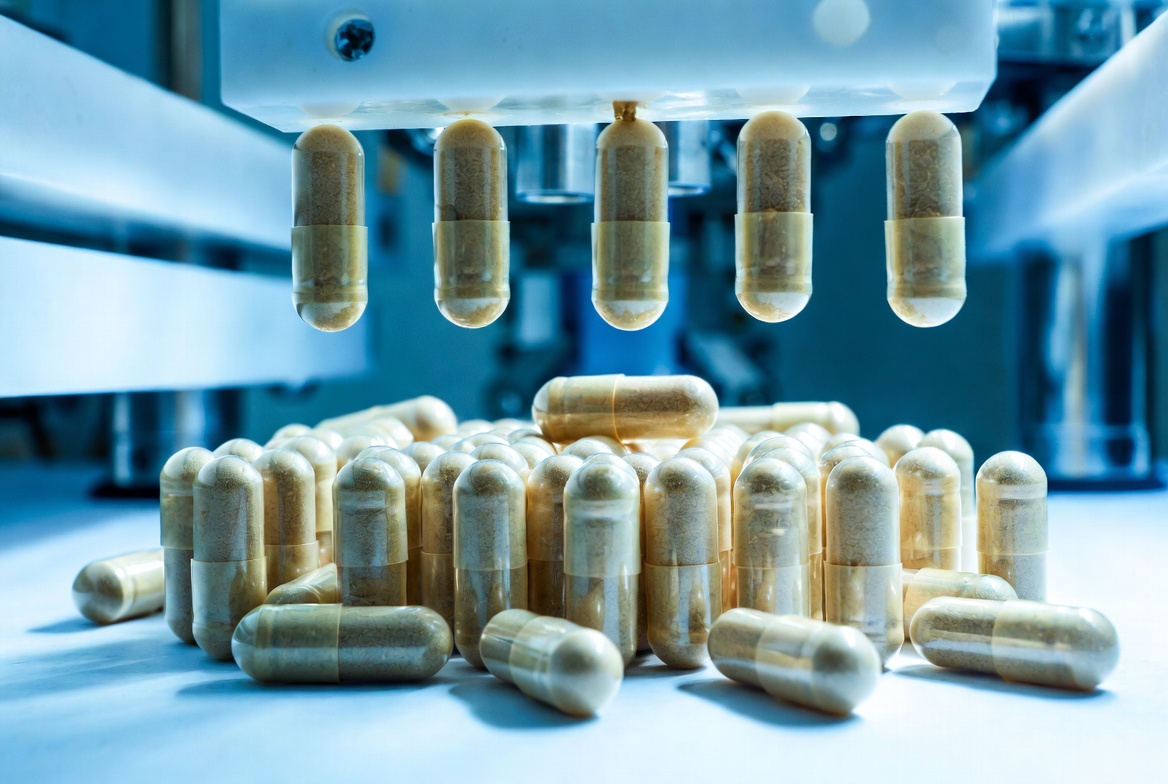
Light exposure can accelerate chemical changes in botanicals, especially when combined with oxygen, heat, or humidity. In real-world supplement manufacturing, the most common concerns include oxidation of sensitive lipids, color fading in plant extracts, and potency loss in compounds that are photosensitive.
Botanical supplements also face a broader quality challenge: raw material variability, contamination risk, and inconsistent standardization. That is why a capsule decision should be made alongside ingredient authentication, analytical testing, and batch control—not after formulation is already locked.
Ingredients that deserve extra caution
- Carotenoids such as lutein and astaxanthin.
- Polyphenol-rich extracts.
- Essential oil-based botanicals.
- Ingredients with known oxidation sensitivity.
- Multi-herb blends with unstable marker compounds.
Manufacturing Controls That Matter
At River Pharm, capsule color is only one part of a stronger quality system. Under dietary supplement cGMP expectations, manufacturers must control components, packaging, labeling, holding, and distribution in a documented way. That means the right capsule must be paired with the right raw material management, batch documentation, and environmental control.
For botanical products, quality assurance should begin with ingredient authentication and continue through contaminant screening, standardization, and release testing. If the formula is being produced in an ISO 7 cleanroom environment, that clean manufacturing context can further support consistency and reduce risk during encapsulation and handling.
A practical production checklist
1. Confirm whether the active botanical is light-sensitive.
2. Review ingredient stability data and target shelf-life.
3. Decide whether visibility or protection is the higher priority.
4. Match capsule opacity to the fill's vulnerability.
5. Use appropriate secondary packaging for extra defense.
6. Verify batch records, QC release, and storage conditions.

OEM and ODM Decisions
For OEM, the client provides the formula, so capsule selection should be evaluated early in the tech-transfer stage to avoid stability issues later. For ODM, where the client brings a reference product or a desired ingredient/function direction, capsule color can be built into the development plan from the start, making stability and branding easier to align.
Because River Pharm does not support generic white-label ODM, the development process should emphasize custom formulation logic, ingredient compatibility, and packaging decisions that reflect the product's actual technical needs. This is especially important for botanical supplements, where perceived quality and real stability must support each other.
Packaging Is Part of the Formula
One of the most overlooked truths in supplement development is that packaging is not "after the formula." For light-sensitive botanicals, capsule opacity functions like an extension of formulation science because it helps shape the environment the active ingredient experiences after manufacturing.
That is why experienced manufacturers treat capsule shell selection as part of the product's technical file. The right decision can reduce risk, improve shelf-life confidence, and lower the chance that a strong formula loses performance before the consumer opens the bottle.
When Transparency Can Hurt Trust
Clear capsules can create a premium, honest look—but only if the fill itself remains visually stable. If botanical powders darken, clump, or oxidize, a clear shell can make those changes visible to consumers, which may reduce trust even when the product is still within specification.
This is where many brands make a strategic mistake: they choose transparency for branding, but unintentionally expose the customer to visual signs of degradation. In sensitive botanical products, opacity can protect both chemistry and consumer perception.
How to Choose the Right Shell
The decision should be based on four questions:
- Is the active ingredient photosensitive?
- Does the formula contain unstable botanical markers?
- Is consumer visibility important to the sales strategy?
- Will secondary packaging provide enough additional protection?
If the first two answers are yes, opaque capsules are usually the better choice. If the latter two are the main priorities and stability risk is low, clear capsules may be acceptable with strong supporting packaging.
Conclusion
For light-sensitive botanical supplements, the choice between clear and opaque capsules is really a choice between visibility and protection. If your brand wants a formula that is technically strong and commercially reliable, capsule selection should be integrated into the product development plan from day one.
For River Pharm OEM/ODM projects, the smartest next step is to evaluate ingredient sensitivity, packaging requirements, and target shelf-life together so the finished product performs as intended from production to end use.
FAQ
1. Are clear capsules always worse than opaque capsules?
No. Clear capsules can work well for stable formulas or products where visibility is part of the brand story, but they are less protective for light-sensitive botanicals.
2. Which ingredients usually need opaque capsules?
Ingredients such as carotenoids, antioxidant botanicals, and other light-sensitive plant extracts often benefit from opaque shells and protective packaging.
3. Does opaque mean better quality?
Not automatically. It means better light protection. Real quality still depends on sourcing, testing, process control, and packaging design.
4. How does ISO 7 manufacturing help?
An ISO 7 cleanroom supports controlled production conditions, which can help reduce contamination risk and improve consistency during encapsulation.
5. Should capsule color be decided before or after formulation?
Before final locking. Capsule color should be part of the stability and packaging discussion early in development, especially for botanical formulas.
6. Can secondary packaging replace opaque capsules?
Sometimes it helps, but it should not be relied on alone for highly sensitive ingredients. The safest strategy is often layered protection: capsule shell plus appropriate outer packaging.
References
1. FDA / 21 CFR Part 111: Current Good Manufacturing Practice in Manufacturing, Packaging, Labeling, or Holding Operations for Dietary Supplements. [Link] [blog.lyfegroup]
2. van Breemen RB, et al. The Role of Quality Assurance and Standardization in the Safety of Botanical Dietary Supplements. PMC. [Link] [tci-bio]
3. CapsCanada / Lyfe Group. Guide to Capsule Color Selection. [Link] [blog.lyfegroup]
4. NutraIngredients. Tablet and Capsule Colors: Multifunctional Purpose. [Link] [nutritionaloutlook]
5. Catalent. Blue Light VEGICAPS Capsules. [Link] [consumerhealth.catalent]
6. TCI Bio. What Supplement Manufacturers Suit You Better? [Link] [tci-bio]
7. Modular Cleanrooms. Cleanroom Solutions for Nutraceutical Manufacturing. [Link] [modularcleanrooms]
8. Crescent Industries. The Key Benefits of ISO 7 Cleanroom Standards. [Link] [crescentind]
Hot Tags: Opaque Capsules, Clear Capsules, Botanical Ingredients, Dietary Supplement Manufacturing, Capsule Manufacturing, OEM ODM, Nutraceutical Manufacturing, Light Sensitive Ingredients, Cleanroom Manufacturing, Supplement Packaging
Did you find this helpful?
Comments (0)
No comments yet. Be the first to comment!
Leave a comment
Related Posts

Oct 14, 2026
Why Full-Service Supplement Manufacturing Matters for Growing Brands
Oct 13, 2026
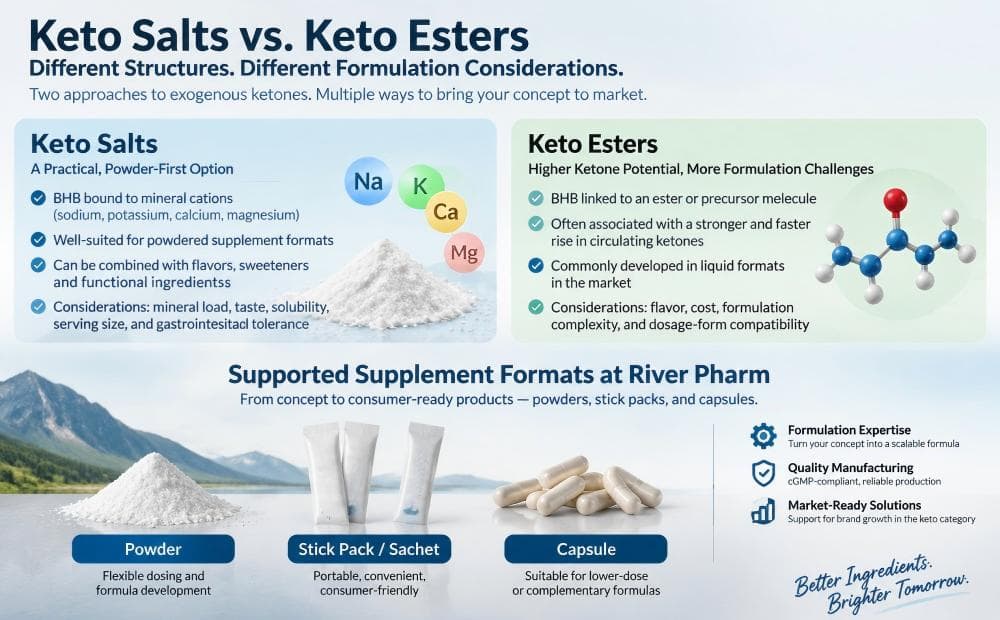
Keto Salts vs. Keto Esters: Formulation, Dose, Stability, and Manufacturing Considerations for Rapid Ketosis

Oct 13, 2026
Batch Consistency vs. Rapid Prototyping: Solving the Scaling Issues in Custom Supplement Formulation
Riverpharm · Supplement Contract Manufacturing
Your supplement brand, manufactured to the highest standard
From first formula to finished product — we handle manufacturing, packaging, and fulfillment so you can focus on building your brand.
Core services
Contract Manufacturing
GMP-certified production with full batch testing and certificate of analysis on every run.
Custom Formulation & R&D
In-house scientists develop your formula from scratch or refine existing blends for efficacy.
Packaging & Labeling
Design-to-print label service — shelf-ready, FDA-compliant, and retail-tested.
FBA Prep & Fulfillment
Amazon-ready prep and direct-to-warehouse shipping — no extra steps on your end.
By the numbers
NSF
NSF/ANSI 455-2 certified
cGMP
Certified environment
24 hr
AI-accelerated quote turnaround
600K
cGMP+ encapsulator capacity per run
Why Riverpharm
Quality systems with higher standards
- NSF/ANSI 455-2 certified
- cGMP-certified environment
- In-house + third-party testing
- Source-locked ingredients
Production capacity with faster execution
- Heavy-duty hardware
- In-house core reserves
- AI-accelerated quotes
- In-house expert hub
Delivery formats we produce
Capsules
Gelatin & HPMC vegetarian
Sachets
Single-dose powder blends
Stick packs
Convenient single-serve
Pouches
Flexible, shelf-ready
Ready to bring your supplement to market?
Free consultation · 24-hour quote · No minimum commitment to get started