Why Full-Service Supplement Manufacturing Matters for Growing Brands
Explore OEM and custom ODM supplement manufacturing for capsules, sachets, stick packs, and flexible pouches—built for differentiated brands.

Building a successful dietary supplement brand requires much more than selecting popular ingredients or designing attractive packaging. It requires a manufacturing system that can convert a product concept into a consistent, well-documented, properly packaged finished product—without losing control of quality, timelines, or brand differentiation.
For brands launching capsules, sachets, stick packs, or flexible pouches, choosing the right full-service supplement manufacturer can reduce coordination risk across formulation, sourcing, manufacturing, quality review, packaging, and delivery. The key is not simply finding a factory that can fill products. It is finding a development and production partner that can translate a clear commercial brief into a manufacturable, traceable, and market-ready supplement.
River Pharm Inc. supports brands through two defined service models:
- OEM manufacturing: The customer provides the finished formula, and River Pharm manufactures it according to agreed specifications.
- Custom ODM development: The customer provides a reference product, target ingredients, intended consumer benefit, dosage-form concept, or market direction; River Pharm supports formulation development and manufacturing.
River Pharm does not offer generic stock-formula relabeling. This approach helps brand owners develop products with a clearer point of difference rather than competing only on packaging or price.

The New Standard for Supplement Manufacturing
The dietary supplement market is becoming more sophisticated. Buyers increasingly look beyond a basic ingredient list. They compare dosage format, convenience, transparency, label clarity, flavor experience, portability, and the credibility of the product proposition.
At the same time, brands face practical operational pressure:
- More complex ingredient combinations.
- Longer supplier lead times for certain specialty materials.
- Greater scrutiny of product labels and claims.
- Demand for portable, portion-controlled formats.
- The need to launch efficiently while protecting product quality.
- Higher expectations for documented manufacturing and packaging controls.
For a growing brand, managing separate vendors for formulation, ingredient procurement, blending, encapsulation, pouch filling, label review, and packaging can create unnecessary gaps. Every handoff introduces the possibility of delay, specification drift, packaging mismatch, or unclear accountability.
A coordinated manufacturing partner can make those handoffs more manageable by aligning the product specification from the earliest stage.
The U.S. dietary supplement current good manufacturing practice framework applies to businesses that manufacture, package, label, or hold dietary supplements. It requires production and process controls designed to ensure that the finished product meets established specifications and is packaged and labeled as described in the master manufacturing record.
Full-Service Does Not Mean One-Size-Fits-All
A common misconception is that comprehensive manufacturing service means choosing a pre-made formula and applying a new label. That may suit some commercial strategies, but it does not create meaningful product distinction.
For brands that want to build a long-term category position, a more strategic model begins with the product brief.
A strong brief may include:
- Target consumer group.
- Intended use occasion, such as morning routine, post-workout, travel, sleep support, or daily wellness.
- Desired dosage form.
- Key ingredients or ingredient categories.
- Target serving size and servings per package.
- Flavor, sweetness, color, allergen, or lifestyle requirements.
- Pack format and retail channel.
- Price positioning and expected order volume.
- Label language and claims direction.
This information allows a manufacturer to evaluate whether a concept is technically feasible, commercially sensible, and suitable for the intended packaging format.
For example, a brand may request a "daily immune-support powder." That statement alone is not enough for a reliable production plan. The manufacturer needs to understand whether the brand expects a low-dose stick pack, a larger sachet for beverage mixing, sweetened or unsweetened flavoring, hot-water compatibility, ingredient sourcing preferences, and the intended market.
The more precise the product brief, the faster a development team can identify practical formulation and packaging options.
River Pharm's OEM Manufacturing Model
OEM manufacturing is appropriate when a brand has already completed its formula design and needs a capable production partner to manufacture it consistently.
In this model, the brand provides an established formula and relevant specifications. River Pharm focuses on manufacturing execution, including material handling, production planning, packaging coordination, quality controls, and finished-product delivery according to the agreed project scope.
This service model can be useful for:
- Established supplement brands transferring production.
- Importers with proprietary formulations.
- Companies working with nutritionists, R&D consultants, or in-house product developers.
- Brands that have completed ingredient selection and dosage design.
- Businesses seeking additional capacity for an existing product line.
The value of OEM manufacturing is not merely production capacity. It is the ability to produce against a controlled specification.
A professional manufacturing process should clarify key details before production begins, including:
- Ingredient identity and required documentation.
- Formula quantities and permissible tolerances.
- Allergen and cross-contact considerations.
- Packaging material specifications.
- Label version control.
- Batch coding requirements.
- Product appearance and fill-weight standards.
- Storage and shipping requirements.
In supplement manufacturing, small details can have large consequences. A change in powder density can affect stick-pack fill volume. A capsule shell choice can influence stability considerations. A pouch barrier specification can affect protection from moisture. A label revision can require review before it reaches production.
A documented process helps reduce avoidable surprises.
Custom ODM: From Product Direction to Finished Supplement
Custom ODM development is designed for brands that have a market opportunity or product concept but do not yet have a finalized formula.
Rather than relying on a generic catalog item, the brand can provide a reference product, target ingredient list, functional direction, consumer need, or dosage-format idea. River Pharm then works toward a manufacturable supplement concept and supports subsequent production.
A custom ODM project may start with one of the following directions:
- "We want a travel-friendly hydration stick pack for active consumers."
- "We want a capsule formula inspired by a leading women's wellness product, but with our own ingredient strategy."
- "We want a daily beauty-from-within powder in single-serving sachets."
- "We need a convenient nutrition product for office workers who prefer portion-controlled packs."
- "We want to combine several compatible ingredients into a differentiated supplement concept."
The development process should balance commercial intent with production reality. An attractive ingredient list may not automatically produce a stable, free-flowing powder. A desirable daily serving may not fit the selected capsule size. A reference product may use a delivery system, flavor profile, or raw material that requires adjustment for manufacturability.
That is why product development requires more than copying a market trend. It requires technical review.
A Practical ODM Development Workflow
1. Define the commercial goal.
Clarify the target customer, product category, dosage form, preferred pack format, and brand positioning.
2. Review the reference direction.
Assess the requested ingredient profile, expected daily dosage, sensory target, and format feasibility.
3. Develop the formula concept.
Select appropriate ingredients and supporting excipients based on the desired finished-product format.
4. Evaluate manufacturability.
Consider blending behavior, capsule compatibility, powder flow, hygroscopicity, fill weight, pouch dimensions, and packaging protection.
5. Confirm specifications.
Align formula, finished-product characteristics, packaging details, and documentation requirements before commercial production.
6. Move into production planning.
Establish materials, batch schedule, packaging artwork requirements, and final approval milestones.
A custom ODM program is especially valuable when a brand wants to avoid looking interchangeable with dozens of other products in the same category.
Product differentiation should begin with the formulation and user experience—not only the label design.
Choosing the Right Dosage Format
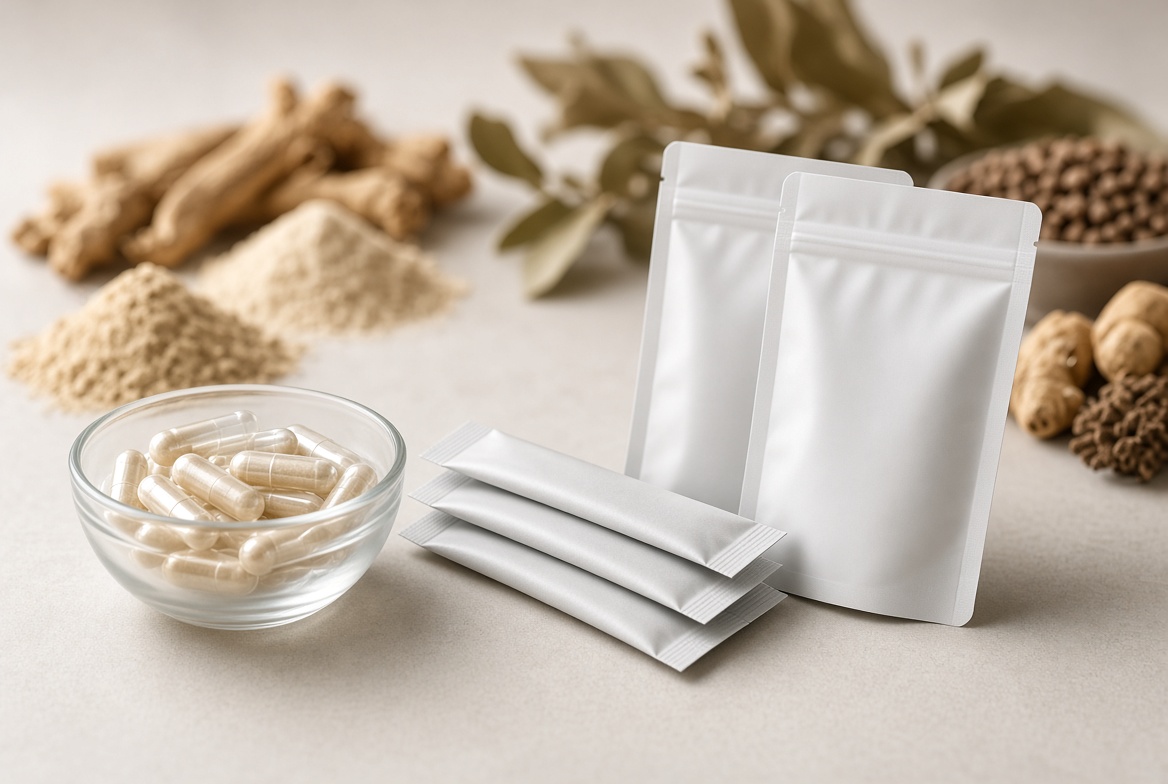
The supplement format should be chosen based on product use, formulation needs, consumer expectations, and packaging strategy. The "best" format depends on the product, not on what is most familiar.
Capsules: Familiar, Efficient, and Precise
Capsules remain a practical choice for many ingredient combinations, especially when the goal is a compact daily routine. They can support clean, straightforward positioning and may be suitable for formulas where a flavored powder format is unnecessary.
Capsules are often a good fit for:
- Botanical blends.
- Vitamins and minerals.
- Specialty nutrient combinations.
- Products designed for routine daily use.
- Brands seeking a compact, portable format.
However, capsule feasibility depends on fill weight, powder density, number of capsules per serving, and ingredient compatibility. A formula with a high daily dosage may require multiple capsules, which can affect consumer acceptance.
Sachets: Controlled Portions for Daily Programs
Sachets can work well for single-serve powders, granular products, and products designed to be mixed with water or taken as part of a daily nutrition routine.
They are useful when brands want:
- Individual dosage control.
- Cleaner distribution of multi-day programs.
- Easy sampling and trial packs.
- Better portability than tubs or jars.
- A polished presentation for retail or subscription models.
Sachets can also support product systems that include different daily servings, such as morning and evening routines. However, brands should consider powder volume, moisture sensitivity, sealing requirements, and shipping durability before selecting this format.
Stick Packs: Convenience With a Narrower Profile
Stick packs are increasingly associated with on-the-go nutrition because they are pre-measured, portable, and easy to carry. NutraIngredients reported that stick-pack launches in the vitamin, mineral, and supplement category increased 34% between 2020 and 2024, reflecting demand for low-friction, portion-controlled formats.
Stick packs may suit:
- Hydration powders.
- Electrolyte blends.
- Collagen-related powder concepts.
- Fiber or prebiotic drink mixes.
- Energy and daily wellness powders.
- Travel-oriented nutritional products.
Their slim format can improve convenience, but it also creates design constraints. The formula must fit the pack dimensions, flow consistently during filling, and remain stable throughout shelf life.
Flexible Pouches: More Space for Product Stories
Flexible pouches can offer a strong visual presence and may be appropriate for larger powder volumes, refill concepts, multi-serving products, or bundle-oriented retail programs.
They can provide room for:
- Larger product quantities.
- Resealable closures.
- More detailed instructions.
- Brand storytelling and usage guidance.
- Ingredient transparency and education.
Pouch selection should account for barrier requirements, reseal performance, filling process, storage conditions, and the expected consumer experience after opening.
Manufacturing Innovation Starts With Process Discipline
In dietary supplements, innovation is not limited to novel ingredients. It also includes better ways to control quality, reduce variability, improve packaging usability, and maintain consistency from one batch to the next.
A reliable production system should focus on the full chain of control:
- Incoming ingredient verification.
- Supplier documentation review.
- Controlled storage conditions.
- Formula-specific production instructions.
- Equipment cleaning and sanitation procedures.
- In-process checks.
- Packaging and label reconciliation.
- Finished-product release procedures.
- Batch documentation and traceability.
The U.S. framework for dietary supplement manufacturing requires production and process controls across manufacturing, packaging, labeling, and holding operations. It also requires processes designed to consistently meet established specifications.
This matters because product quality is not proven by a marketing statement. It is supported by the systems used to manage materials, production, labeling, and records.
For brand owners, the most useful manufacturing questions are often operational:
- How is ingredient identity verified?
- What specifications are set for incoming materials and finished goods?
- How are batch records maintained?
- How are labels checked before use?
- How are deviations investigated and documented?
- What controls prevent mix-ups during packaging?
- How are complaints and safety reports handled?
These are not administrative details. They are part of protecting the product, the consumer experience, and the long-term value of the brand.

Claims, Labels, and Responsible Product Communication
A supplement product may have an excellent formula and attractive packaging, but unclear or unsupported claims can create unnecessary risk.
Dietary supplement labels may use certain health-related statements, including structure/function claims that describe how an ingredient may support normal body structure or function. However, the company remains responsible for ensuring that claims are truthful, not misleading, and appropriately substantiated.
Health claims, nutrient-content claims, and structure/function claims are distinct categories with different requirements. FDA explains that health claims describe a relationship between a substance and reduced risk of a disease or health-related condition, while other claim types are governed by different standards and conditions.
For practical brand planning, this means that product claims should be reviewed early—before label artwork is finalized and before marketing assets are created.
A more responsible workflow includes:
- Aligning product language with the actual formula.
- Avoiding disease-treatment language for dietary supplements.
- Ensuring the Supplement Facts panel accurately reflects ingredients and serving amounts.
- Reviewing required disclaimer language where applicable.
- Keeping substantiation records organized.
- Maintaining consistency between packaging, website copy, advertisements, and sales materials.
According to the NIH Office of Dietary Supplements, manufacturers are responsible for evidence supporting product safety and for ensuring label claims are truthful and not misleading. It also notes that supplement labels include a Supplement Facts panel identifying active ingredients, amounts per serving, and other ingredients.
The best time to solve a claims issue is before the artwork goes to print.
A Manufacturer Selection Checklist for Brands
Before selecting an OEM or custom ODM partner, brands should evaluate more than price and minimum order quantity.
Use the following checklist during early discussions:
- Does the manufacturer support your required dosage forms?
- Can the facility handle capsules, sachets, stick packs, and flexible pouches within the same project scope?
- Does the company clearly distinguish OEM production from custom formulation development?
- Can it assess whether your formula is practical for your chosen format?
- Are product specifications established before manufacturing begins?
- Is there a documented approach to raw-material review and batch traceability?
- Does the manufacturer have a defined quality-control process for labels and packaging?
- Can it explain packaging options in relation to moisture, oxygen, fill volume, and consumer use?
- Is the project communication process clear from development through delivery?
- Does the company help you create a differentiated product rather than pushing a generic catalog formula?
A strong manufacturer should answer these questions directly. Vague answers at the quotation stage often become larger problems during production.
Build a Supplement That Is Designed to Compete
The strongest supplement brands do not treat manufacturing as a final purchasing step. They treat it as part of product strategy.
A capsule, sachet, stick pack, or pouch is not simply a container for ingredients. It shapes the consumer's daily experience. It affects portability, dosage consistency, shelf presentation, repeat purchase behavior, and the credibility of the product.
River Pharm Inc. helps brands turn clear product direction into scalable supplement manufacturing solutions. Whether you already have a finished formula and need dependable OEM production, or you have a reference product or ingredient concept that requires custom ODM development, the goal is the same: create a product that is technically practical, commercially distinctive, and ready for the market you want to serve.
Ready to develop a differentiated supplement line? Share your formula, reference product, ingredient direction, desired dosage format, and target packaging requirements with River Pharm Inc. Our team can help assess the most practical path from concept to production.
FAQ
What is the difference between OEM and custom ODM supplement manufacturing?
OEM manufacturing means the brand provides the finished formula and the manufacturer produces it according to the agreed specification. Custom ODM means the brand provides a product direction, reference product, target ingredients, or benefit concept, and the manufacturer supports formula development before manufacturing.
Does River Pharm offer private-label stock formulas?
No. River Pharm focuses on OEM manufacturing and custom ODM development. It does not offer generic stock-formula relabeling programs. This model is better suited to brands that want a formula and product experience aligned with their own positioning.
Which supplement format is best: capsules, sachets, stick packs, or pouches?
The right format depends on serving size, ingredient properties, user occasion, portability needs, and commercial positioning. Capsules may suit compact daily formulas, while sachets and stick packs can support portion-controlled powders. Flexible pouches may be suitable for larger-volume or multi-serving products.
Why should a brand discuss packaging early in product development?
Packaging affects product protection, filling feasibility, unit cost, consumer convenience, artwork layout, and logistics. A formula that performs well in a capsule may require different considerations when placed in a stick pack or flexible pouch.
What should I prepare before requesting a custom ODM project?
Prepare a clear product brief with your target consumer, intended use, reference products, preferred ingredients, desired dosage form, pack format, target market, label direction, and expected order quantity. The more complete the brief, the more effectively the project can be evaluated.
What should brands know about dietary supplement claims?
Claims must be truthful and not misleading, and brands should ensure that claim language aligns with the formula, labeling rules, and available substantiation. Product communication should avoid presenting a dietary supplement as a product intended to diagnose, treat, cure, or prevent disease.
Why are batch records important in supplement production?
Batch records create a documented history of how a product was made, packaged, and reviewed. They support traceability, specification control, investigation of deviations, and consistent manufacturing from batch to batch.
References
1. U.S. Food and Drug Administration. "[Small Entity Compliance Guide: Current Good Manufacturing Practice in Manufacturing, Packaging, Labeling, or Holding Operations for Dietary Supplements]." Explains the scope of 21 CFR Part 111, including production and process controls for dietary supplement manufacturing, packaging, labeling, and holding. [fda]
2. U.S. Food and Drug Administration. "[Label Claims for Conventional Foods and Dietary Supplements]." Explains health claims, nutrient-content claims, and the regulatory pathways used for dietary supplement label claims. [fda]
3. National Institutes of Health, Office of Dietary Supplements. "[Dietary Supplements: What You Need to Know]." Covers Supplement Facts labeling, manufacturing quality requirements, claim responsibilities, and consumer information. [ods.od.nih]
4. U.S. Food and Drug Administration. "[Guidance for Industry: Questions and Answers Regarding Adverse Event Reporting and Recordkeeping for Dietary Supplements]." Describes serious adverse-event reporting responsibilities for manufacturers, packers, and distributors. [fda]
5. U.S. Food and Drug Administration. "[How to Report a Problem with Dietary Supplements]." Provides information about reporting health problems associated with dietary supplements through the Safety Reporting Portal. [fda]
6. NutraIngredients. "[Packaging Trends and Regulations for 2026]." Discusses growth in portable packaging formats and reports a 34% rise in vitamin, mineral, and supplement stick-pack launches between 2020 and 2024. [nutraingredients]
Hot Tags: Dietary Supplement Manufacturer, Supplement OEM, Supplement ODM, Custom Supplement Formulation, Contract Supplement Manufacturing, Capsule Manufacturing, Stick Pack Manufacturing, Sachet Packaging, Nutraceutical Manufacturing, Flexible Pouch Packaging, custom, private label, manufacturing company, manufacturers, suppliers, factory, Customized, Bulk, quotation, oem
Did you find this helpful?
Comments (0)
No comments yet. Be the first to comment!
Leave a comment
Related Posts
Oct 13, 2026
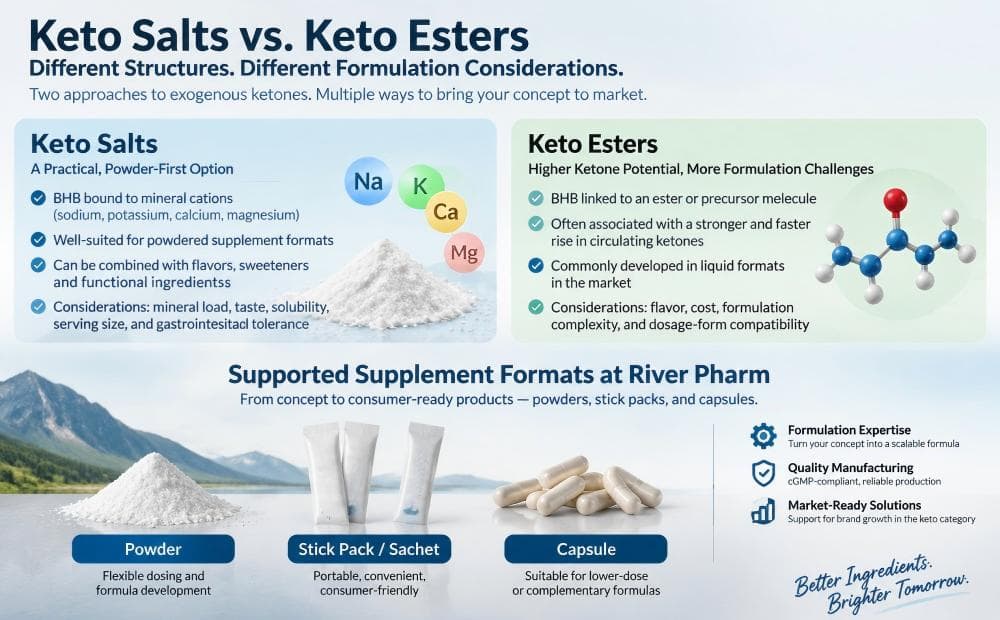
Keto Salts vs. Keto Esters: Formulation, Dose, Stability, and Manufacturing Considerations for Rapid Ketosis

Oct 13, 2026
Batch Consistency vs. Rapid Prototyping: Solving the Scaling Issues in Custom Supplement Formulation
Sep 24, 2026
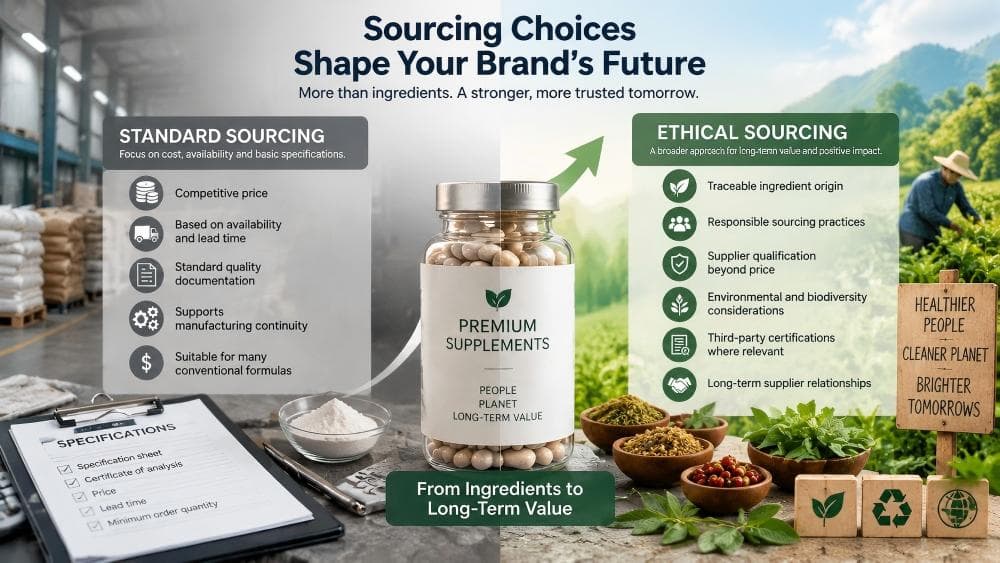
Standard Sourcing vs. Ethical Sourcing: The ROI of Sustainability in Premium Health Supplement Contracts
Riverpharm · Supplement Contract Manufacturing
Your supplement brand, manufactured to the highest standard
From first formula to finished product — we handle manufacturing, packaging, and fulfillment so you can focus on building your brand.
Core services
Contract Manufacturing
GMP-certified production with full batch testing and certificate of analysis on every run.
Custom Formulation & R&D
In-house scientists develop your formula from scratch or refine existing blends for efficacy.
Packaging & Labeling
Design-to-print label service — shelf-ready, FDA-compliant, and retail-tested.
FBA Prep & Fulfillment
Amazon-ready prep and direct-to-warehouse shipping — no extra steps on your end.
By the numbers
NSF
NSF/ANSI 455-2 certified
cGMP
Certified environment
24 hr
AI-accelerated quote turnaround
600K
cGMP+ encapsulator capacity per run
Why Riverpharm
Quality systems with higher standards
- NSF/ANSI 455-2 certified
- cGMP-certified environment
- In-house + third-party testing
- Source-locked ingredients
Production capacity with faster execution
- Heavy-duty hardware
- In-house core reserves
- AI-accelerated quotes
- In-house expert hub
Delivery formats we produce
Capsules
Gelatin & HPMC vegetarian
Sachets
Single-dose powder blends
Stick packs
Convenient single-serve
Pouches
Flexible, shelf-ready
Ready to bring your supplement to market?
Free consultation · 24-hour quote · No minimum commitment to get started