Custom Single‑Ingredient Supplement Manufacturing for B2B Brands (OEM / ODM Guide)
Custom OEM/ODM guide to single‑ingredient supplement manufacturing, from cGMP compliance and QC to capsules, powders, and B2B launch strategy.

Custom single‑ingredient supplement manufacturing is often underestimated. From an industry and practitioner perspective, it is where process discipline, regulatory alignment, and scientific rigor either strengthen your brand—or quietly erode it over time.
For serious nutraceutical brands, single‑ingredient products such as vitamin D3, magnesium, NAC, ashwagandha, or creatine are the backbone of the portfolio. They look simple on the label, yet every batch is the outcome of complex decisions around raw‑material quality, manufacturability, packaging, and quality control. As an OEM/ODM manufacturer focused on dietary supplements, our responsibility is to translate your formula or product concept into a compliant, reproducible, and scalable manufacturing program.
In this article, I will walk through how we approach single‑ingredient projects from an operational, regulatory, and quality standpoint, and what brand owners should be looking for in an OEM/ODM partner.
OEM vs. Custom ODM – Two Paths to a Single‑Ingredient Product
OEM: You Own the Formula, We Own the Execution
When you choose an OEM cooperation model, you already have a defined or near‑final formula. You understand your market, your claims, and your customer base. What you need is a manufacturing partner that can execute that formula consistently.
In an OEM project, brand owners typically provide:
- A finished or draft formula with clear dosage per serving.
- Preferred excipients, capsule size, or powder characteristics.
- Target dosage form: capsule, stick pack, sachet, or soft pouch.
- Desired label claims and positioning in the market.
From there, our OEM team focuses on feasibility and risk control. We verify whether the formula can be run reliably on our equipment, assess ingredient compatibility and flowability, and check whether the planned dose and serving size are realistic for the chosen format. At this stage, a technical review often prevents costly changes later in design, labeling, and supply.
The core value of OEM is that you retain control of the formulation while leveraging a manufacturing system that is already aligned with regulatory expectations for dietary supplements and built for scale.
Custom ODM: From Concept or Reference Product to a Unique Formula
Custom ODM is for brands that are clear on the health need and market segment, but not yet on the final composition. You may have:
- A benchmark product from another market.
- A set of clinical studies you want to align with.
- A broad direction, such as "sleep support," "healthy aging," or "immune health," and a few preferred ingredients.
In this model, we take your input and design a technically robust, manufacturable formula that fits your positioning. We consider:
- Active dose ranges based on current evidence and safety data.
- Interactions between ingredients and excipients.
- Capsule size constraints or powder serving volume.
- Stability in the chosen packaging format.
Importantly, we do not work with generic public mold ODM or simple "label‑slap" products. Every ODM project is developed as a unique formula for a specific brand. That protects your differentiation and reduces the risk of your product being commoditized in the same category.
Why Single‑Ingredient Supplements Are Not Actually "Simple"
On paper, a single‑ingredient product sounds straightforward: one active, one dose, one format. In reality, three constraints make these products technically demanding.
First, regulatory expectations for dietary supplements have continued to tighten. Manufacturers are expected to apply current good manufacturing practice, maintain written procedures, and ensure that supplements contain the ingredients and strengths declared on the label, free from unacceptable contaminants.
Second, raw material quality is highly variable between suppliers and even between lots from the same supplier. The same ingredient name can represent very different realities in terms of purity, particle size, residual solvents, or microbial profile. Without a structured qualification process, brands can see significant variation in potency and performance from batch to batch.
Third, the physical and chemical behavior of a given ingredient in a capsule, stick pack, or sachet can be very different from what appears in a laboratory notebook. Flow, compressibility, moisture sensitivity, and electrostatic behavior all determine how an ingredient behaves in real‑world manufacturing. A technically elegant formula on paper may be impossible to run at scale if these factors are not considered early.
Single‑ingredient supplements therefore require at least the same level of discipline as complex blends. They are often the products your customers use daily for months or years, making consistency and trust even more critical.
Our End‑to‑End Manufacturing Approach for Single‑Ingredient Supplements
Step 1: Ingredient Qualification and Identity Testing
Every successful single‑ingredient project starts with the raw material. Before a new ingredient is approved for use, we run a structured qualification process that covers supplier, documentation, and the material itself.
This typically includes:
- Supplier evaluation and verification of their own quality systems.
- Review of specifications, certificates, and safety data.
- Independent identity testing using appropriate analytical methods.
- Screening for relevant contaminants such as heavy metals, microbial load, pesticides, or adulterants, depending on the ingredient and market.
The goal is straightforward: to ensure that the material really is what it claims to be, within defined purity limits, and suitable for dietary supplement use. Only when the raw material has passed this gate can it be used in trial or commercial batches.
Step 2: Pre‑Formulation and Feasibility for the Chosen Format
Once an ingredient is qualified, we need to understand how it behaves in the real world. Even a single active powder can present challenges, especially when translated into targeted capsule sizes or powder serving volumes.
For capsule products, we examine:
- Bulk density and its impact on capsule size and fill weight.
- Flow characteristics to determine whether flow agents are needed.
- Compatibility with capsule shells, especially when using special materials or colors.
For powder stick packs, sachets, and soft pouches, we look at:
- Hygroscopicity and caking behavior, which affect ease of filling and shelf life.
- Dusting and electrostatic behavior, which affect equipment performance and workplace safety.
- Solubility and dispersibility, especially if the product is intended to be mixed with water or other beverages.
During this stage we may adjust the excipient system or recommend a different dosage form if the original plan is not technically robust enough. This is also when we cross‑check intended dosage levels against recognized safety and intake guidance for the ingredient.
Step 3: Pilot Batches and Process Optimization
No matter how promising a formula looks on paper, it must prove its behaviour on the production line. Pilot batches bridge the gap between theory and scale.
In pilot runs we:
- Define mixing times, equipment choices, and filling parameters.
- Measure blend uniformity, capsule or fill‑weight variation, and other in‑process controls.
- Identify potential bottlenecks, such as poor flow or unusual behavior during encapsulation or filling.
- Capture data and observations into a draft master manufacturing record.
The goal is a process that is not only technically feasible, but also stable and repeatable. Investing in this optimization step upfront reduces deviations, rework, and quality investigations later.
Step 4: Full‑Scale Production Under a Documented Quality System
Once the process is defined, we move to full‑scale production within a documented quality management framework. In a single‑ingredient project this typically involves:
- Using approved equipment that has been maintained and cleaned according to written procedures.
- Following standard operating procedures for each key step, from dispensing and mixing to encapsulation or filling and packaging.
- Conducting in‑process checks on capsule weights, powder fill levels, appearance, and packaging integrity.
- Recording all critical parameters and observations in batch records.
A disciplined approach here is not just about compliance. It creates a traceable history for every batch, which is essential for responding to customer queries, supporting regulatory reviews, or conducting root‑cause analysis if an issue arises.

Step 5: Finished Product Testing and Batch Release
Before releasing any batch of single‑ingredient product, we verify that it meets agreed‑upon specifications. This usually includes:
- Assay of the active ingredient to confirm that the product delivers the declared strength within an acceptable range.
- Microbiological testing where relevant for the ingredient and packaging type.
- Physical tests such as disintegration time for capsules or flowability and appearance checks for powders.
- Verification of packaging integrity, labeling accuracy, and coding.
Only when all predefined criteria are met do we authorize batch release. The resulting certificate of analysis becomes a key document for quality, regulatory, and customer communication.
Capsules, Stick Packs, Sachets, and Soft Pouches: Strategic Choices for Brand Owners
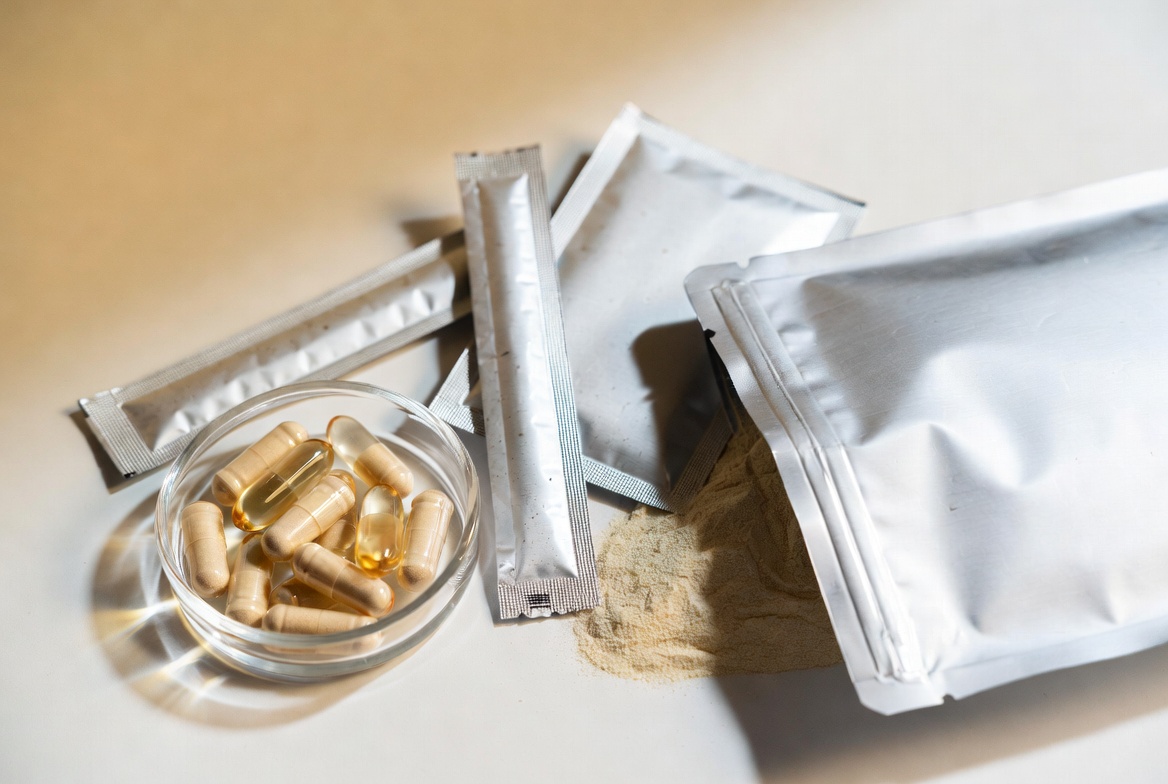
The same active ingredient can be delivered in multiple formats, each with different implications for product design, user experience, and logistics.
Capsules are often preferred in practitioner and clinical channels because they signal precision and clarity of dosing. They are easy to standardize and simple to integrate into daily routines. From a manufacturing perspective, they require a well‑controlled fill process and regular monitoring of disintegration and appearance.
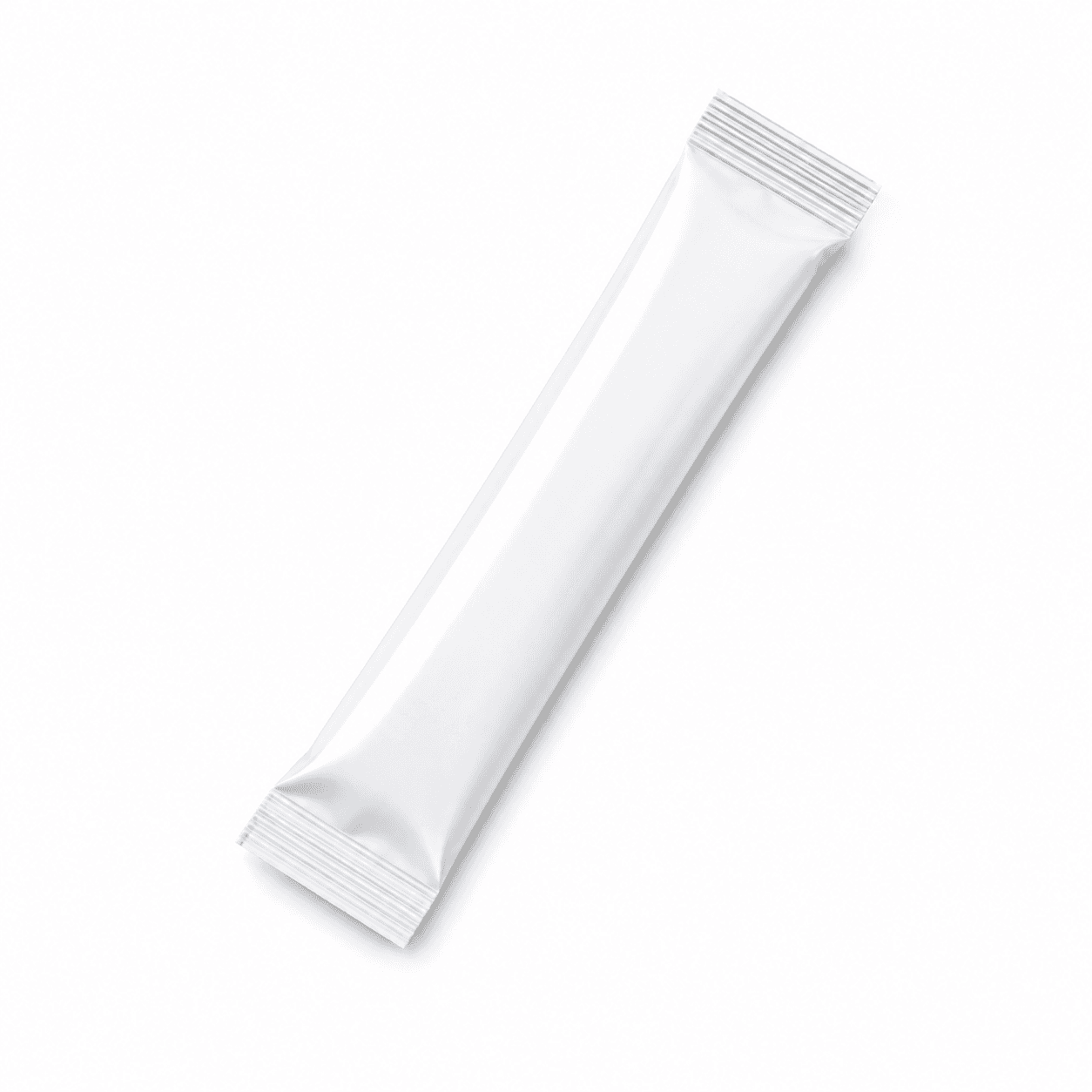
Powder stick packs are particularly strong for on‑the‑go usage and sampling. They support controlled single‑serve portions and are convenient for e‑commerce and subscription models. On the line, they require excellent blend uniformity and stable flow to ensure each stick delivers the same dose.
Flat sachets perform well when larger serving sizes are needed, or when products are sold through multiple B2B channels such as clinics, health food retailers, and online stores. Their larger format allows more branding and instructions. They place high demands on moisture control and sealing integrity.
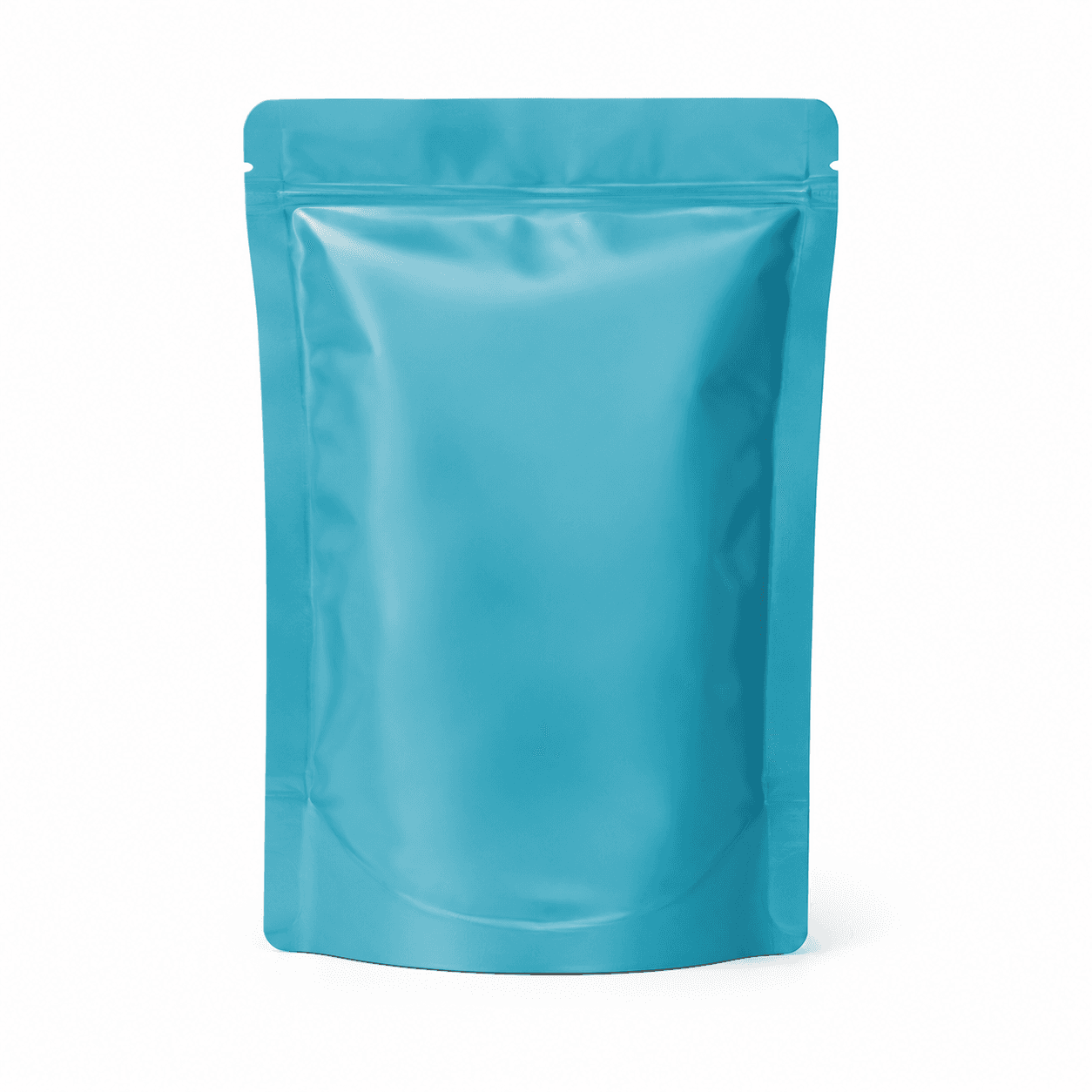
Soft pouches are attractive for bulk‑powder formats and price‑sensitive markets. They can be combined with scoops and resealable features to improve usability. Manufacturing focus shifts towards maintaining homogeneity in the bulk powder and ensuring that the packaging protects against environmental factors over the full shelf life.
Selecting the right format is not a purely marketing decision. It is a technical and operational choice that affects stability, lead times, and your long‑term cost structure.
Quality Management, Documentation, and Long‑Term Brand Protection
Within the supplement space, the difference between brands that grow steadily and those that struggle often comes down to their approach to quality and documentation.
A robust quality system does more than satisfy auditors. It ensures that:
- There are written procedures for all manufacturing, packaging, labeling, and holding operations.
- Personnel are trained and periodically retrained on those procedures.
- Deviations are documented, investigated, and used as inputs for continuous improvement.
- Records for each batch are maintained in a way that allows traceability from raw material to finished goods.
Analytical laboratories supporting dietary supplement production also need their own layer of quality assurance. Participation in structured quality‑assurance programs, use of validated methods, instrument calibration, and ongoing competency checks all contribute to reliable results. When your products are sold into professional channels or across multiple countries, regulators and institutional buyers often look at this documentation as part of vendor qualification.
For brand owners, this infrastructure translates into trust. It gives you defensible data if questions arise, and it supports your own compliance with local regulations and partner requirements.
Practical Guidance for Brands Planning a Single‑Ingredient Launch
From years of working with B2B clients, a few practical lessons stand out. If you are preparing to launch or upgrade a single‑ingredient supplement, consider the following steps.
First, clarify your evidence base and positioning before finalizing the dose. Review reputable monographs, clinical summaries, and expert consensus for your ingredient. Understand typical intake ranges, safety considerations, and how your targeted dose compares to what practitioners expect or what leading clinical studies have used.
Second, define your regulatory and channel strategy early. A product intended for the US practitioner channel will have different documentation expectations from a product optimized for mass e‑commerce. If export is on your roadmap, identify key markets and align with their regulatory and labeling requirements from the start.
Third, lock in your dosage form and packaging before artwork and marketing content go too far. Different formats impose real constraints on serving size, claims space, and logistics. Early involvement of your OEM/ODM partner can help avoid expensive redesigns.
Fourth, plan your quality documentation package. Decide what you will need to supply to your own customers, distributors, or partners. This may include certificates of analysis, allergen statements, stability data, or manufacturing summaries. Aligning this list with your manufacturer at the start prevents delays at launch.
Finally, take forecasting and supply planning seriously. Single‑ingredient products often become staples in your catalog. Aligning demand forecasts, raw‑material planning, and production capacity with your partner will help you maintain continuity of supply, protect price stability, and avoid stock‑outs during critical sales periods.
Collaboration Model: How We Work With B2B Clients
The most successful projects are those where brand owners and the OEM/ODM manufacturer work as one integrated team rather than in a simple transactional relationship.
In practice, this typically looks like:
- A technical scoping phase where we review your formula or concept and flag potential challenges.
- A structured project plan covering development, pilot, validation, and commercial batches.
- Regular project reviews to align on timelines, new regulatory information, or feedback from the field.
- A continuous‑improvement loop where production experience, customer feedback, and analytical data feed into the next manufacturing cycles.
From our side, we bring deep experience in process, quality, and regulatory alignment for dietary supplements. From your side, you bring intimate knowledge of your customers, your brand story, and your competitive landscape. When these perspectives are combined early and transparently, single‑ingredient products become a reliable long‑term asset rather than a risk.

Call to Action: Turn Your Single‑Ingredient Concept Into a Reliable Product Line
If you are planning to launch a new single‑ingredient supplement or to consolidate existing SKUs under a more controlled manufacturing program, this is the right moment to engage an OEM/ODM partner that understands both the technical and commercial sides of the business.
Prepare your concept, formula, or reference product, clarify your target dosage form and markets, and outline your documentation needs. From there, a well‑structured OEM/ODM collaboration can take you from feasibility and pilot batches to full‑scale, cGMP‑aligned production and long‑term supply.
By treating single‑ingredient supplements with the seriousness they deserve—scientifically, operationally, and commercially—you build a portfolio that can grow with you and withstand the scrutiny of practitioners, regulators, and increasingly informed end users.
References
1. U.S. Food and Drug Administration (FDA). "Dietary Supplements Guidance Documents & Regulatory Information." Available at: https://www.fda.gov/food/dietary-supplements-guidance-documents-regulatory-information
2. FDA. "Small Entity Compliance Guide: Current Good Manufacturing Practice in Manufacturing, Packaging, Labeling, or Holding Operations for Dietary Supplements." Available at: https://www.fda.gov
3. NIH Office of Dietary Supplements. "Dietary Supplements: Regulatory Challenges and Research Resources." Available at: https://ods.od.nih.gov
4. NIH / NIST. "Dietary Supplement Laboratory Quality Assurance Program." Available at: https://www.nist.gov
5. Pharmacopeial Convention. "Manufacturing Practices for Dietary Supplements (USP Chapter 2750)." Available through: https://doi.usp.org
Hot Tags: B2B Supplement Manufacturing, OEM ODM Supplements, Single Ingredient Capsules, Private Label Nutraceuticals, Contract Supplement Manufacturer, GMP Supplement Factory, Custom Capsule Production, Stick Pack Powder Supplements, Dietary Supplement OEM Partner, Nutraceutical OEM Services
Did you find this helpful?
Comments (0)
No comments yet. Be the first to comment!
Leave a comment
Related Posts

Oct 14, 2026
Why Full-Service Supplement Manufacturing Matters for Growing Brands
Oct 13, 2026
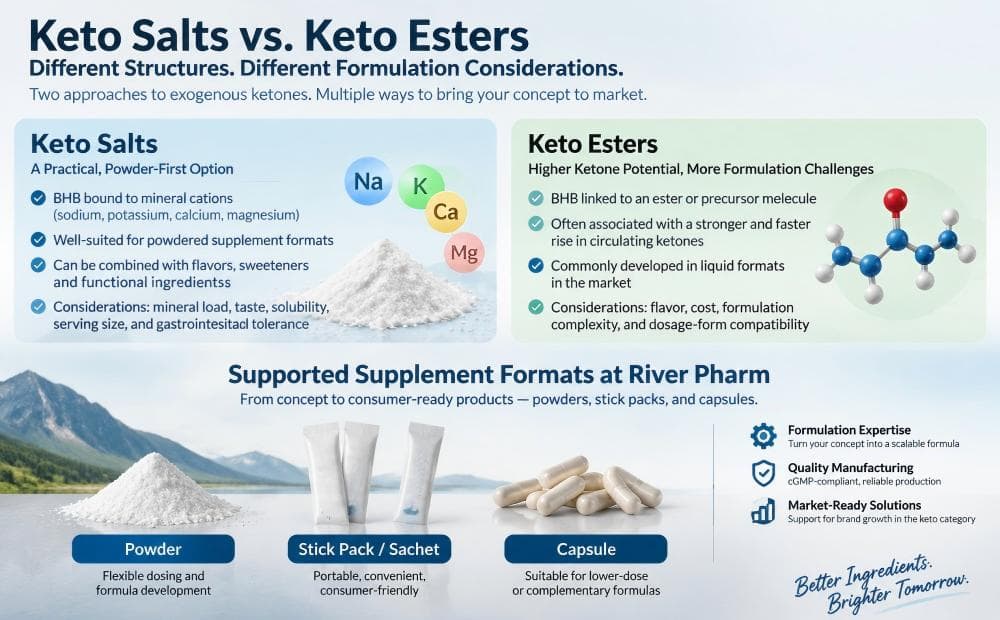
Keto Salts vs. Keto Esters: Formulation, Dose, Stability, and Manufacturing Considerations for Rapid Ketosis

Oct 13, 2026
Batch Consistency vs. Rapid Prototyping: Solving the Scaling Issues in Custom Supplement Formulation
Riverpharm · Supplement Contract Manufacturing
Your supplement brand, manufactured to the highest standard
From first formula to finished product — we handle manufacturing, packaging, and fulfillment so you can focus on building your brand.
Core services
Contract Manufacturing
GMP-certified production with full batch testing and certificate of analysis on every run.
Custom Formulation & R&D
In-house scientists develop your formula from scratch or refine existing blends for efficacy.
Packaging & Labeling
Design-to-print label service — shelf-ready, FDA-compliant, and retail-tested.
FBA Prep & Fulfillment
Amazon-ready prep and direct-to-warehouse shipping — no extra steps on your end.
By the numbers
NSF
NSF/ANSI 455-2 certified
cGMP
Certified environment
24 hr
AI-accelerated quote turnaround
600K
cGMP+ encapsulator capacity per run
Why Riverpharm
Quality systems with higher standards
- NSF/ANSI 455-2 certified
- cGMP-certified environment
- In-house + third-party testing
- Source-locked ingredients
Production capacity with faster execution
- Heavy-duty hardware
- In-house core reserves
- AI-accelerated quotes
- In-house expert hub
Delivery formats we produce
Capsules
Gelatin & HPMC vegetarian
Sachets
Single-dose powder blends
Stick packs
Convenient single-serve
Pouches
Flexible, shelf-ready
Ready to bring your supplement to market?
Free consultation · 24-hour quote · No minimum commitment to get started