Custom Whey Protein Powder Manufacturing: Trends, Formulation Strategy, and Sachet Packaging for Modern Brands
Discover whey protein powder manufacturing trends, custom formulation strategies, quality controls, and sachet packaging solutions for modern nutrition brands.

Launching a whey protein product is no longer simply a matter of choosing a protein source and a flavor. Today's successful brands need a manufacturable formula, a clear product position, dependable documentation, and a packaging format that protects product quality from filling through consumer use.
For brand owners, the opportunity is substantial—but so is the need for disciplined product development. This guide explains how to develop whey protein powders, single-serve sachets, and pouch-packed products through a practical OEM or custom ODM manufacturing approach.

Why Whey Protein Products Still Matter
Whey protein remains one of the most established protein ingredients in sports nutrition and active-lifestyle products. It is derived from milk and provides all essential amino acids. The U.S. National Institutes of Health notes that protein supports muscle building, maintenance, and repair, while whey is a complete protein source.
However, the commercial opportunity is no longer limited to traditional "post-workout shake" products. Product developers are now working across several use occasions:
- Daily protein support for busy professionals and active adults
- Workout recovery powders with protein-forward positioning
- Weight-management routines that prioritize satiety and convenient nutrition
- Healthy-aging concepts designed around maintaining dietary protein intake
- Travel and office use through pre-measured stick packs and sachets
- Hybrid nutrition concepts combining dairy protein with selected plant proteins, fiber, minerals, or other compatible ingredients
Industry forecasts continue to project expansion in whey protein demand. One market analysis estimated the global whey protein market at USD 10.5 billion in 2026, with projected growth to USD 17.5 billion by 2033. Market expansion is being supported by demand for clean-label products, blended proteins, flavored formats, and convenient delivery options.
For a brand, this means the central question is not, "Should we make whey protein?" It is: Which whey protein format, formula, sensory profile, and pack size best fit the intended user and sales channel?
Whey Protein Concentrate, Isolate, and Hydrolysate
The protein base affects nutrition positioning, taste, texture, formulation flexibility, and cost structure. Selecting the right base should happen before flavor development or packaging decisions.
Whey Protein Concentrate
Whey protein concentrate is commonly used in mainstream protein powders because it can offer a balanced combination of protein content, dairy flavor, and processing practicality.
It may be appropriate for brands seeking:
- A familiar, creamy shake experience
- Broad mainstream positioning
- Flexible flavor development
- A cost-conscious but quality-led formula
- Nutrition products for everyday active consumers
Its lactose and fat content can vary by grade and supplier specification. Therefore, brands should not rely on a generic "concentrate" description alone. The product specification should define the intended protein level, sensory target, microbiological limits, allergen status, and applicable testing requirements.
Whey Protein Isolate
Whey protein isolate is generally selected when a brand wants a higher-protein formula with lower levels of lactose and fat than many concentrate-based systems.
It can support concepts such as:
- High-protein, lower-carbohydrate formulas
- Products for consumers who prefer a lighter shake profile
- Premium sports-nutrition positioning
- Clearer macro-focused product communication
- Flavor systems designed for a less creamy, cleaner finish
Isolate-based powders can be more sensitive to formula choices. Sweeteners, acids, minerals, flavors, and instantizing systems may all influence dispersibility, foam, mouthfeel, and overall taste. A successful isolate product should therefore be validated through pilot blending and sensory evaluation rather than developed only from a formula sheet.
Whey Protein Hydrolysate
Hydrolyzed whey protein uses proteins that have been partially broken down into smaller peptides. It can be considered for specialized sports-nutrition concepts and premium formulas.
Potential considerations include:
- Distinctive flavor-management requirements
- Higher ingredient cost
- Formula positioning that requires careful, substantiated wording
- The need for a stronger sensory-development process due to possible bitterness
A hydrolysate format should not be treated as an automatic premium upgrade. If the final drink is difficult to enjoy, even a technically sophisticated formula can struggle to earn repeat purchase.
Formulation Trends That Are Practical to Manufacture
Many brands want their protein powder to look innovative. The strongest concepts, however, are not built by adding every trending ingredient to one label. They are built by choosing additions that work with the protein base, intended serving size, flavor profile, packaging format, and target market.
Clean-Label Direction With Real Formulation Discipline
Ingredient transparency remains important in the category. But a short ingredient list only has value when the product also performs well in real use.
For a custom whey protein powder, a practical clean-label direction may involve:
- A clearly identified whey protein source
- Flavor systems selected for the intended market
- Sweeteners used at sensory-effective levels
- A limited number of functional additions with defined amounts
- No unnecessary filler ingredients
- Straightforward allergen communication
- Packaging selected to help manage moisture exposure and product protection
The challenge for manufacturers is to balance simplicity with performance. For example, removing a processing aid or flavor modifier may change clumping behavior, sweetness onset, sediment, foam stability, or taste persistence. The right development process is to test the trade-off—not to make assumptions.
Functional Add-Ins Need a Purpose
Adding ingredients such as creatine, electrolytes, vitamins, minerals, fiber, enzymes, or botanical materials may support a differentiated product concept. But every addition should answer a clear question: What role does this ingredient play in the user's routine?
A better product-development brief is specific:
- "A chocolate whey protein powder designed for post-training use, with a defined amount of creatine per serving."
- "A vanilla protein sachet for daily use, with selected electrolytes for active consumers."
- "A high-protein powder with fiber designed for a more filling morning shake."
A weaker brief is vague:
- "Add more trending ingredients."
- "Make it feel more premium."
- "Use a proprietary blend."
The NIH cautions that research findings for individual ingredients do not automatically apply to multi-ingredient products. In other words, combining ingredients does not guarantee that the finished formula will deliver the same effects observed in studies of individual components.
Flavor Is a Manufacturing Requirement
Flavor is not just a marketing feature. It directly affects repeat purchase, product reviews, and brand reputation.
For whey protein powders, the development team should assess:
- Initial flavor impact
- Sweetness profile and aftertaste
- Dairy notes
- Bitterness masking
- Mouthfeel
- Foam level after shaking
- Sediment after standing
- Performance in water and milk alternatives
- Flavor stability during the intended shelf-life period
Common starting points such as chocolate, vanilla, strawberry, coffee, and cookies-and-cream can work well. Yet a familiar flavor still needs a distinct sensory target. "Chocolate" may mean cocoa-forward, milk-chocolate, dark-chocolate, malted-chocolate, or mocha. Defining that target early avoids lengthy reformulation cycles later.
From Reference Product to Custom ODM Formula
For brands without a final formula, custom ODM development is often the most useful route. The brand supplies a reference product, ingredient direction, serving format, target consumer, or desired effect. The manufacturer then develops and produces a new product based on the brief.
This is different from a simple label-change model. A true custom project requires formulation work, testing, packaging review, and production planning.
A Better Custom Development Brief
Before requesting samples, prepare the following information:
1. Target market
Identify where the product will be sold and whether it will be positioned for sports nutrition, general wellness, e-commerce, retail, or professional channels.
2. Product objective
Define the core user need, such as daily protein intake, workout recovery, convenient travel use, or high-protein meal support.
3. Protein system
State whether you prefer concentrate, isolate, hydrolysate, or a blend. If undecided, explain your desired nutrition and sensory outcome.
4. Serving size and target nutrition
Specify the approximate powder weight per serving and the intended protein amount per serving.
5. Ingredient direction
List required ingredients, excluded ingredients, sweetener preferences, allergen concerns, dietary preferences, and any reference formula details.
6. Taste target
Provide preferred flavors and a clear benchmark. If a reference product is available, share what works and what should be improved.
7. Packaging format
Indicate whether the product will use a tub, pouch, sachet, stick pack, or another flexible format.
8. Launch quantity and timing
Estimated order volume affects sourcing, packaging procurement, testing schedules, and production planning.
This level of detail allows R&D, quality, procurement, and production teams to evaluate feasibility before the project reaches a costly late stage.
Why Sachets and Stick Packs Are Reshaping Protein Powder Launches
Bulk powder tubs remain important, particularly for regular users. But sachets, stick packs, and other flexible pouch formats are increasingly valuable for brands that want portability, controlled servings, product sampling, or lower-friction trial purchases.
Pre-measured single-use formats have been identified as a key packaging trend in nutraceuticals because they support portability and dosage convenience. Flexible packaging can also help protect products from environmental factors such as moisture and oxidation when the pack structure is correctly selected.
Practical Advantages of Protein Powder Sachets
For brand owners, single-serve powder sachets can support:
- Convenient daily use at work, while traveling, or after training
- Portion consistency with a pre-measured serving
- Product sampling before a consumer buys a larger pack
- Multi-flavor variety packs
- Subscription and e-commerce fulfillment
- Reduced dependence on a scoop for end users
- Better pack-level storytelling for a compact product format
A sachet is not automatically the right answer for every formula. The powder must flow consistently through the filling process, and the finished pack must preserve quality throughout storage and distribution.
Packaging Decisions That Should Be Made Early
Packaging should be developed alongside the formula, not after it. For protein powders, the formula and pack interact.
A manufacturer should evaluate:
- Powder flow characteristics
- Particle size and dust control
- Hygroscopicity, or tendency to absorb moisture
- Seal integrity requirements
- Fill weight accuracy
- Static behavior
- Flavor and aroma retention
- Warehouse and transport conditions
- Intended shelf-life period
- Outer carton, display, and shipping configuration
For example, a high-protein formula with sensitive flavor components may require a different pouch structure than a simple flavored protein blend. Similarly, a formula with larger inclusions, certain fibers, or a high mineral load may need special attention during filling and sealing.
The packaging format is part of the product system—not an afterthought.
Quality Starts Before Blending
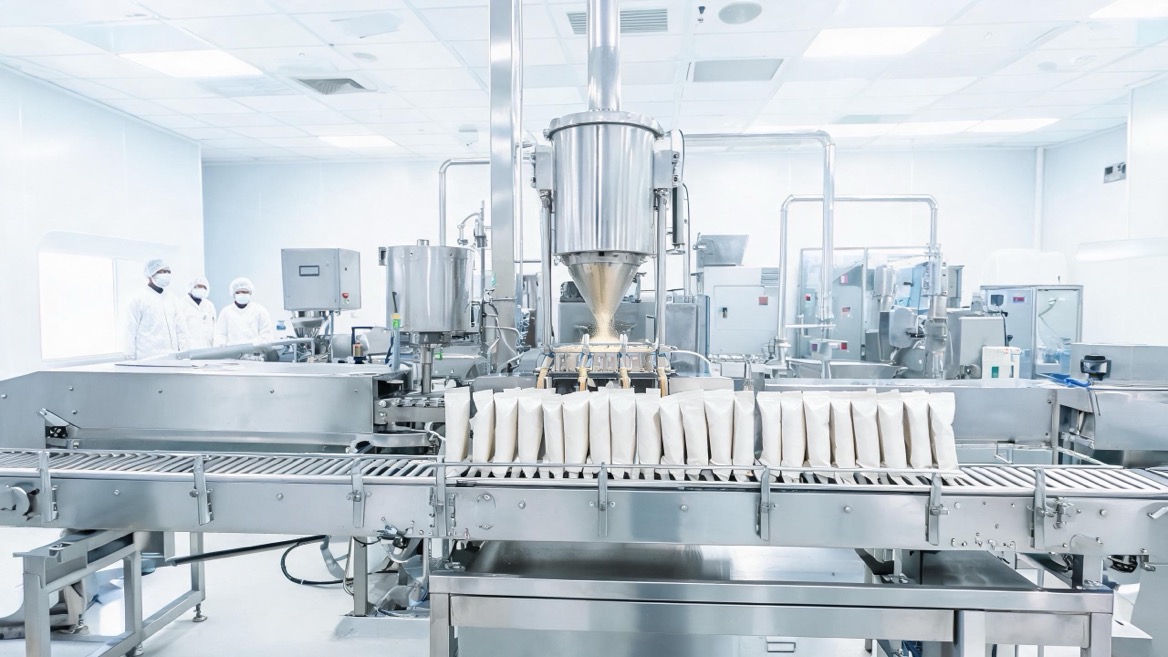
The visible manufacturing step is blending and filling. The quality system starts much earlier, with supplier qualification, incoming-material review, specifications, and documented controls.
U.S. dietary-supplement current good manufacturing practice requirements apply to companies that manufacture, package, label, or hold dietary supplements, including foreign firms making products for import into the United States. The requirements emphasize controls to ensure that products meet established specifications for identity, purity, strength, composition, and contaminant limits.
For a whey protein project, a disciplined quality approach may include:
- Reviewing supplier documentation and ingredient specifications
- Verifying incoming-material identity through appropriate methods
- Establishing defined acceptance criteria
- Maintaining master manufacturing records
- Creating batch production records
- Controlling label versions and packaging components
- Conducting relevant in-process checks
- Reviewing finished-product specifications before release
- Maintaining traceability for ingredients, packaging, and finished batches
- Investigating product complaints through documented procedures
The U.S. guidance also explains that quality control responsibilities must be distinct and that manufacturers are expected to establish written procedures for areas including laboratory operations, manufacturing, packaging, distribution, and complaint handling.
Brand Owners Still Have a Role
Outsourcing manufacturing does not mean outsourcing responsibility for product decisions. Brand owners should maintain a clear approval process for:
- Formula specifications
- Ingredient restrictions
- Label claims and required statements
- Packaging artwork
- Finished-product release expectations
- Market-specific regulatory review
- Change-control procedures
A brand should also understand exactly what it is approving. If a formula changes because of an ingredient-source adjustment, flavor replacement, or pack-material revision, the impact should be reviewed before production proceeds.
A Five-Step Development Path for Whey Protein Products
A structured project process reduces avoidable revisions and helps protect launch timing.
1. Define the Product Position
Start with the user, usage occasion, channel, target price range, and preferred format. Do not start with a long ingredient list.
For example: "A premium single-serve vanilla whey isolate sachet for travel-oriented fitness consumers" is much more actionable than "a better protein powder."
2. Set Formula Guardrails
Document the protein source, protein target, serving size, flavors, sweeteners, excluded ingredients, functional additions, allergen requirements, and target markets.
This turns a broad product idea into a workable R&D brief.
3. Develop and Evaluate Samples
Assess samples under realistic use conditions. Test in the recommended liquid, at the intended serving size, with the intended shaking method.
Record feedback on taste, sweetness, texture, foam, mixability, color, and aftertaste. One consolidated feedback round is usually more effective than multiple fragmented requests.
4. Confirm Packaging Compatibility
Select the final package after considering powder behavior, fill weight, seal requirements, barrier needs, storage conditions, and visual presentation.
For sachet programs, confirm the number of sachets per carton, serving instructions, outer-case configuration, and shipping requirements early.
5. Lock Specifications Before Production
Before production, confirm the approved formula, raw-material specifications, label artwork, packaging components, testing requirements, batch documentation, and release process.
This is the point where detail protects speed. A project that enters production with unresolved artwork, incomplete claims review, or unclear specifications risks delay and unnecessary rework.

How River Pharm Inc. Supports OEM and Custom ODM Projects
River Pharm Inc. provides manufacturing services for dietary supplements and nutritional supplements in capsules, sachets, stick packs, and flexible pouch formats.
For OEM projects, the client provides the formula and product requirements. River Pharm Inc. manufactures according to the agreed specifications.
For custom ODM projects, the client can provide a reference product, ingredient direction, desired function, target format, or market concept. River Pharm Inc. then supports formula development and manufacturing for a custom product.
River Pharm Inc. does not offer stock-formula relabeling or generic private-label ODM. The focus is on product-specific development and production that aligns with each brand's requirements.
If you are planning a whey protein powder, protein sachet, or functional protein blend, send your target market, preferred protein type, serving size, flavor direction, pack format, and estimated order volume. A clear brief is the fastest way to move from concept to a manufacturable product.
FAQ
1. What is the difference between whey protein concentrate and whey protein isolate?
Whey protein concentrate generally contains more lactose and fat than whey protein isolate, although exact values depend on the material specification. Isolate is often selected for higher-protein and lower-carbohydrate positioning, while concentrate may provide a creamier sensory profile and broader cost flexibility.
2. Can whey protein be packed in single-serve sachets?
Yes. Whey protein powders can be packed in single-serve sachets or stick packs when the formula has suitable flow properties and the packaging structure is selected to protect the powder from moisture and other environmental exposure.
3. What information is needed for a custom whey protein powder project?
A useful brief includes the target market, product purpose, protein type, target protein amount per serving, serving size, flavor direction, ingredient preferences, excluded ingredients, preferred packaging format, estimated order quantity, and launch timing.
4. Can a whey protein formula include creatine, electrolytes, fiber, or other functional ingredients?
It can, subject to formula compatibility, sensory performance, serving-size limitations, product positioning, and applicable market requirements. Each addition should have a defined role in the product concept instead of being included only because it is popular.
5. Why is pilot sampling important before mass production?
Pilot samples allow the brand and development team to evaluate taste, mixability, texture, sweetness, foam, appearance, and practical use. This helps identify issues before large-scale production and reduces the risk of costly reformulation.
6. What does OEM manufacturing mean for dietary supplements?
In an OEM project, the client provides the formula and product specifications, while the manufacturer produces the product according to the approved requirements.
7. What does custom ODM mean at River Pharm Inc.?
Custom ODM means the client provides a reference product, desired ingredients, functional direction, or product concept, and River Pharm Inc. develops and manufactures a custom formula. It does not mean selecting a generic stock formula and simply applying a new label.
References
5. [Packaging Digest — Top 4 Trends in Nutraceutical Packaging]
6. [Grand View Research — Whey Protein Market Size, Share and Trends Report]
7. [European Commission — Good Practice Guidance for the Control of Allergens]
8. [Reference Article — Whey Protein Market: Trends, Innovations & Brand Success]
Hot Tags: Whey Protein Manufacturer, Protein Powder Manufacturer, Custom Protein Powder, Whey Protein OEM, Dietary Supplement OEM, Dietary Supplement ODM, Supplement Contract Manufacturing, Protein Powder Sachets, Stick Pack Supplements, Custom Supplement Formulation, custom, private label, manufacturing company, manufacturers, suppliers, factory, Customized, Bulk, quotation, oem
Did you find this helpful?
Comments (0)
No comments yet. Be the first to comment!
Leave a comment
Related Posts

Riverpharm · Supplement Contract Manufacturing
Your supplement brand, manufactured to the highest standard
From first formula to finished product — we handle manufacturing, packaging, and fulfillment so you can focus on building your brand.
Core services
Contract Manufacturing
GMP-certified production with full batch testing and certificate of analysis on every run.
Custom Formulation & R&D
In-house scientists develop your formula from scratch or refine existing blends for efficacy.
Packaging & Labeling
Design-to-print label service — shelf-ready, FDA-compliant, and retail-tested.
FBA Prep & Fulfillment
Amazon-ready prep and direct-to-warehouse shipping — no extra steps on your end.
By the numbers
NSF
NSF/ANSI 455-2 certified
cGMP
Certified environment
24 hr
AI-accelerated quote turnaround
600K
cGMP+ encapsulator capacity per run
Why Riverpharm
Quality systems with higher standards
- NSF/ANSI 455-2 certified
- cGMP-certified environment
- In-house + third-party testing
- Source-locked ingredients
Production capacity with faster execution
- Heavy-duty hardware
- In-house core reserves
- AI-accelerated quotes
- In-house expert hub
Delivery formats we produce
Capsules
Gelatin & HPMC vegetarian
Sachets
Single-dose powder blends
Stick packs
Convenient single-serve
Pouches
Flexible, shelf-ready
Ready to bring your supplement to market?
Free consultation · 24-hour quote · No minimum commitment to get started