Fermented Herbal Supplements vs. Raw Extracts: Which Offers Higher Bioactive Compound Concentration?
Compare fermented herbal supplements and raw extracts to learn how fermentation, standardization, testing, and dosage format shape bioactive content.
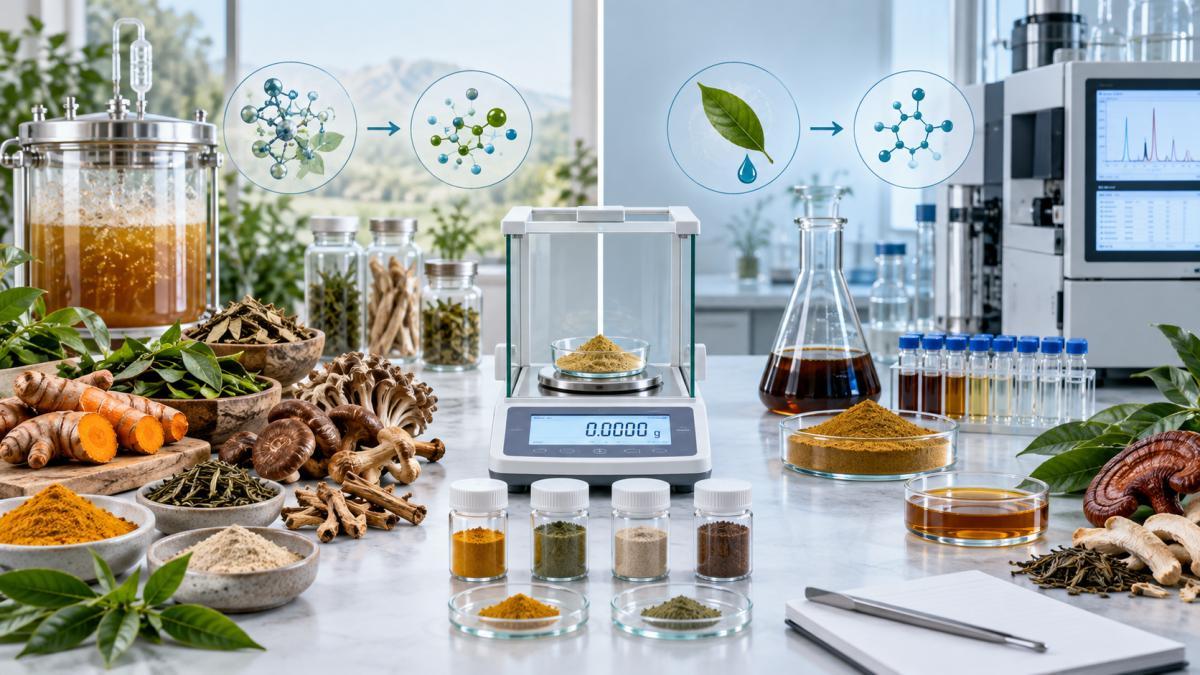
When brands compare fermented herbal supplements vs. raw extracts, the central question is often framed too narrowly: which ingredient has more bioactive compounds? In practice, the better question is: which process delivers the target bioactive compounds in a measurable, stable, and formulation-ready form?
A fermented botanical ingredient can convert or release certain compounds that are bound within the plant matrix. A raw herbal extract, however, can offer highly controlled standardization when the desired marker compound is already known and can be reliably concentrated through extraction. The answer is not that fermented ingredients always win—or that raw extracts are always more potent. It depends on the herb, the target compound, the fermentation organism, the extraction method, the dosage form, and the testing strategy.
For brands developing botanical capsules, sachets, stick packs, or soft pouch supplements, the most commercially useful choice is the one supported by a clear specification: identity, marker profile, assay method, stability target, contaminant limits, and finished-product dose.
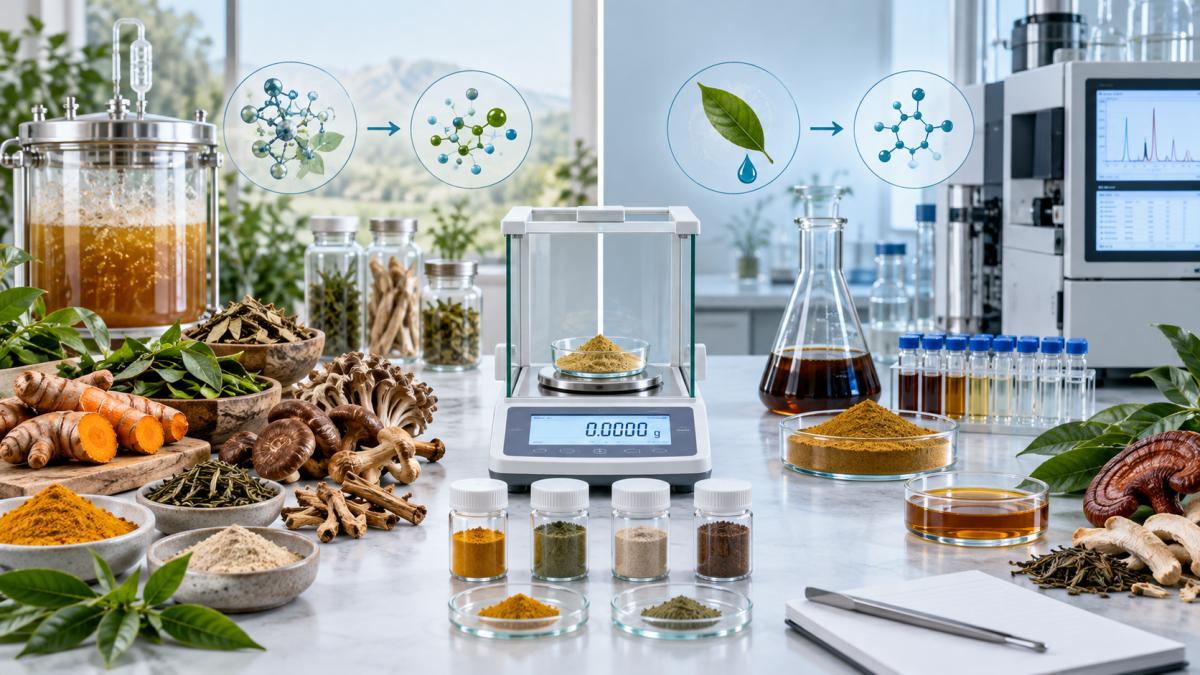
The Short Answer: Concentration Depends on What You Measure
Fermented herbal supplements may have a higher concentration of certain free, transformed, or newly generated bioactive compounds. This is particularly relevant when microbial enzymes break down plant cell-wall structures, hydrolyze glycosides, reduce some antinutritional factors, or produce small metabolites during controlled fermentation.
Raw herbal extracts may provide a higher concentration of a specific standardized marker compound, especially when a manufacturer uses a selective extraction and concentration process. For example, if a brand requires a defined percentage of a particular polyphenol, saponin, alkaloid, or curcuminoid, a standardized raw extract can be designed around that specification.
The key distinction is this:
- Fermentation can change the form and accessibility of compounds
- Extraction can concentrate selected compounds
- Neither result should be assumed without analytical testing
- Higher total content does not automatically mean higher usable activity
- A stronger claim requires evidence from the finished ingredient or final formula
Research on fermented plant materials shows that fermentation may reduce phytates and tannins, release phenolic compounds from complexes, and change the profile of antioxidants, peptides, vitamins, and other metabolites. Yet the direction and scale of change vary substantially by plant material, microbial strain, processing time, temperature, pH, and storage conditions.
What Is a Fermented Herbal Supplement?
A fermented herbal supplement begins with a botanical material, such as an herb, root, fruit, leaf, mushroom, algae, or plant blend. The material is exposed to selected microorganisms under controlled conditions.
Depending on the development plan, these microorganisms may include:
- Lactic acid bacteria
- Yeast
- Bacillus species
- Fungal cultures
- Mixed microbial cultures
- Proprietary starter cultures selected for enzyme activity
During fermentation, microbial enzymes can act on the botanical substrate. The process may break down larger structures, transform precursor compounds, release bound compounds, or create metabolites that were not present in the original raw botanical at the same level.
For example, fermentation can hydrolyze glycosidic bonds. In simple terms, a plant compound attached to a sugar group may be converted into a different form, sometimes called an aglycone. In some botanical categories, these transformed forms may be more readily measured as free compounds or may show different behavior in laboratory activity assays.
However, fermentation is not simply "letting herbs sit with microbes." For supplement brands sourcing fermented botanical ingredients, the raw-material supplier should use a documented and controlled fermentation process. Relevant supplier documentation may cover:
1. Raw material identification and incoming quality specifications
2. Selection of fermentation substrate and microbial culture
3. Defined temperature, time, pH, and oxygen conditions
4. Controlled termination or stabilization of the process
5. Drying, concentration, or blending steps
6. Microbiological and chemical testing
7. Stability evaluation in the intended dosage form
A controlled fermentation process differs significantly from spontaneous fermentation. Controlled systems use defined cultures and operating parameters to reduce variability and support reproducibility. Scientific reviews note that fermentation outcomes can differ widely depending on the plant material and the specific fermentation conditions used.
What Is a Raw Herbal Extract?
A raw herbal extract is made by processing botanical material with a solvent or extraction medium to isolate selected compounds from the plant matrix. Depending on the herb and intended marker profile, the process may use water, ethanol, hydroalcoholic systems, glycerin, or other suitable extraction approaches.
The extract may then be:
- Filtered
- Concentrated
- Dried into powder
- Standardized to a marker compound
- Blended with an approved carrier
- Converted into capsules, powder sachets, stick packs, or liquid-oriented pouch formats
A raw extract does not necessarily mean a minimally processed ingredient. In the supplement industry, the word "raw" is often used to distinguish a conventional extract from a fermented botanical ingredient. In reality, a standardized extract can involve sophisticated processing, solvent recovery, concentration, drying, and analytical verification.
The major strength of a standardized extract is precision. A brand may specify an extract ratio, a minimum marker content, a solvent system, or a finished dosage amount. This makes raw extracts particularly attractive when product positioning depends on a recognizable quantitative statement.
For example, a development brief may specify:
- A botanical extract standardized to a defined polyphenol level
- A root extract standardized to a defined class of triterpenes
- A tea extract standardized to catechins
- A botanical blend standardized to total flavonoids
- A mushroom extract standardized to polysaccharides and beta-glucans
The limitation is that a familiar marker compound is not always the only relevant compound in a plant. A narrowly standardized extract may have less of the broader matrix than a whole-spectrum preparation. Whether that matters depends on the product concept, target consumer, substantiation plan, and applicable market requirements.
Fermentation Changes Profiles, Not Just Percentages
The phrase "higher bioactive compound concentration" can create confusion because concentration may refer to several different measurements.
A laboratory can measure:
- Total phenolic content
- Total flavonoid content
- Individual marker compounds
- Free versus bound compounds
- Glycoside versus aglycone forms
- Antioxidant capacity assay results
- Peptide profile
- Organic acid profile
- Polysaccharide profile
- Microbial metabolites
- Bioaccessibility during simulated digestion
These measurements are not interchangeable.
A fermented ingredient may show a higher total phenolic result but a lower level of one specific original plant marker. Another product may show lower total phenolics but a higher concentration of a selected compound after extraction. A third ingredient may have a changed profile that looks favorable in a laboratory assay but has limited human evidence.
This is why the correct formulation question is not simply, "Which one is stronger?"
It is:
> Which ingredient provides the right active profile, at the right dose, with batch-to-batch consistency, for the product's intended positioning?
Research on fermented plant-based foods and extracts indicates that microbial processing can increase the availability of some compounds by reducing phytates and tannins or by releasing compounds from complexes. At the same time, studies also report losses in certain vitamins, pigments, and antioxidants depending on the botanical substrate and processing conditions.
Why Fermentation May Increase Some Bioactive Compounds
Fermentation can improve the measurable level of certain bioactive compounds through several mechanisms.
Enzyme-Mediated Release of Bound Compounds
Plants naturally contain bioactive compounds bound to fibers, cell walls, sugars, proteins, or other structures. Microbial enzymes may help release some of these compounds.
For example, enzymes such as beta-glucosidase can contribute to the conversion of glycoside-bound compounds into free forms. In soy-based research, fermentation has been associated with conversion of isoflavone glycosides into aglycones such as genistein and daidzein, although the final result depends on the strain and process used.
For a supplement developer, this means a fermented herbal ingredient may offer a different chemical profile, not merely a larger amount of the same compounds.
Reduction of Some Antinutritional Factors
Certain plant materials contain phytates, tannins, and other components that may bind minerals or interact with other nutrients. Fermentation can reduce some of these compounds through microbial enzyme activity.
A review published through the National Institutes of Health's PubMed Central archive reports that fermentation may reduce phytates and tannins and can improve the availability of minerals in some plant-based materials. The same review emphasizes that outcomes vary by food matrix and fermentation conditions.
For herbal supplement brands, this may be relevant when developing formulas that combine botanical powders with minerals, plant proteins, or nutrient-dense fermented ingredients.
Production of New Metabolites
Fermentation is an active biochemical process. Microorganisms can generate organic acids, peptides, amino-acid derivatives, and other metabolites. In certain plant systems, fermentation has also been associated with changes in gamma-aminobutyric acid, bioactive peptides, and antioxidant-related compounds.
This creates an important distinction: a fermented ingredient may deliver value because it contains newly formed metabolites, not only because it contains more of the original plant constituents.
Better Access to the Plant Matrix
Some botanicals contain valuable compounds that are difficult to release from dense cell structures. Fermentation can partially pre-process the plant substrate. This may improve extraction efficiency or alter the availability of selected compounds in a final powder or concentrate.
But this benefit should never be generalized across all herbs. The effect is botanical-specific. Fermented bamboo shoot, fermented soybean, fermented tea, fermented turmeric, and fermented fruit materials can each behave differently because their chemical matrices are different.
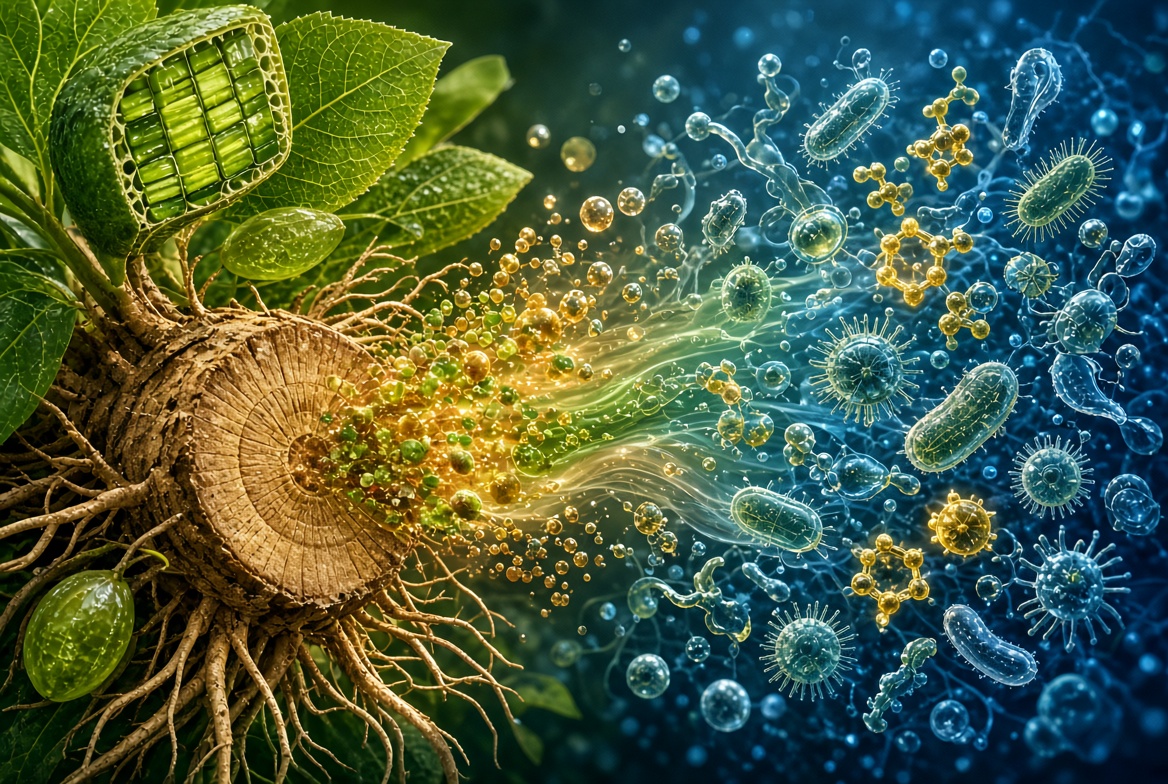
Why Raw Extracts Can Deliver Higher Targeted Concentration
A raw extract can be the more effective choice when a brand needs a precise, concentrated, and assayable active profile.
Standardization Around a Defined Marker
If the product concept depends on a known target compound, raw extraction may provide more direct control. The process can be optimized to concentrate selected compounds while reducing unwanted plant solids.
This is especially useful when the final dose is limited by capsule size, stick pack serving size, taste, color, or cost.
A 500 mg capsule cannot hold unlimited herb powder. A concentrated extract may help a brand deliver a meaningful amount of a marker compound without requiring multiple large capsules.
Lower Dose Burden
Many raw botanical powders require several grams per serving. A concentrated extract can reduce the amount of material needed, which can be helpful for:
- Daily capsules
- Travel-friendly sachets
- Slim stick packs
- Multi-ingredient blends
- Consumer-friendly serving sizes
A fermented powder may also be concentrated after fermentation, but it must be tested to confirm the final active profile after drying and processing.
Easier Specification Setting
A raw extract is often easier to purchase against an established specification. A brand can define a minimum active content, moisture range, microbial limit, heavy-metal limit, pesticide requirement, solvent expectation, and botanical identity standard.
For a fermented ingredient, these requirements remain essential, but the specification may need to be broader. It may include the original botanical identity, microorganism identity, fermentation endpoint, metabolite profile, marker compounds, and microbiological status.
A Practical Example: Choosing a Turmeric Ingredient
Imagine a brand wants to launch a botanical capsule featuring turmeric.
A conventional turmeric extract may be appropriate if the brand needs a formula standardized to a defined curcuminoid percentage. The development team can select a target dose, calculate capsule fill weight, and establish an assay specification for curcuminoids.
A fermented turmeric ingredient may be appropriate if the development concept focuses on fermentation-derived transformation, a broader botanical story, or a different sensory and ingredient narrative. However, the finished fermented ingredient should still be tested for its specific marker profile and not assumed to have a higher curcuminoid content than a standardized extract.
Research reviewed in a 2024 scientific publication includes clinical and experimental discussions of fermented turmeric preparations, but the broader evidence base remains highly ingredient-specific. A result from one fermented turmeric process cannot automatically be transferred to another botanical, another strain, or another manufacturing process.
This is why formulation teams should avoid copying ingredient claims across unrelated fermented botanicals.
The Hidden Issue: Bioavailability Is Not the Same as Concentration
A common development mistake is treating bioactive compound concentration and bioavailability as identical concepts.
They are not.
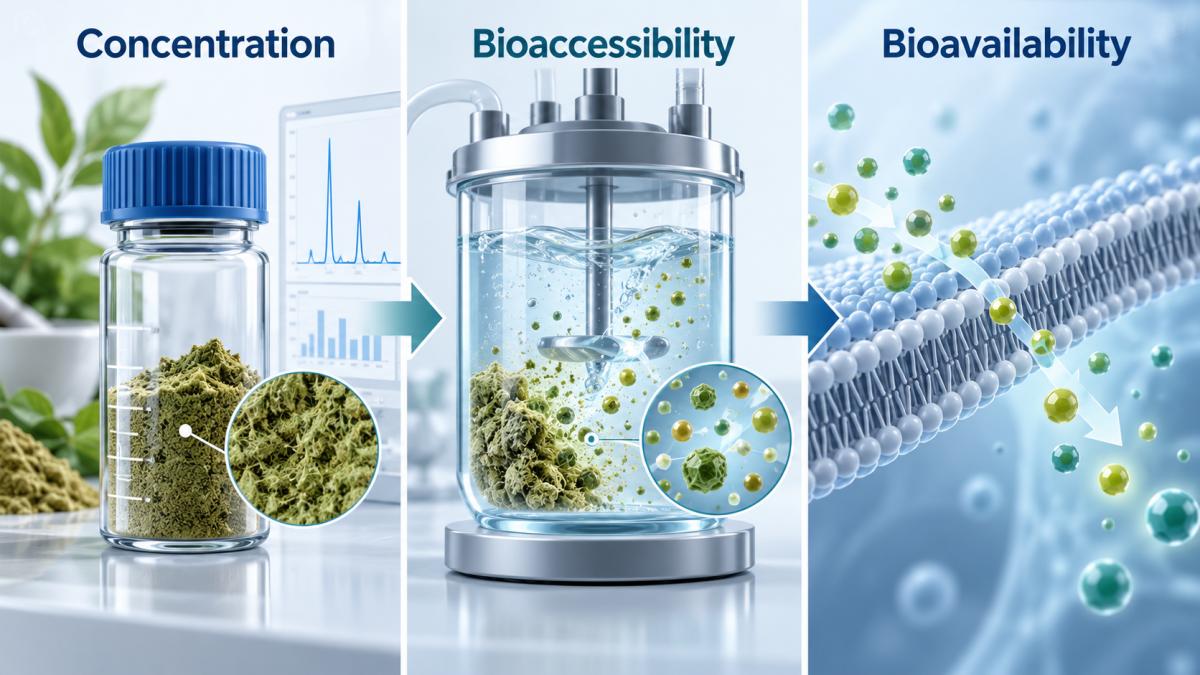
Concentration refers to the amount measured in the ingredient or finished product.
Bioaccessibility refers to how much may be released from the product matrix during digestion.
Bioavailability generally refers to the fraction that reaches systemic circulation or is otherwise available for physiological use.
An ingredient can show a high assay result but low bioavailability. Another ingredient may contain a lower total amount but appear in a more accessible form. A third may look promising in a cell-based or antioxidant assay but lack sufficient human data.
Fermentation may support bioaccessibility by changing compound forms, reducing certain binding factors, or breaking down parts of the plant matrix. However, scientific reviews repeatedly stress that evidence varies across materials and that more human research is needed for many fermented plant products.
For product development, the safest path is to avoid broad claims such as:
- "Fermentation guarantees superior absorption"
- "Fermented herbs are always more potent"
- "Raw extracts are less effective"
- "Higher antioxidant score proves greater benefit"
Instead, build claims around what has actually been tested for the ingredient and the finished formula.
How to Evaluate Which Ingredient Is Better
A useful decision framework begins with the brand's actual development brief.
Start With the Product Objective
Ask these questions before selecting a fermented botanical ingredient or a standardized herbal extract:
- What botanical ingredient is central to the formula?
- Which compounds matter most to the product concept?
- Is the goal a marker-standardized product or a differentiated fermented botanical?
- What dosage form will be used?
- How much active material can fit into one serving?
- Does the formula need a clean taste for sachets or stick packs?
- Will the formula include vitamins, minerals, amino acids, probiotics, or other botanicals?
- What markets will the product enter?
- What analytical method will verify the active profile?
A capsule formula may prioritize high concentration and low fill weight. A powdered sachet may allow larger botanical doses and may support a more complex fermented blend. A stick pack may require careful control of flavor, hygroscopicity, and powder flow. A soft pouch may require extra attention to moisture, microbial stability, and packaging compatibility.
Request Comparable Test Data
When comparing a fermented botanical with a raw extract, do not compare only supplier marketing sheets. Request comparable analytical data.
The data package should include:
- Botanical identity and plant part
- Country or region of origin where relevant
- Supplier-provided extraction or fermentation process summary for the finished raw material
- Target compound assay
- Test method used
- Batch-specific certificate of analysis
- Microbiological test results
- Heavy-metal testing
- Pesticide and residual-solvent data where relevant
- Moisture and water activity
- Stability data
- Allergen and carrier information
- Particle size and flow characteristics for powder formats
The comparison must be like-for-like. Comparing "total polyphenols" from one method with "specific flavonoid marker" from another does not answer which ingredient has more relevant bioactive content.
Test the Finished Product, Not Only the Ingredient
This point is often overlooked.
A high-performing ingredient may change after blending, granulation, encapsulation, drying, storage, or exposure to moisture. In multi-ingredient formulas, botanical compounds can interact with minerals, acids, sweeteners, flavors, or protein materials.
For a finished supplement, test the final dosage form for:
- Marker content at release
- Marker content through shelf life
- Microbial limits
- Disintegration for capsules where applicable
- Powder uniformity
- Moisture uptake
- Packaging compatibility
- Sensory stability for flavored sachets and stick packs
Under U.S. dietary supplement manufacturing requirements, firms are expected to establish specifications for components, in-process materials, packaging and labels, and finished dietary supplements, along with quality-control operations and documentation.
Consistency Is the Real Commercial Advantage
From a manufacturing perspective, the most valuable ingredient is not simply the one with the highest one-time laboratory number. It is the one that can be produced consistently across batches.
For fermented herbal ingredients, brands and supplement manufacturers should source from qualified raw-material suppliers that document and control factors such as:
- Microorganism strain selection
- Inoculation level
- Raw botanical quality
- Particle size
- Water activity
- Fermentation temperature
- Fermentation duration
- pH endpoint
- Oxygen exposure
- Enzyme activity
- Drying conditions
- Storage conditions
For raw extracts, batch consistency requires control over:
- Plant identity and plant part
- Harvest and post-harvest handling
- Solvent system
- Solvent-to-material ratio
- Extraction time and temperature
- Concentration process
- Drying method
- Carrier level
- Marker assay method
- Storage and packaging
The strongest sourcing and product-development strategy is to treat both formats as specification-driven ingredients. Fermentation is not automatically inconsistent, and extraction is not automatically precise. Both should be sourced from qualified raw-material suppliers with documented process controls, appropriate specifications, and fit-for-purpose testing.
Which Format Fits Different Supplement Types?
Capsules
Capsules are often ideal for standardized raw extracts because they can deliver concentrated actives in a compact format. They can also work well for fermented botanical powders, especially when the ingredient is spray-dried, low in moisture, and compatible with encapsulation flow requirements.
For a capsule formula, consider:
- Capsule fill weight
- Bulk density
- Flowability
- Marker dose per capsule
- Excipient compatibility
- Disintegration performance
- Hygroscopicity
Sachets and Stick Packs
Sachets and stick packs provide more room for larger serving sizes and can support botanical blends, fermented powders, fibers, electrolytes, amino acids, and flavored functional formulas.
For fermented herbs, sachets may be useful when the product concept benefits from a higher serving amount than a capsule can hold. However, taste, aroma, moisture sensitivity, and clumping risk must be addressed during development.
Soft Pouches
Soft pouch packaging can support ready-to-use or semi-solid supplement formats, but fermented ingredients require particularly careful control of moisture, microbial stability, pH, and packaging-barrier performance.
A fermented botanical ingredient should not be assumed to remain stable simply because it was fermented. The final package system must be evaluated based on the actual formula.
A Clear Recommendation for Brands
Choose a fermented herbal supplement ingredient when your product concept calls for a differentiated botanical story or a transformed metabolite profile, and when a suitable supplier-produced fermented ingredient is available with ingredient-specific specifications and testing.
Choose a raw herbal extract when your product requires a precise marker compound, a compact dose, a standardized active level, or a familiar extract specification.
Choose a hybrid formula when the product benefits from both approaches. For example, a brand may use a standardized herbal extract as the primary marker-driven ingredient and add a fermented botanical powder as a supporting component. This can create a more layered formula, provided that the final label, testing plan, and product positioning remain accurate.
The winning formulation is not the one with the most dramatic ingredient story. It is the one that can demonstrate:
- Verified identity
- Defined active profile
- Appropriate serving dose
- Reliable batch consistency
- Finished-product stability
- Responsible, evidence-aligned communication
Source the Right Fermented or Extract-Based Ingredient for Your Formula
River Pharm Inc. supports OEM manufacturing for brands that already have a defined formula, as well as customized ODM formulation development for brands that begin with a reference product, a target ingredient direction, or an intended functional concept. When a formula requires fermented botanical ingredients, River Pharm can support the sourcing and evaluation of suitable commercially available raw materials from qualified suppliers; River Pharm does not perform the raw-material fermentation process itself.
Whether you are sourcing a supplier-produced fermented herbal powder, a standardized raw extract, or a combination of both, ingredient selection and formulation development should begin with a clear technical brief. Define the target herb, active profile, serving size, dosage form, packaging format, flavor requirements, and testing expectations before moving into pilot formulation.
For capsule, sachet, stick pack, and soft pouch projects, River Pharm Inc. can support ingredient sourcing, formulation development, raw-material specification review, and finished supplement manufacturing. For fermented botanicals, River Pharm sources suitable supplier-produced ingredients rather than conducting the fermentation process in-house. Share your target botanical ingredients, reference product, or desired functional direction to begin a customized formulation discussion.
FAQ
1. Are fermented herbal supplements always more concentrated than raw extracts?
No. Fermentation may increase, release, transform, or create certain bioactive compounds, but it can also reduce some compounds. A standardized raw extract may contain a higher concentration of a selected marker compound. The correct answer requires batch-specific analytical testing.
2. Can fermentation improve the bioavailability of herbal compounds?
It may improve the accessibility of certain compounds by reducing some antinutritional factors, changing glycoside forms, or altering the plant matrix. However, bioavailability must be evaluated ingredient by ingredient, and laboratory changes do not automatically prove superior human absorption.
3. What tests should brands request for fermented botanical ingredients?
Brands should request supplier documentation covering botanical identity testing, active-marker assays, microorganism and fermentation-process information, microbiological testing, heavy-metal results, pesticide data where relevant, moisture data, stability information, and a batch-specific certificate of analysis.
4. Are raw herbal extracts better for capsule supplements?
Often, yes, when the goal is to deliver a concentrated and standardized marker compound in a small serving size. However, fermented powders can also be suitable for capsules when their bulk density, moisture level, powder flow, and target dose are appropriate.
5. Can a formula include both fermented herbs and raw extracts?
Yes. A hybrid formulation can combine a standardized raw extract with a fermented botanical ingredient. The formula should be designed around clear ingredient roles, compatible dosage levels, accurate specifications, and finished-product testing.
6. Does a higher antioxidant result mean a better supplement?
Not necessarily. Antioxidant assays measure specific chemical activity under laboratory conditions. They do not by themselves establish the overall performance of a supplement in people. The botanical identity, compound profile, serving dose, stability, and available evidence all matter.
7. What makes a fermented botanical ingredient consistent from batch to batch?
Consistency depends on the raw-material supplier controlling and documenting the botanical material, microbial strain, inoculation conditions, pH, temperature, fermentation duration, drying process, active-marker profile, microbiological limits, and storage conditions.
References
1. U.S. Food and Drug Administration. "Current Good Manufacturing Practices (CGMPs) for Food and Dietary Supplements." The FDA explains that dietary supplements are subject to Current Good Manufacturing Practice requirements under 21 CFR Part 111, including production and process controls. [FDA source]. [fda]
2. Electronic Code of Federal Regulations. "21 CFR Part 111—Current Good Manufacturing Practice in Manufacturing, Packaging, Labeling, or Holding Operations for Dietary Supplements." This regulation addresses requirements for specifications, quality control, manufacturing operations, packaging, labeling, and holding of dietary supplements. [eCFR source]. [ecfr]
3. Knez, E., Kadac-Czapska, K., and Grembecka, M. "Effect of Fermentation on the Nutritional Quality of the Selected Vegetables and Legumes and Their Health Effects." Life, 2023, 13(3), 655. The review discusses effects of fermentation on phytates, tannins, minerals, polyphenols, vitamins, isoflavones, antioxidant activity, and other compounds. [NIH PubMed Central source]. [pmc.ncbi.nlm.nih]
4. Khayatan, D., Nouri, K., Momtaz, S., et al. "Plant-Derived Fermented Products: An Interesting Concept for Human Health." Current Developments in Nutrition, 2024, 8(5), 102162. The review examines controlled and natural fermentation, plant-derived fermented products, microbial transformation, and clinical research involving fermented plant materials. [NIH PubMed Central source]. [pmc.ncbi.nlm.nih]
5. Herman, A. "Biological Activity of Fermented Plant Extracts for Potential Dermal Applications." Pharmaceutics, 2023, 15(12), 2775. This review discusses evidence that fermentation may alter plant extract composition and biological activity, while emphasizing variability among materials and processes. [Journal source]. [mdpi]
6. NutraIngredients. "Fermedics: Enhancing Botanical Bioavailability With Fermentation." 2023. Industry reporting on the use of targeted fermentation to modify botanical secondary metabolites and reduce selected antinutritional factors; company statements should be interpreted as ingredient-specific rather than universally applicable. [NutraIngredients source]. [nutraingredients]
Hot Tags: Fermented Herbal Supplements, Raw Herbal Extracts, Botanical Extract Manufacturer, Dietary Supplement OEM, Custom Supplement Manufacturing, Botanical Supplement ODM, Herbal Extract Standardization, Bioactive Compound Testing, Capsule Supplement Manufacturer, Sachet Supplement Manufacturing
Did you find this helpful?
Comments (0)
No comments yet. Be the first to comment!
Leave a comment
Related Posts
Riverpharm · Supplement Contract Manufacturing
Your supplement brand, manufactured to the highest standard
From first formula to finished product — we handle manufacturing, packaging, and fulfillment so you can focus on building your brand.
Core services
Contract Manufacturing
GMP-certified production with full batch testing and certificate of analysis on every run.
Custom Formulation & R&D
In-house scientists develop your formula from scratch or refine existing blends for efficacy.
Packaging & Labeling
Design-to-print label service — shelf-ready, FDA-compliant, and retail-tested.
FBA Prep & Fulfillment
Amazon-ready prep and direct-to-warehouse shipping — no extra steps on your end.
By the numbers
NSF
NSF/ANSI 455-2 certified
cGMP
Certified environment
24 hr
AI-accelerated quote turnaround
600K
cGMP+ encapsulator capacity per run
Why Riverpharm
Quality systems with higher standards
- NSF/ANSI 455-2 certified
- cGMP-certified environment
- In-house + third-party testing
- Source-locked ingredients
Production capacity with faster execution
- Heavy-duty hardware
- In-house core reserves
- AI-accelerated quotes
- In-house expert hub
Delivery formats we produce
Capsules
Gelatin & HPMC vegetarian
Sachets
Single-dose powder blends
Stick packs
Convenient single-serve
Pouches
Flexible, shelf-ready
Ready to bring your supplement to market?
Free consultation · 24-hour quote · No minimum commitment to get started