Hard-Shell Capsules vs. Softgels: Which performs better for complex nutraceutical formulations with high oil content?
Hard-shell capsules can solve high-oil nutraceutical challenges through powder encapsulation, dry fill, and compatible liquid-fill solutions.
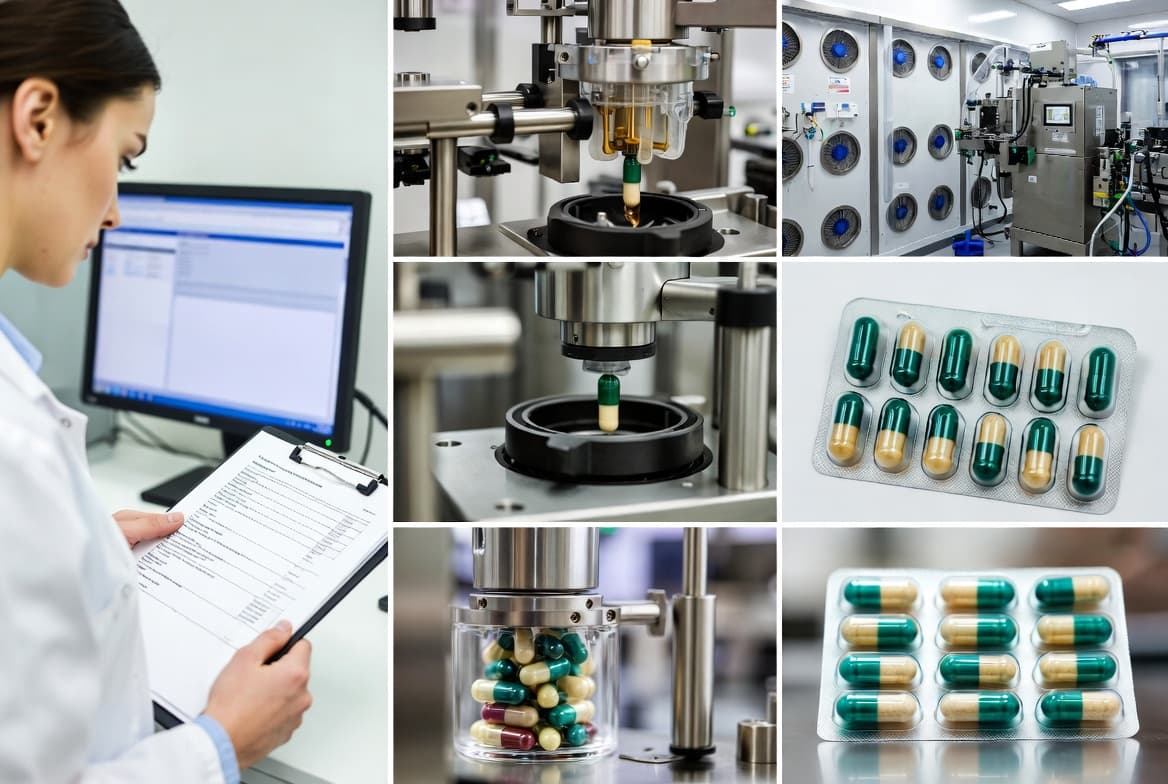
High-oil nutraceutical formulations create a familiar manufacturing challenge: they need stable delivery, accurate dosing, and clean processing, but they often struggle with flow, oxidation, leakage risk, and ingredient incompatibility. For brands evaluating capsule formats, hard-shell capsules can be an excellent solution when the formulation is engineered correctly, especially through powder encapsulation, dry fill, or liquid-filled hard capsule technologies.
From a manufacturing perspective, the real question is not simply "hard-shell capsules vs. softgels." It is whether a high-oil formula can be converted into a capsule-friendly system that preserves potency, supports shelf life, and fits a GMP production line designed for dietary supplements.
Why High-Oil Formulas Are Difficult to Capsule
High-oil blends often contain lipophilic actives, botanical extracts, omega-rich ingredients, or self-emulsifying systems. These materials can be difficult to handle because oils may separate, leak, oxidize, or interact with shell materials if the process is not carefully designed. Softgel systems are traditionally associated with oils, but hard-shell capsules can also work when the fill is converted into a dry, semi-solid, or compatible liquid system.
The biggest issues are usually these:
- Flowability, because oily materials do not naturally move well through capsule-filling equipment.
- Stability, because oxygen, heat, moisture, and light can degrade sensitive ingredients.
- Compatibility, because some solvents, plasticizers, or hygroscopic vehicles can damage capsule shells or reduce performance.
For supplement brands, this matters because a formulation that looks good on paper may fail in real-world production. A strong manufacturing partner must evaluate not only the ingredient list, but also the fill system, shell compatibility, sealing method, and packaging strategy.
Hard-Shell Capsules vs. Softgels in Practice
For high-oil nutraceuticals, both formats have strengths, but they solve the problem differently. Softgels are naturally suited to liquid and semi-solid fills, while hard-shell capsules are better known for powders and pellets, though they can also handle certain liquid or semi-solid fills when the system is engineered properly.
In other words, softgels may be the more obvious format for a pure oil product, but hard-shell capsules can outperform them when the goal is broader formulation flexibility, cleaner processing, or a dry-based delivery system that avoids a traditional oil-only fill.
When Hard-Shell Capsules Perform Better
Hard-shell capsules can be the better option when the formula needs precision dosing, multi-ingredient compatibility, and simpler scale-up. They are especially useful when oils are not the only actives in the formula, or when a brand wants to combine oil-rich ingredients with powders, pellets, or micro-encapsulated components.
Hard-shell capsules often perform better when:
1. The oil can be absorbed into a dry carrier or micro-encapsulated into a free-flowing powder.
2. The formula includes multiple actives that need staged or combination filling.
3. The brand wants a dry-process manufacturing path with easier handling and packaging.
4. The product must be built around hard-shell capsule production only, which fits River Pharm's manufacturing scope.
This is where formulation strategy becomes more important than dosage form marketing. If the oil phase can be transformed into a stable powder or a compatible fill, hard capsules become a practical and commercially attractive route.
Powder Encapsulation for Oil-Rich Ingredients
One of the most effective approaches for River Pharm's hard-shell capsule scope is powder encapsulation. This means converting part of the oil phase into a dry, fillable system using adsorption, micro-encapsulation, or carrier-based blending. Industry examples show that oily materials can be incorporated into absorbent dry blends and then filled into hard capsules when the process uses suitable excipients and parameters.
This method is valuable because it can:
- Improve flow into capsule-filling equipment.
- Reduce leakage risk compared with liquid systems.
- Support cleaner handling and better batch consistency.
- Create a more familiar format for consumers who prefer dry capsules.
For high-oil nutraceuticals, powder encapsulation is often the best compromise between formulation performance and manufacturing practicality. It can also help preserve marketing claims around premium botanical oils or lipid-based actives while keeping the process aligned with hard-shell capsule production.

Dry Fill and Semi-Solid Fill Options
Dry fill is the most straightforward hard-capsule strategy when the oily ingredient can be converted into a stable powder blend. Semi-solid and non-aqueous liquid fills are more advanced, but they are also possible in hard-shell capsule systems if the vehicle is compatible and the equipment supports the process.
According to technical literature, hard capsules can be filled with powders, pellets, granules, non-aqueous liquids, suspensions, semisolids, and certain thixotropic systems, provided the viscosity and compatibility requirements are met. This opens the door to more complex nutraceutical designs without moving outside the hard-capsule category.
For River Pharm's customers, in the case of oil-absorbing dry powder mixtures, we recommend using a powder encapsulation solution for production.
Stability and Shelf-Life Considerations
Oil-rich formulas are highly sensitive to oxygen, moisture, heat, and light. Stability must be addressed from the beginning of development, not after the first pilot batch fails. Scientific reviews of capsule systems repeatedly emphasize the importance of shell design, packaging, antioxidants, and environmental protection for sensitive fills.
Key stability controls include:
- Choosing a carrier that reduces free oil migration.
- Testing shell compatibility before scale-up.
- Using moisture-barrier packaging when needed.
- Considering antioxidant support for oxidative ingredients.
- Validating storage conditions and shelf-life assumptions.
This is especially important for nutraceuticals featuring fish oil, botanical oils, fat-soluble vitamins, or lipid-based delivery systems. A stable product is not only a formulation win; it is also a brand trust win.

Manufacturing Reality Under FDA cGMP
For U.S. dietary supplements, manufacturers must follow FDA cGMP requirements that cover manufacturing, packaging, labeling, and holding operations. These rules are designed to ensure identity, purity, strength, composition, and contamination control.
That means a capsule strategy is not judged only by theory. It must be producible under controlled systems with documented procedures, quality checks, and batch traceability. For high-oil formulas, this increases the importance of process validation, raw-material control, and packaging decisions.
In practice, a formulation that is technically possible but hard to hold, fill, or verify may not be the best commercial choice. The best solution is the one that balances product performance, manufacturing robustness, and regulatory defensibility.
River Pharm's Best-Fit Approach
At River Pharm, the strongest high-oil capsule strategy is not direct softgel comparison. It is a hard-shell capsule solution built around dry-fill engineering, powder encapsulation, and compatible liquid-fill feasibility. That keeps the product within River Pharm's actual OEM/ODM scope while still solving the core technical challenge.
From a conversion perspective, this positioning is also stronger. It targets buyers searching for high-oil supplement manufacturing, capsule encapsulation solutions, and OEM/ODM support for difficult formulations. It also avoids promising a dosage form that is outside your production scope.
For brands, the message is simple: if your oil-based formula can be converted into a stable capsule-friendly system, hard-shell capsules can be a scalable, elegant, and commercially strong solution.
Expert Takeaway
As a formulation and content strategy perspective, the winning capsule format is the one that solves the ingredient problem with the fewest trade-offs. Softgels are often the default for pure oils, but hard-shell capsules can be the better strategic choice when you need formulation flexibility, combination fills, or a dry-process production path.
For River Pharm, that means the article should focus on solving the "high-oil formulation problem" inside the hard-shell capsule platform, not on positioning softgels as an in-house option. That approach is more accurate, more credible, and more likely to convert the right leads.
Practical Development Workflow
If a brand approaches River Pharm with a high-oil concept, this is the most efficient development path:
1. Review the ingredient profile, including oil load, stability risk, and target dose.
2. Decide on the capsule strategy, such as powder encapsulation, pellet mix, or compatible liquid-fill hard capsule.
3. Run compatibility screening, especially for shell interaction, moisture sensitivity, and fill behavior.
4. Prototype and test, focusing on flow, fill uniformity, leakage risk, and shelf stability.
5. Select packaging, such as moisture-protective bottles or blisters where appropriate.
6. Prepare scale-up documentation, aligned with cGMP expectations.
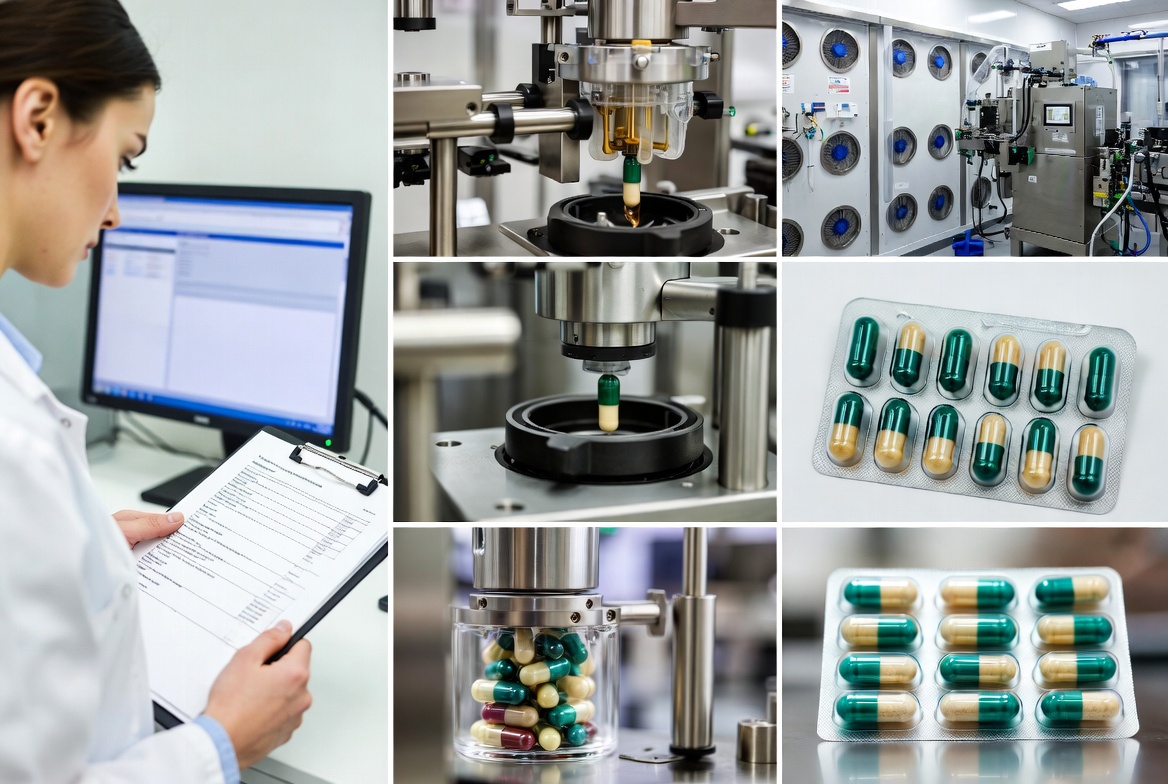
FAQ
1. Can high-oil nutraceuticals be made in hard-shell capsules?
Yes. When the oil is converted into a compatible dry blend, pellet mix, or approved liquid-fill system, hard-shell capsules can work very well.
2. Are softgels always better for oil-based supplements?
No. Softgels are a natural fit for many oils, but hard-shell capsules can be better when you need combination fills, simpler handling, or a dry-process strategy.
3. What is powder encapsulation?
It is the process of absorbing or micro-encapsulating oil into a dry carrier so the material becomes flowable and suitable for hard-capsule filling.
4. What are the main stability risks for oil-rich formulas?
The main risks are oxidation, moisture exposure, heat stress, and light sensitivity, all of which can reduce quality over time.
5. What should brands check before choosing a capsule format?
They should review ingredient compatibility, target dose, shelf-life needs, packaging, and whether the manufacturing partner can actually produce the chosen format under cGMP controls.
6. Does River Pharm offer softgel manufacturing?
No. For this topic, the most accurate River Pharm positioning is to focus on hard-shell capsules, including powder encapsulation and compatible fill solutions.
References
1. FDA. Final Rule for CGMPs for Dietary Supplements. https://www.fda.gov/food/dietary-supplements-guidance-documents-regulatory-information/backgrounder-final-rule-current-good-manu... [fda]
2. FDA/CGMP overview and quality framework for dietary supplements. https://www.npanational.org/education/regulatory-framework-and-historical-context/ [npanational]
3. Johnson, E.J. et al. Bioavailability of AREDS1 micronutrients from softgel capsule vs tablet. PMC. https://pmc.ncbi.nlm.nih.gov/articles/PMC4164907/ [pmc.ncbi.nlm.nih]
4. Naharros-Molinero, A. et al. Shell Formulation in Soft Gelatin Capsules: Design and Stability. PMC. https://pmc.ncbi.nlm.nih.gov/articles/PMC11468233/ [pmc.ncbi.nlm.nih]
5. Technical review on liquid-filled hard capsules and formulation compatibility. https://www.tabletscapsules.com/3641-Technical-Articles/592486-Capsule-Filling-Solving-Formulation-Problems-with-Liquid-Filled-H... [tabletscapsules]
6. Hard capsule applicability for powders, pellets, and liquid fills. https://www.lfacapsulefillers.com/articles/right-empty-capsule-for-your-product [lfacapsulefillers]
7. Oil encapsulation into hard capsules via dry blends. https://www.biogrund.com/knowledge/natural-alternative-excipients-for-tableting-and-capsule-filling/?lang=en [biogrund]
8. Gelatin hard capsule positioning and oil-soluble ingredient protection. https://www.gelita.com/en/markets-we-serve/pharma/hard-capsules [gelita]
9. Stability considerations for softgel systems. https://www.colorcon.com/education-insights/the-science-of-softgel-stability [colorcon]
10. Liquid-filled hard capsule excipient compatibility discussion. https://www.pharmtech.com/view/selecting-excipients-liquid-filled-hard-capsules [pharmtech]
Hot Tags: Hard Shell Capsules, High Oil Nutraceuticals, Powder Encapsulation, Dry Fill Capsules, Liquid Filled Hard Capsules, Nutraceutical Manufacturing, Dietary Supplement OEM, Dietary Supplement ODM, Capsule Filling Technology, cGMP Manufacturing
Did you find this helpful?
Comments (0)
No comments yet. Be the first to comment!
Leave a comment
Related Posts
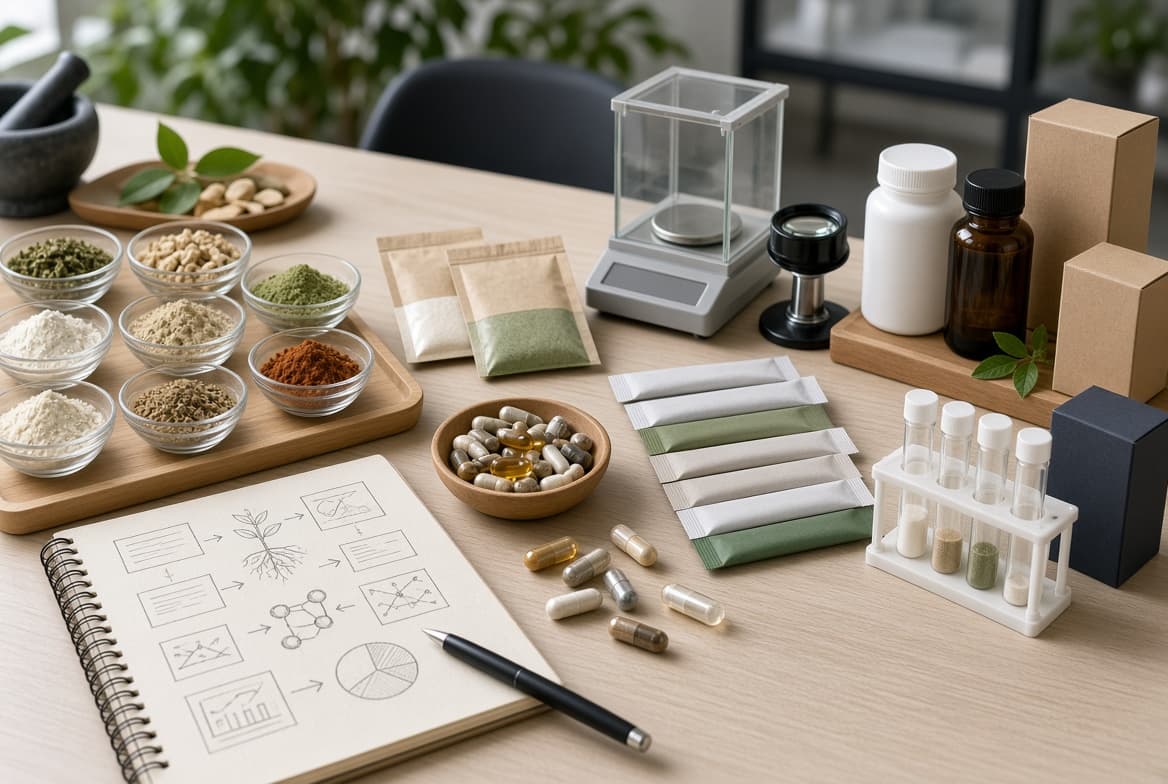
Riverpharm · Supplement Contract Manufacturing
Your supplement brand, manufactured to the highest standard
From first formula to finished product — we handle manufacturing, packaging, and fulfillment so you can focus on building your brand.
Core services
Contract Manufacturing
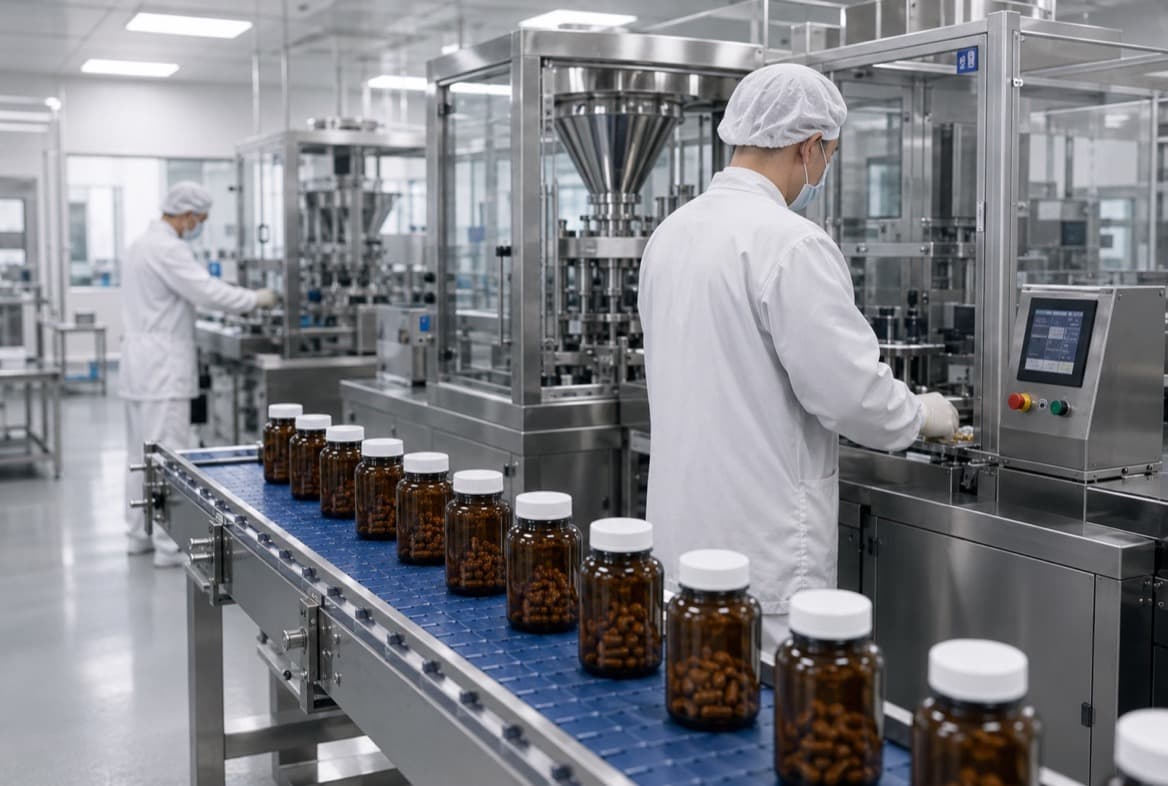
GMP-certified production with full batch testing and certificate of analysis on every run.
Custom Formulation & R&D
In-house scientists develop your formula from scratch or refine existing blends for efficacy.
Packaging & Labeling
Design-to-print label service — shelf-ready, FDA-compliant, and retail-tested.
FBA Prep & Fulfillment
Amazon-ready prep and direct-to-warehouse shipping — no extra steps on your end.
By the numbers
NSF
NSF/ANSI 455-2 certified
cGMP
Certified environment
24 hr
AI-accelerated quote turnaround
600K
cGMP+ encapsulator capacity per run
Why Riverpharm
Quality systems with higher standards
- NSF/ANSI 455-2 certified
- cGMP-certified environment
- In-house + third-party testing
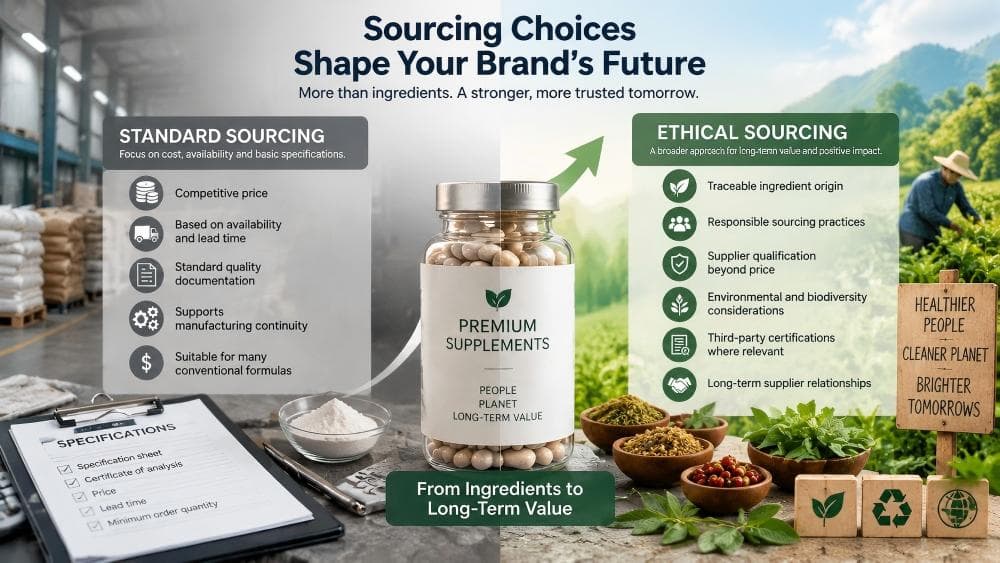
- Source-locked ingredients
Production capacity with faster execution
- Heavy-duty hardware
- In-house core reserves
- AI-accelerated quotes
- In-house expert hub
Delivery formats we produce
Capsules
Gelatin & HPMC vegetarian
Sachets
Single-dose powder blends
Stick packs
Convenient single-serve
Pouches
Flexible, shelf-ready
Ready to bring your supplement to market?
Free consultation · 24-hour quote · No minimum commitment to get started