Health & Wellness Trends vs Fads in Nutraceutical Manufacturing: A B2B Guide for OEM/ODM Brand Owners
Strategic OEM/ODM guide for supplement brands on separating health & wellness trends from fads to build compliant, scalable long-term portfolios.

In the fast-moving health and wellness market, the ability to distinguish long-term trends from short-lived fads is now a core competitive skill for nutraceutical brand owners working with OEM/ODM manufacturers like River Pharm Inc. When your products rely on complex formulations, strict regulatory frameworks, and scalable manufacturing, chasing the wrong wave can lock capital, compromise compliance, and dilute brand trust for years.
Why "Trends vs Fads" Matters for Supplement OEM/ODM
The dietary supplement market has expanded rapidly over the past decade, with usage increasing across multiple demographics and product categories. For brand owners, this surge means:
- Intense competition across health platforms, dosage forms, and channels.
- Regulatory scrutiny on claims, labeling, and scientific substantiation.
- Operational complexity in sourcing, formulation, and packaging at scale.
In this context, choosing which health themes and ingredients to build into your OEM and custom ODM roadmaps is a strategic decision, not a marketing whim. A misplaced bet on a fad can result in:
- Dead inventory and obsolete SKUs locked in warehouses.
- Formulas that are difficult to defend under evidence-based standards.
- Fragmented portfolios that confuse distributors, retailers, and end clients.
For manufacturers and brand owners alike, trends vs fads is not just a marketing topic; it is a decisive factor in product lifecycle management and capital efficiency.

Defining Health & Wellness Trends vs Fads for B2B Decision-Makers
What Counts as a True Market Trend?
From a nutraceutical manufacturing and regulatory standpoint, a trend is a health or ingredient direction characterized by several features:
- Multi-year demand and repeated use across segments, rather than a single seasonal spike.
- Scientific backing in peer-reviewed research or authoritative reports that support rational use.
- Regulatory-compatible messaging, alignable with accepted claim categories and careful labeling.
- Operational viability, including reliable sourcing, standardized quality, and stable formulation options.
Examples of trend-type categories that have demonstrated durability include:
- Micronutrient support such as vitamin D, B vitamins, and minerals, anchored in deficiency and preventive health discussions.
- Digestive health, including fiber, probiotics, and prebiotics, supported by ongoing clinical and consumer interest.
- Healthy aging and cardiometabolic support, reflecting demographic shifts and long-term wellness concerns.
For OEM/ODM brands, these areas form pillars around which stable product families can be built and expanded over time.
What Makes a Health & Wellness Fad?
A fad in supplements and wellness usually exhibits a very different profile:
- High visibility on social media, but limited longitudinal data on real-world use.
- Weak or preliminary evidence that does not translate into robust, defensible claims.
- Highly specific narratives (often "viral hacks") that cannot easily be expressed in compliant label language.
- Volatile supply chains or exotic raw materials that complicate manufacturing and quality assurance.
These product concepts often peak quickly and then fade as new "viral" ideas capture attention. For a manufacturer, they tend to consume engineering and validation resources without building cumulative portfolio value.
Using Regulatory Signals to Distinguish Trends from Fads
When River Pharm Inc evaluates a potential formula for OEM or custom ODM projects, our technical teams look for:
- Whether the ingredient or health condition appears in reputable data sources or long-term usage analyses.
- Whether there is enough scientific evidence to support rational structure/function style messaging.
- Whether benefits can be framed in cautious, compliant language rather than speculative or exaggerated claims.
When a concept cannot be supported by credible data, clearly expressed benefits, and disciplined language, it is more likely to behave as a short-lived fad than as a sustainable trend.
Operational Criteria: How OEM/ODM Manufacturers Separate Trends from Fads
From Concept to Capsule: OEM Perspective
Under River Pharm's OEM model, clients bring their own formulas and the manufacturer produces according to established quality systems and agreed specifications. For each OEM request, key operational questions include:
- Is ingredient availability stable and secure enough to support repeated batches?
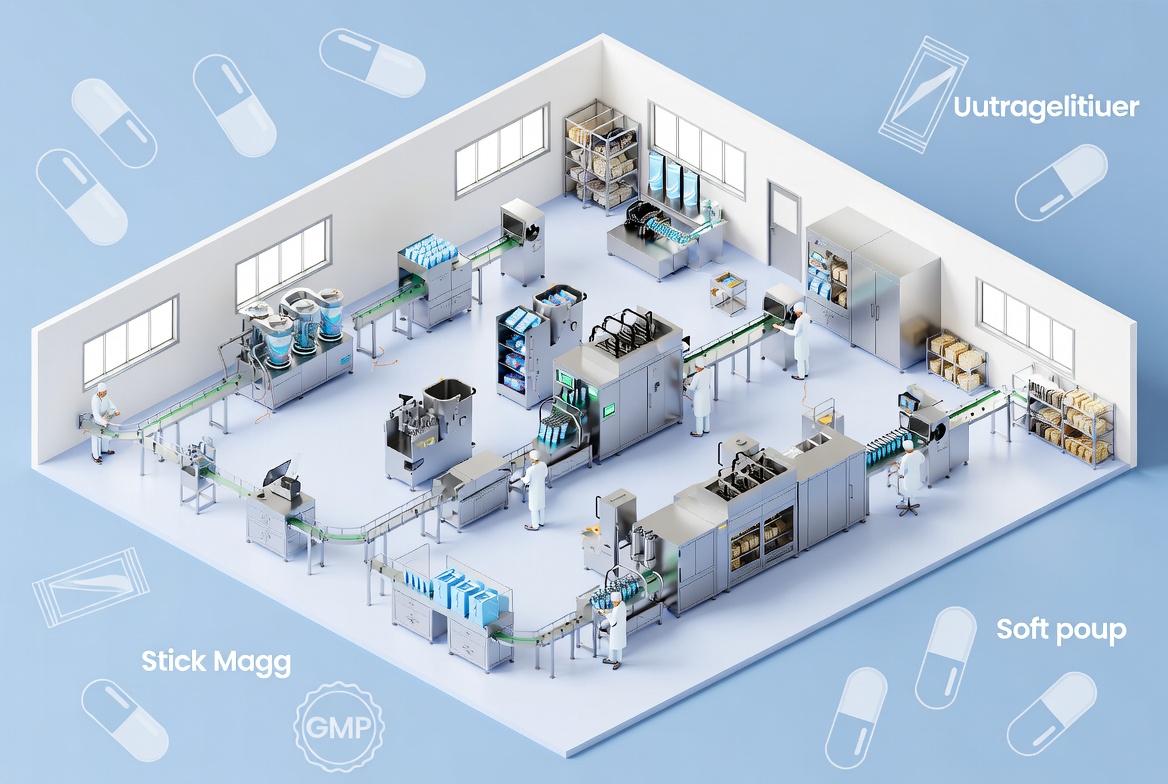
- Can the formulation be scaled across capsules, small sachets, stick packs, or soft pouches without compromising stability?
- Are testing requirements clear for identity, purity, and potency, and can they be integrated into standard quality control?
OEM projects often reflect trend-aligned formulations, because experienced brand owners tend to screen out concepts that cannot survive basic viability checks.
Custom ODM: Turning Trend Intelligence into Ownable Product IP
The custom ODM model at River Pharm Inc is different from simple label replacement. Clients provide reference products, target consumer segments, or desired health directions, and the technical team develops a working formula based on the client’s reference products and target benefits, then moves to sampling and production.
In this framework, priority is given to:
- Health platforms supported by emerging and established data, such as gut health, metabolic balance, or resilience.
- Ingredient clusters that can be positioned credibly and consistently across multiple products.
- Packaging architectures where the same platform can appear in capsules, sachets, stick packs, and soft pouches to serve different usage occasions.
Fad-driven concepts tend to be filtered out during R&D, because they fail fundamental checks on evidence, compliance, and manufacturability.
Examples of Enduring Trends vs Short-Term Waves
Enduring Trends in Nutraceutical Portfolios
Based on cross-market observations and usage statistics, several categories have shown persistent growth and deep consumer relevance:
- Micronutrient adequacy: Ongoing interest in vitamins and minerals for daily support, often linked to dietary gaps and lifestyle factors.
- Gut health and fiber: Fiber, probiotics, and prebiotics anchored in everyday digestive comfort, immune dialogue, and holistic wellness narratives.
- Preventive wellness formulas: Multi-ingredient blends designed around general vitality, immune function, or healthy aging, which can be tailored to specific demographics.
For OEM/ODM collaboration, these areas allow for platform thinking, where a central health concept anchors multiple SKUs across dosage forms and strengths.
Short-Term Fads and Their Operational Risks
In contrast, short-lived waves tend to display characteristic risk patterns:
- Rapid adoption driven by influencers or single campaigns, with little evidence of repeat purchase.
- Demo-specific positioning that is difficult to translate into neutral, compliant language.
- Unclear tolerability or dosage guidance across diverse user profiles.
From a manufacturing perspective, this can cause:
- Elevated regulatory risk if claims or product communication drift into problematic territory.
- Frequent reformulation and relabeling cycles as marketing narratives evolve or are challenged.
- Difficulty justifying dedicated production capacity, line time, or specialized sourcing.
A Practical Framework for OEM/ODM Portfolio Planning
Five-Step Process to Evaluate Trend vs Fad Before You Brief Your Manufacturer
To help River Pharm's OEM/ODM partners make robust, data-informed decisions, the following process can be used internally before any manufacturing brief is submitted:
1. Map demand against available data
Review whether the category or ingredient shows up in population-level usage studies, respected industry reports, or long-term retail performance.
2. Test regulatory language options
Draft potential product messages and check whether they can be expressed in cautious, compliant language rather than speculative promises.
3. Review evidence depth and quality
Verify that there is a sufficient body of credible research on the ingredient and context, rather than relying on anecdotal or preliminary findings.
4. Assess manufacturing feasibility
Confirm that raw material quality, stability, and packaging compatibility are acceptable for your chosen dosage form and target market.
5. Plan a controlled launch path
Start with core SKUs around the strongest trends, and experiment with adjacent concepts through limited runs, gathering your own data on repeat orders and feedback.
This structured approach turns "trend vs fad" into a manageable decision workflow rather than a subjective judgement based on channel noise alone.

How Trends vs Fads Affect OEM/ODM Decisions
To make trend analysis operational, it is helpful to look at how trends and fads differ across key dimensions relevant to OEM/ODM collaboration:
- Market data
True trends are backed by multi-year demand signals and observed usage patterns, while fads are typically defined by sharp, short-term spikes.
- Evidence base
Trend categories usually have a growing body of research in support of rational use, whereas fads may rely on isolated or low-quality sources.
- Regulatory fit
Trend-based products can be framed using established, careful language; fad products often struggle to avoid exaggerated claims.
- Manufacturing profile
Trends tend to anchor around ingredients with known stability and sourcing pathways; fads frequently involve unstable or poorly characterized components.
- Portfolio impact
Trend-based platforms support coherent families of SKUs, whereas fads often generate scattered single products with limited shelf life.
River Pharm Inc's Role as a Strategic OEM/ODM Partner
As a specialized OEM/ODM manufacturer of dietary and nutritional supplements, River Pharm Inc supports brand owners across capsules, small sachets, stick packs, and soft pouch packaging. Drawing on cross-project experience, our teams:
- Help clients align formulas and investment decisions with evidence-backed health platforms rather than transient waves.
- Encourage portfolio architectures that group SKUs into recognizable platforms, improving both buyer understanding and operational efficiency.
- Integrate regulatory and quality considerations from the first concept conversation, instead of treating them as downstream hurdles.
By viewing trends vs fads through both a B2B manufacturing lens and a brand-building lens, we support clients in building portfolios that can grow sustainably.
Turning Trend Intelligence into SEO and UX Assets for B2B Brands
Communicating Trends vs Fads on Your Website
From a B2B SEO and user experience standpoint, brands can strengthen their presence and conversion rates by:
- Creating pillar pages focused on enduring health platforms, such as digestive health, immune support, or healthy aging, and structuring content with clear headings.
- Publishing supporting pages that detail specific formulas, dosage forms, and use cases, demonstrating expertise and manufacturing capability.
- Incorporating education sections that explain how product concepts were chosen, what evidence was considered, and how quality and compliance are maintained.
This kind of content does more than attract traffic; it positions the brand as a reliable partner for distributors, retailers, and professional clients.
Internal Content Strategy and Sales Enablement
Trend-focused portfolios also benefit from aligned content for sales teams and B2B buyers, such as:
- Product dossiers summarizing rationale, evidence references, and positioning.
- Technical sheets outlining dosage, excipients, packaging, and testing methods.
- Training materials that distinguish core trend platforms from experimental or niche offerings.
By integrating operational and marketing narratives, brands ensure that OEM/ODM capacity is used to support products with clear, long-term relevance.
Clear Next Steps: Build Your Next Trend-Based Portfolio with River Pharm Inc
For supplement brands that want to move from reactive, fad-driven launches to a strategic, trend-based roadmap, partnering with a manufacturer that understands both health data and operational realities is crucial. River Pharm Inc offers:
- Experience in evaluating product concepts through evidence, compliance, and manufacturability lenses.
- Flexible OEM services for clients with defined formulations and clear technical requirements.
- Custom ODM support for brands that have strategic health directions and reference products, but need specialized development and manufacturing.
If you are reviewing your current portfolio and suspect that some SKUs are tied more to past hype than to current demand and evidence, this is the ideal time to reassess. A focused discussion with our team can help you identify which products to evolve into durable platforms and which to retire or re-engineer before they consume further resources.
Get in touch with River Pharm Inc to schedule a portfolio review and explore how a trend-based approach to OEM/ODM can strengthen your brand, improve operational efficiency, and support long-term growth.
FAQs: Trends vs Fads for Supplement OEM/ODM
1. How can I tell if a supplement idea is a trend or a fad?
A practical way is to look at duration, depth, and data. If demand has persisted across multiple seasons, appears in usage statistics or serious reports, and is supported by credible evidence, it is more likely to be a trend. If interest is new, narrow, and primarily driven by social channels, it is more likely to be a fad.
2. Why does regulatory compliance matter when assessing trends vs fads?
Regulatory compliance matters because it restricts how you can communicate about products and what kind of evidence you must hold. Fad concepts often depend on bold, speculative claims that are hard to express in compliant language, increasing risk. Trend-based concepts usually fit more naturally within cautious, established claim styles.
3. How does River Pharm's custom ODM model avoid "white label" fads?
River Pharm's custom ODM model is built on original R&D rather than pre-existing generic templates. Each project starts with a health platform, target user, and operational constraints. Concepts that cannot be supported with clear rationale, anticipated demand, and manufacturing feasibility are not promoted into full product development.
4. What internal data should my team review before briefing an OEM/ODM project?
Your team should review historic sales, repeat purchase behavior, feedback from distributors or key accounts, and any usage or consumer data you have collected. This internal data complements external evidence and helps identify which health areas deserve expansion and which were driven by short-term hype.
5. Which packaging formats are best for trend-based portfolios?
The best formats depend on your audience and use context. Capsules may be ideal for daily routines, sachets and stick packs for on-the-go convenience, and soft pouches for multi-serving or combination products. A trend-based portfolio often uses a mix of formats to express the same health platform across different user scenarios.
References
1. U.S. Food and Drug Administration – pages and guidance on dietary supplement labeling, structure/function messaging, and substantiation requirements. https://www.fda.gov/food/nutrition-food-labeling-and-critical-foods/structurefunction-claims https://www.fda.gov/food/nutrition-food-labeling-and-critical-foods/label-claims-food-dietary-supplements https://www.fda.gov/regulatory-information/search-fda-guidance-documents/guidance-industry-substantiation-dietary-supplement-claims
2. National Institutes of Health, Office of Dietary Supplements – strategic plans, usage statistics, and overview of supplement use in different populations. https://ods.od.nih.gov https://ods.od.nih.gov/factsheets/list-all/
3. Peer-reviewed analyses of dietary supplement regulation and market evolution, including global overviews and usage trends. https://pmc.ncbi.nlm.nih.gov/articles/PMC10421343/ https://pmc.ncbi.nlm.nih.gov/articles/PMC9839985/
4. Studies and reviews examining how structure/function messaging is interpreted and regulated in the context of dietary supplements. https://pmc.ncbi.nlm.nih.gov/articles/PMC6516064/ https://www.sciencedirect.com/science/article/abs/pii/S0091743517300142
5. Contemporary guidance on E-E-A-T and SEO strategy relevant to supplement and nutraceutical brands. https://rankai.ai/articles/seo-for-supplement-company-guide https://keygrow.co/industries/ecommerce/supplements/seo
Hot Tags: Nutraceutical Manufacturing, Dietary Supplement OEM, Custom ODM Services, Health Wellness Trends, Supplement Portfolio Strategy, B2B Contract Manufacturing, Private Label Alternatives, Trend Based Formulation, Capsule Sachet Stick Packs, Regulatory Compliant Claims
Did you find this helpful?
Comments (0)
No comments yet. Be the first to comment!
Leave a comment
Related Posts

Oct 14, 2026
Why Full-Service Supplement Manufacturing Matters for Growing Brands
Oct 13, 2026
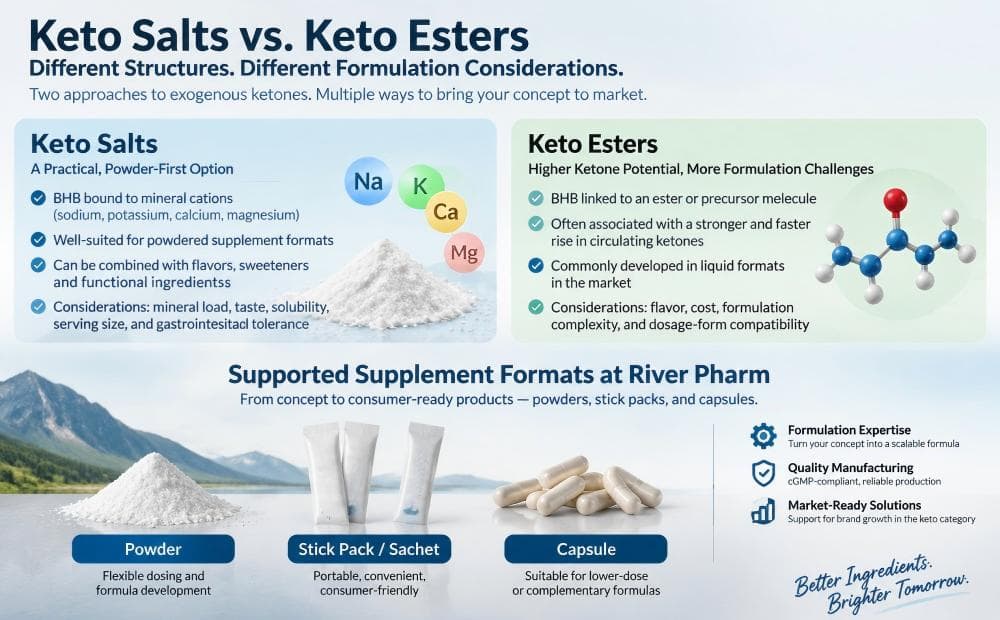
Keto Salts vs. Keto Esters: Formulation, Dose, Stability, and Manufacturing Considerations for Rapid Ketosis

Oct 13, 2026
Batch Consistency vs. Rapid Prototyping: Solving the Scaling Issues in Custom Supplement Formulation
Riverpharm · Supplement Contract Manufacturing
Your supplement brand, manufactured to the highest standard
From first formula to finished product — we handle manufacturing, packaging, and fulfillment so you can focus on building your brand.
Core services
Contract Manufacturing
GMP-certified production with full batch testing and certificate of analysis on every run.
Custom Formulation & R&D
In-house scientists develop your formula from scratch or refine existing blends for efficacy.
Packaging & Labeling
Design-to-print label service — shelf-ready, FDA-compliant, and retail-tested.
FBA Prep & Fulfillment
Amazon-ready prep and direct-to-warehouse shipping — no extra steps on your end.
By the numbers
NSF
NSF/ANSI 455-2 certified
cGMP
Certified environment
24 hr
AI-accelerated quote turnaround
600K
cGMP+ encapsulator capacity per run
Why Riverpharm
Quality systems with higher standards
- NSF/ANSI 455-2 certified
- cGMP-certified environment
- In-house + third-party testing
- Source-locked ingredients
Production capacity with faster execution
- Heavy-duty hardware
- In-house core reserves
- AI-accelerated quotes
- In-house expert hub
Delivery formats we produce
Capsules
Gelatin & HPMC vegetarian
Sachets
Single-dose powder blends
Stick packs
Convenient single-serve
Pouches
Flexible, shelf-ready
Ready to bring your supplement to market?
Free consultation · 24-hour quote · No minimum commitment to get started