NSF Certified vs. Non-Certified Supplements: The Impact on Athlete Safety and Professional Sports Eligibility
NSF certification vs. non-certified supplements: how third-party testing protects athlete safety, doping compliance, and pro sports eligibility.

Every year, hundreds of dietary supplements sold in the United States are quietly pulled from shelves after testing reveals hidden pharmaceutical ingredients, banned stimulants, or undeclared anabolic agents. For everyday consumers, this is a health concern. For professional and collegiate athletes, it can end a career. The distinction between NSF Certified and non-certified supplements is no longer a marketing footnote — it is the single factor most likely to determine whether an athlete stays on the field or faces a multi-year suspension for a substance they never intentionally consumed.
This comparison breaks down exactly how NSF certification protects athlete safety, why professional leagues increasingly require it, and what brands and manufacturers must understand to compete in this high-stakes category.

What NSF Certification Actually Verifies
NSF International operates one of the most rigorous third-party testing programs in the supplement industry, built around two distinct layers of oversight. The first is NSF/ANSI 455-2, the Good Manufacturing Practices standard that governs how a facility formulates, blends, tests, and packages a product, verifying compliance with 21 CFR Part 111 (dietary supplement cGMP) and 21 CFR Part 117 (Food Safety Modernization Act). The second, and more athlete-specific layer, is the NSF Certified for Sport® program, which screens finished products lot-by-lot for more than 290 substances banned by the World Anti-Doping Agency (WADA) and major sports organizations, including stimulants, narcotics, steroids, diuretics, and masking agents .
A product that earns the Certified for Sport mark has passed:
- Label-accuracy testing confirming the product contains exactly what is printed on the panel
- Contaminant screening for heavy metals, pesticides, and microbial impurities
- Unannounced facility audits conducted on a recurring basis, not just at initial certification
- Formulation and label review to catch ingredients that could trigger a banned-substance flag before the product ever reaches a shelf
Non-certified supplements skip every one of these checkpoints. Under the Dietary Supplement Health and Education Act (DSHEA) of 1994, the U.S. Food and Drug Administration does not review or approve a supplement's safety or label claims before it goes to market — manufacturers are legally responsible for that themselves, and enforcement happens only after a problem surfaces . That regulatory gap is precisely where contamination risk lives.
The Scale of the Contamination Problem
The numbers behind non-certified products are more alarming than most athletes realize, and they have not improved much over the past two decades.
- Between 2007 and 2016, the FDA identified 776 dietary supplements from 146 different companies that contained undeclared pharmaceutical ingredients, most commonly marketed for sexual enhancement, weight loss, or muscle building .
- A 2023 narrative review in Frontiers in Sports and Active Living found that 14% to 50% of analyzed supplement samples tested positive for anabolic agents or other prohibited substances, depending on the product category .
- Research cited in a 2025 peer-reviewed study estimates that contaminated supplements account for 6.4% to 8.8% of all positive doping test results in professional sport, and one analysis attributed 26% of all anti-doping rule violations between 2003 and 2020 to supplement contamination .
- The global market for sports nutrition testing and certification was valued at USD 428.5 million in 2023 and is projected to grow at a 13.6% compound annual rate through 2030, a trajectory driven almost entirely by rising demand for verified, contamination-free products .
These figures matter because the World Anti-Doping Code applies strict liability: an athlete is responsible for whatever is found in their system, regardless of intent. Pleading ignorance about a contaminated pre-workout or protein powder does not reverse a positive test.
Real Consequences for Real Careers
The abstract risk of adulteration becomes concrete once athletes' names are attached to it. A professional football offensive tackle was suspended for four games early in the season after testing positive for oxytocin, but he insisted he had never intentionally taken the substance. A swimmer was removed from the Olympic team for using supplements containing clenbuterol, and a cyclist was suspended for 18 months for using weight-loss supplements containing hidden performance-enhancing drugs. None of these athletes set out to cheat — each was undone by a product that lacked independent verification.
This is exactly why Major League Baseball, the NFL, the PGA, the LPGA, and the Canadian Centre for Ethics in Sport advise or restrict their athletes to Certified for Sport products, and why MLB, NHL, and CFL clubs are permitted to provide only certified supplements to players . The certification does not just protect the athlete's health; it protects their eligibility, their contracts, and their public reputation.

Awareness Gap: Why Education Still Lags Behind Risk
One of the most underreported findings in recent research is how little athletes actually know about certification programs, even at the professional level. A 2025 survey of 659 Polish athletes found that while 81.8% of professional athletes were aware of the WADA Prohibited List, only 9.1% recognized the NSF Certified for Sport program by name, and just 18.2% were familiar with Informed-Sport . The same study found that social media, not sports dietitians or physicians, was the leading source of supplementation advice for both professional and amateur athletes . This gap between the availability of certification and athletes' awareness of it represents one of the clearest opportunities for brands, medical staff, and manufacturers to add genuine value through education rather than marketing alone.
NSF Certified vs. Non-Certified: The Core Differences
For an athlete or a team physician evaluating two otherwise similar products, the practical differences boil down to a short set of questions:
1. Was every batch tested, or only a sample formulation reviewed once at launch? Certified for Sport testing occurs on a lot-by-lot basis; non-certified products are typically tested only if the brand chooses to, and rarely for every production run .
2. Does the manufacturing facility undergo unannounced audits? NSF/ANSI 455-2 certified facilities are inspected on a recurring, surprise basis; non-certified facilities may operate under minimal or self-reported compliance.
3. Is the product screened against the current WADA banned-substance list? Certified for Sport products are checked against roughly 290 compounds; non-certified products carry no such guarantee .
4. Can the certification be independently verified? Certified for Sport products appear in NSF's public database and mobile app; claims on non-certified labels cannot be cross-checked against any external registry .
5. Who bears the liability if something goes wrong? With DSHEA's post-market enforcement model, non-certified products place the burden of proof almost entirely on the athlete after a positive test, not before one .
The Manufacturer's Role: Where Safety Is Actually Built
Athlete safety does not begin at the retail shelf — it begins on the production floor, months before a product is ever sold. This is the layer of the supply chain that consumers, and often even brand owners, rarely see, yet it determines whether certification claims hold up under scrutiny.
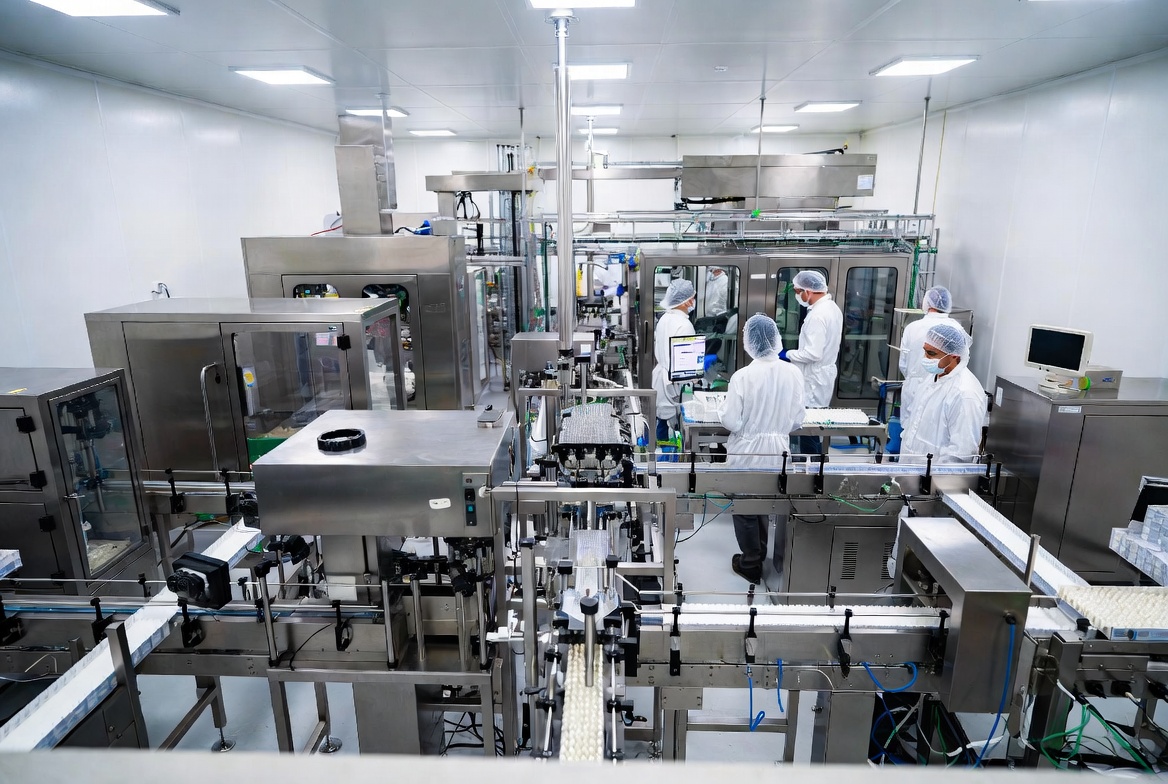
To obtain NSF/ANSI 455-2 certification, factories must demonstrate comprehensive production controls at every stage, including formulation, mixing, and packaging; maintain complete raw material traceability; and adhere to preventative safety control plans, rather than solely relying on final product testing. This is far more stringent than standard food-grade GMP compliance requirements, which is why forward-thinking contract manufacturers pursue NSF Class A certification rather than simply basic registration. River Pharm Inc., for example, is an OEM/ODM manufacturer with FDA registration and NSF Class A certification, specializing in various dosage forms such as capsules, pouches, strips, and flexible packaging.
Practical Steps for Brands and Athletes
For brand owners entering the sports nutrition category, and for athletes selecting products for personal use, the following steps reduce risk meaningfully:
- Verify certification directly on the certifying body's database, not just from a logo on the packaging, since counterfeit certification marks do exist
- Choose a contract manufacturer already operating under NSF/ANSI 455-2 or an equivalent standard, which shortens certification timelines for finished products
- Request lot-specific Certificates of Analysis rather than accepting a single formulation-level test result
- Cross-reference active ingredients against the current WADA Prohibited List before launch, not after a customer complaint
- Educate athlete-facing sales channels, since the research shows most athletes — even professionals — get supplement advice from social media rather than qualified specialists
Take the Safer Path to Market
Brands serious about competing in sports nutrition cannot treat certification as an afterthought — it is now a baseline expectation among athletes, team physicians, and retail buyers alike. If your team is developing a product for athletes or active consumers, work with a manufacturing partner whose facility already meets pharmaceutical-grade compliance standards, so certification becomes a formality rather than a redesign. Reach out to a qualified OEM/ODM manufacturer to review your formulation against current safety and certification requirements before your next production run.
Frequently Asked Questions
Is NSF Certified for Sport legally required for athletes to use a supplement?
No. The certification is voluntary, but many professional leagues, including MLB, the NFL, and the PGA, strongly recommend or restrict players to certified products because of the contamination risks associated with non-certified supplements .
How many substances does NSF Certified for Sport actually test for?
The program screens for more than 290 substances banned by WADA and major athletic organizations, including stimulants, steroids, diuretics, narcotics, and masking agents .
Can a supplement be safe even if it isn't NSF certified?
It is possible, but there is no independent way to verify it. Without third-party testing, consumers and athletes have no confirmation that the label matches the contents or that the product is free of banned substances .
What percentage of supplements have been found to contain banned or undeclared substances?
Analytical studies reviewed in a 2023 sports science publication found contamination rates ranging from 14% to 50% depending on the product category, with pre-workout, weight-loss, and muscle-building supplements showing the highest risk .
Does FDA approval mean a supplement is safe for athletes?
No. The FDA does not approve dietary supplements before they reach the market under DSHEA; it can only act after a product is found to be adulterated or misbranded, which is why third-party certification fills a critical verification gap .
What should a supplement brand look for in a manufacturing partner for sports nutrition products?
Brands should prioritize facilities certified to NSF/ANSI 455-2 or an equivalent pharmaceutical-grade standard, with documented batch traceability and in-house testing capability, since this significantly shortens the path to Certified for Sport eligibility for finished products.
References
1. NSF International. "Certified for Sport® Program." [nsf.org]
2. Pew Charitable Trusts. "Athletes Face Extra Risks When Taking Dietary Supplements." [pew.org]
3. Jagim, A.R. et al. "Prevalence of adulteration in dietary supplements and recommendations for safe supplement practices in sport." Frontiers in Sports and Active Living, 2023. [pmc.ncbi.nlm.nih.gov]
4. Broniecka, A. et al. "Dietary supplement use and knowledge among athletes." Journal of the International Society of Sports Nutrition, 2025. [tandfonline.com]
5. Grand View Research. "Sports Nutrition And Dietary Supplements Testing & Certification Market Report." [grandviewresearch.com]
6. U.S. Food and Drug Administration. "Tainted Products Marketed as Dietary Supplements and Foods." [fda.gov]
7. U.S. Food and Drug Administration. "Information for Consumers on Using Dietary Supplements." [fda.gov]
8. Tucker, J. et al. "Unapproved Pharmaceutical Ingredients Included in Dietary Supplements Associated With US Food and Drug Administration Warnings." JAMA Network Open, 2018. [jamanetwork.com]
9. NSF International. "NSF/ANSI 455-2 Dietary Supplements GMP Certification." [nsf.org]
10. National Institutes of Health, Office of Dietary Supplements. "Dietary Supplement Label Database (DSLD)." [dsld.od.nih.gov]
11. SportsRx Network. "Third-Party Certifications: Recognizing Safe Supplements." [sportsrxnetwork.com]
12. River Pharm Inc. "USA Supplement Contract Manufacturing." [riverpharm.com]
Hot Tags: NSF Certified Supplements, NSF Certified For Sport, Dietary Supplement Manufacturer, Sports Nutrition Manufacturer, OEM Supplement Manufacturing, ODM Supplement Development, GMP Certified Supplements, Athlete Safety Supplements, Third Party Tested Supplements, WADA Banned Substances
Did you find this helpful?
Comments (0)
No comments yet. Be the first to comment!
Leave a comment
Related Posts

Oct 14, 2026
Why Full-Service Supplement Manufacturing Matters for Growing Brands
Oct 13, 2026
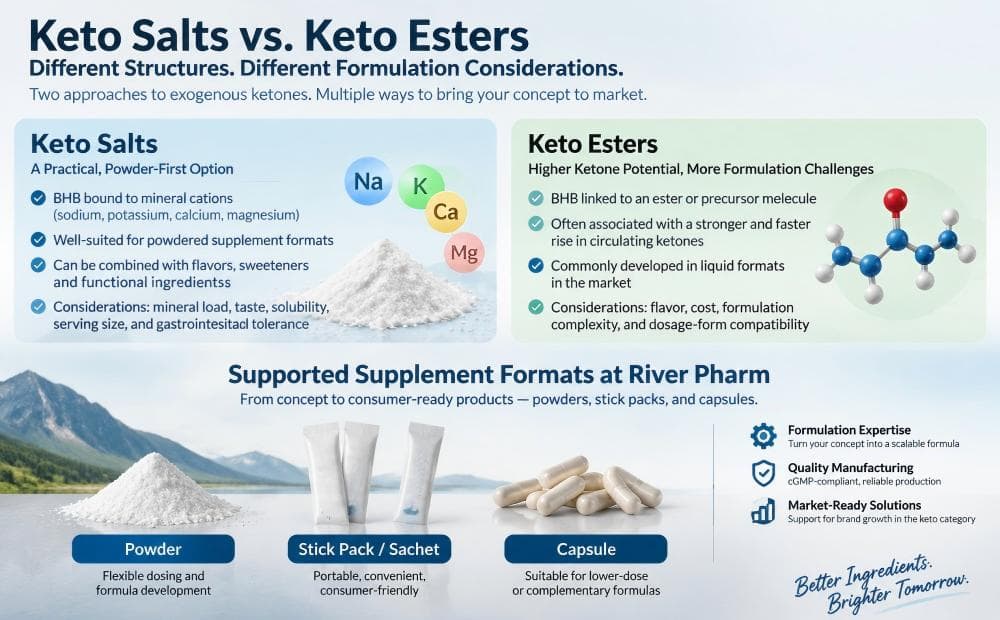
Keto Salts vs. Keto Esters: Formulation, Dose, Stability, and Manufacturing Considerations for Rapid Ketosis
Oct 13, 2026
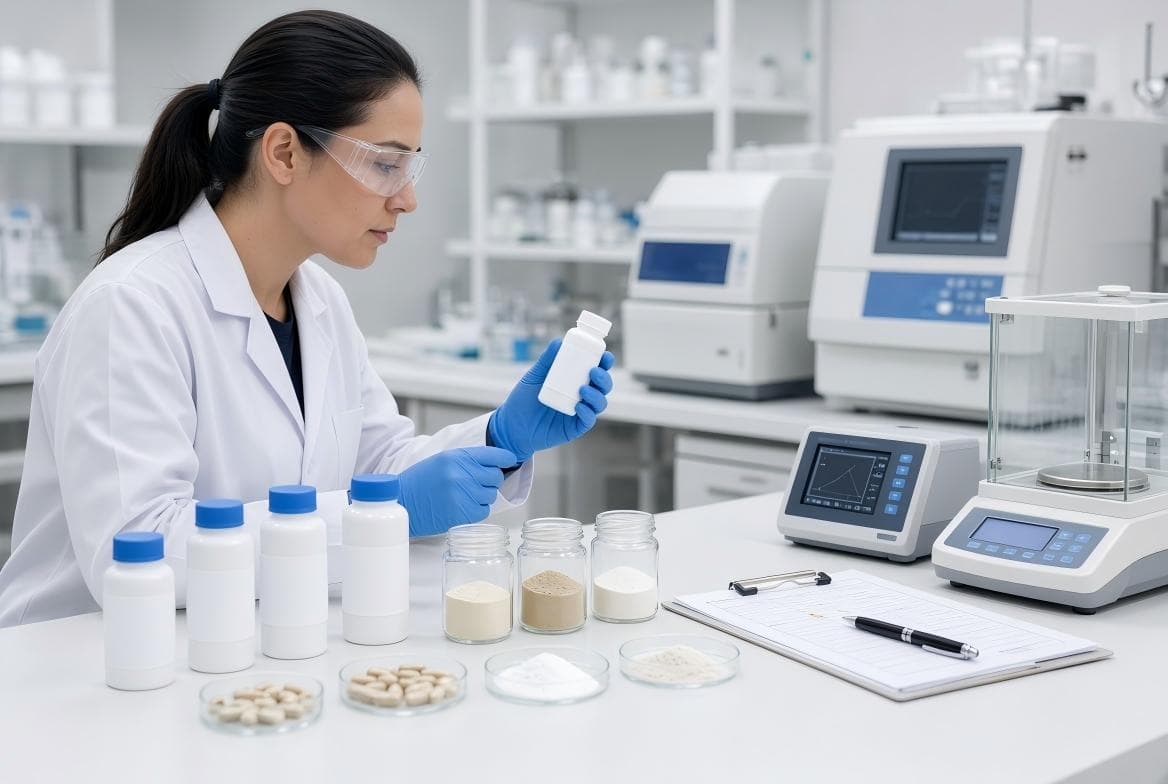
Batch Consistency vs. Rapid Prototyping: Solving the Scaling Issues in Custom Supplement Formulation
Riverpharm · Supplement Contract Manufacturing
Your supplement brand, manufactured to the highest standard
From first formula to finished product — we handle manufacturing, packaging, and fulfillment so you can focus on building your brand.
Core services
Contract Manufacturing
GMP-certified production with full batch testing and certificate of analysis on every run.
Custom Formulation & R&D
In-house scientists develop your formula from scratch or refine existing blends for efficacy.
Packaging & Labeling
Design-to-print label service — shelf-ready, FDA-compliant, and retail-tested.
FBA Prep & Fulfillment
Amazon-ready prep and direct-to-warehouse shipping — no extra steps on your end.
By the numbers
NSF
NSF/ANSI 455-2 certified
cGMP
Certified environment
24 hr
AI-accelerated quote turnaround
600K
cGMP+ encapsulator capacity per run
Why Riverpharm
Quality systems with higher standards
- NSF/ANSI 455-2 certified
- cGMP-certified environment
- In-house + third-party testing
- Source-locked ingredients
Production capacity with faster execution
- Heavy-duty hardware
- In-house core reserves
- AI-accelerated quotes
- In-house expert hub
Delivery formats we produce
Capsules
Gelatin & HPMC vegetarian
Sachets
Single-dose powder blends
Stick packs
Convenient single-serve
Pouches
Flexible, shelf-ready
Ready to bring your supplement to market?
Free consultation · 24-hour quote · No minimum commitment to get started