Organic Certified vs. Conventional Nutraceuticals: Solving the sourcing challenge for clean-label custom supplements
Learn how to source clean-label custom supplements with traceable raw materials, practical compliance controls, and OEM/ODM formulation guidance.

For brands developing clean-label custom supplements, the central sourcing question is not simply whether an ingredient is organic or conventional. It is whether every raw material can be traced, verified, tested, documented, and formulated into a product that matches the brand's ingredient standards, label strategy, target market, and dosage-form requirements.
At River Pharm Inc., we support supplement brands through OEM manufacturing—where the client supplies a finished formula—and custom ODM development, where the client provides a benchmark product, ingredient direction, or intended benefit, and our team helps develop and manufacture the finished supplement. We do not offer generic stock-formula private labeling. This distinction matters because clean-label positioning must be built into formulation, sourcing, testing, packaging, and documentation from the beginning.

Organic Certification vs. Conventional Nutraceutical Ingredients
"Organic" and "conventional" are often treated as opposite quality levels. In practice, they describe different sourcing and production frameworks—not an automatic guarantee that one finished supplement is safer, stronger, or more suitable than the other.
In the United States, use of the term "organic" is regulated under the USDA National Organic Program. Brands should therefore avoid using organic claims unless the relevant ingredients, records, handling processes, and finished-product labeling approach support that claim. FDA notes that USDA oversees the National Organic Program and its standards for the term "organic."
Organic-certified ingredients
Organic-certified ingredients are generally associated with agricultural production and handling methods governed by an applicable organic certification system. For a supplement brand, this may be relevant for botanical powders, plant extracts, fruit or vegetable ingredients, oils, fibers, and certain food-derived nutrients.
Potential advantages include:
- A defined certification framework for qualifying agricultural ingredients
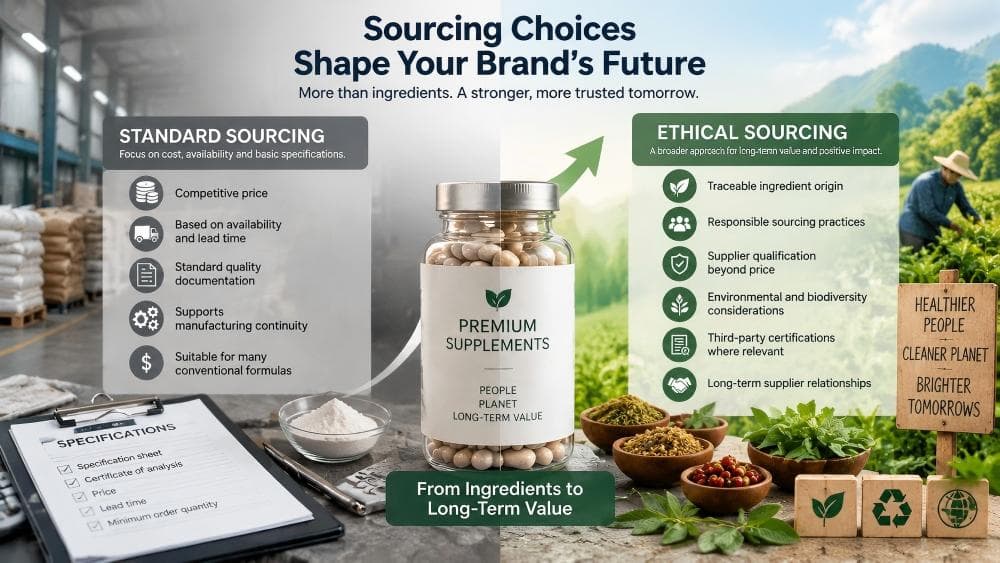
- Stronger alignment with certain brand narratives, such as natural-origin, agricultural transparency, or responsible sourcing
- Useful differentiation in categories where consumers actively seek certified-organic claims
- Potential support for premium positioning, when the certification and label claim are properly substantiated
- Closer attention to supply-chain documentation, depending on the ingredient category and certifier requirements
However, organic certification does not replace core supplement quality controls. An organic botanical ingredient may still require identity verification, contaminant testing, microbial controls, specification review, and stability consideration before it is used in a finished capsule, stick pack, sachet, or soft pouch.
Conventional nutraceutical ingredients
Conventional ingredients are sourced outside an organic-certification framework. They can include vitamins, minerals, amino acids, specialty extracts, probiotics, enzymes, flavors, excipients, and other materials commonly used in dietary supplement formulations.
A conventional ingredient can be an excellent choice when it meets the product's technical, commercial, and documentation requirements. In many formulas, conventional sourcing may offer more consistent availability, broader specification options, more practical dosage formats, and better cost control.
Key strengths may include:
- Wider ingredient selection for technically complex formulations
- More flexible sourcing for vitamins, minerals, amino acids, and standardized actives
- Potentially shorter procurement cycles for established materials
- Greater formulation practicality for high-dose or multi-ingredient products
- More room to optimize cost, flavor, solubility, flowability, and pack size
The correct question is not: "Is organic always better?"
The better question is: Can this ingredient meet the formula's identity, purity, potency, safety, documentation, and label requirements at commercial scale?
What "Clean Label" Should Mean in Supplements
Clean label is not a single universal legal definition. In consumer language, it often refers to products with recognizable ingredients, fewer unnecessary additives, clearer labeling, and stronger transparency around sourcing and processing.
For supplement brands, a credible clean-label strategy should be specific. Avoid vague language such as "pure," "chemical-free," or "natural" unless the claim can be substantiated and is appropriate for the market.
A practical clean-label standard may address:
- Active ingredient origin
- Supplier qualification and traceability
- Identity testing and incoming-material controls
- Allergen management
- Artificial color, flavor, sweetener, or preservative policy
- Use of fillers, flow agents, binders, or capsule materials
- Heavy metals, microbiological, pesticide, solvent, and adulterant risk
- Clear Supplement Facts and ingredient declaration
- Claim substantiation and compliant product communication
FDA's dietary-supplement current good manufacturing practice requirements apply to parties that manufacture, package, label, or hold dietary supplements. These requirements are designed to help ensure supplements are manufactured consistently and meet specifications for identity, purity, quality, strength, and composition.
That means a "shorter" label is not automatically a better label. A clean-label formula should remove ingredients only when their removal does not compromise manufacturing consistency, product stability, sensory performance, dosage accuracy, or consumer safety.
The Real Sourcing Challenge: Evidence, Not Marketing
A brand may choose an organic-certified botanical for its market story. Another brand may choose a standardized conventional extract because it offers a defined active-marker specification, reliable lot consistency, and a better fit for the intended daily serving.
Both choices can be responsible. Both choices can also fail if supplier records, specifications, testing, and change control are weak.
What brands should request from ingredient suppliers
Before approving a material, brands and manufacturing partners should define a sourcing dossier. The exact documents depend on the ingredient and destination market, but a strong review commonly includes:
- Ingredient specification sheet
- Certificate of Analysis for each lot
- Country-of-origin information
- Supplier and manufacturer identification
- Identity-testing method or authentication approach
- Microbiological specifications
- Heavy-metal specifications
- Pesticide-residue information, where relevant
- Residual-solvent information, where relevant
- Allergen, gluten, GMO, and irradiation statements, if applicable
- Organic certification documents, only where an organic claim is intended
- Stability and storage guidance
- Change-notification process
- Safety and regulatory documentation for the intended market
The most important principle is traceability from approved supplier to finished batch. A raw material should not be evaluated only by its marketing name or a one-time sample. It should be controlled through written specifications, lot-level documentation, sampling, testing, release procedures, and records.
Organic vs. Conventional: A Practical Decision Framework
Instead of choosing based on a broad trend, evaluate each material against the product's actual commercial needs.
Choose organic-certified sourcing when:
- Organic status is central to the brand's positioning
- The active material is agricultural in origin and certification is commercially feasible
- The brand can support the added documentation and sourcing discipline
- The intended price point allows for potentially higher material and procurement costs
- The final label and sales claims will be reviewed for appropriate use of organic terminology
- The supply chain can provide reliable lot continuity
Choose conventional sourcing when:
- The formula requires highly standardized active content
- The product contains vitamins, minerals, amino acids, enzymes, probiotics, or specialty ingredients with limited organic options
- Supply continuity and cost management are critical
- The target dose would be impractical or excessively expensive with an organic-only approach
- The brand's clean-label goal focuses on transparent composition and unnecessary-additive reduction rather than organic certification
- The ingredient can meet robust quality, safety, and documentation specifications
Consider a hybrid approach when:
Many successful formulations use a hybrid sourcing strategy. For example, a botanical blend may include a certified ingredient where meaningful and available, combined with conventional vitamins or minerals selected for purity, dose accuracy, and stability.
The key is transparent positioning. Do not imply that an entire product is organic if only selected ingredients hold that status. Claims should reflect the verified composition and applicable labeling rules.
Formulation Choices Affect Clean-Label Outcomes
Raw-material sourcing is only one part of the decision. Dosage form can change which ingredients, processing aids, and packaging systems are needed.
River Pharm Inc. supports capsules, sachets, stick packs, and soft-pouch formats. Each can serve different clean-label product strategies.
Capsules
Capsules are often suitable for botanical extracts, powdered nutrients, blends, and targeted formulas. They may support relatively simple ingredient panels, but the formula still needs appropriate flowability, fill-weight control, capsule-shell compatibility, and stability.
Questions to ask include:
- Is a vegetarian capsule required?
- Are flow agents necessary for consistent filling?
- Can the target dose fit into the selected capsule size?
- Is hygroscopicity likely to affect shell integrity or potency?
- Does the formula require desiccant protection or specialized packaging?
Sachets and stick packs
Sachets and stick packs work well for drink powders, daily wellness blends, electrolytes, collagen-style concepts, fiber products, and flavored functional nutrition.
These formats often require more formulation work because taste, mouthfeel, dispersibility, moisture resistance, and powder flow become essential. A simple ingredient list is valuable, but the product must still dissolve, remain stable, and deliver a consistent serving.
Soft pouches
Soft pouches can support convenient single-serve formats and may be useful for powders, gels, or other format-specific concepts depending on product design. Packaging compatibility, oxygen and moisture barriers, filling conditions, and shelf-life validation should be evaluated early.
A clean label that fails in real-world use is not a strong product. A product that clumps, tastes unpleasant, leaks, or varies between servings can damage brand trust even if its ingredient list looks attractive.
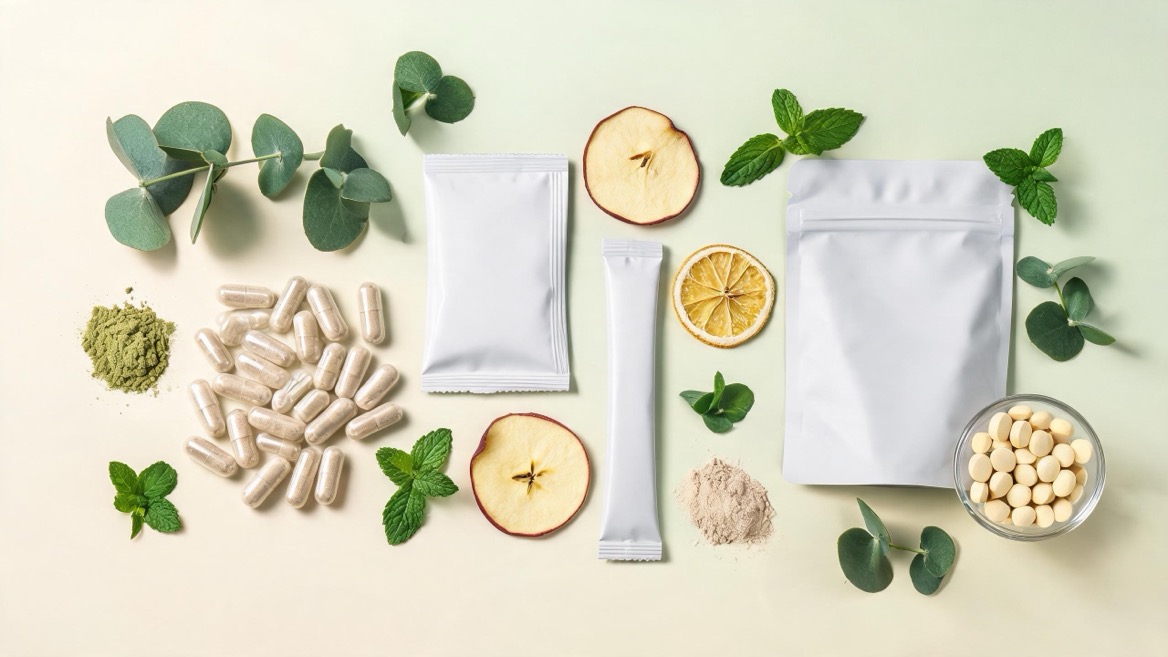
A Five-Step Sourcing Workflow for Custom Supplements
1. Define the non-negotiables
Create a written brief before requesting samples. Include intended benefits, target audience, dosage form, serving size, restricted ingredients, desired claims, target market, and preferred sourcing standards.
For example:
- No artificial colors
- No titanium dioxide
- No dairy or gluten-containing ingredients
- Vegan capsule required
- No unnecessary sweeteners
- Full lot documentation required
- Botanical extract must meet a defined marker specification
2. Separate "must-have" from "nice-to-have"
A frequent sourcing error is treating every preference as mandatory. This can create avoidable supply risk and delay development.
"Must-have" criteria may include allergen exclusions, active dose, regulatory suitability, or a required certification. "Nice-to-have" criteria may include a preferred source country, a particular flavor profile, or a secondary marketing claim.
This distinction helps the development team identify feasible alternatives without weakening the core product concept.
3. Review ingredient risk by category
Not every material carries the same risk profile.
Botanicals may require special attention to species authentication, adulteration risk, pesticides, and active-marker consistency. Minerals may need attention to elemental content and heavy-metal specifications. Probiotics may require strain identification, viable-count expectations, and stability controls. Oils may require oxidation and packaging review.
The National Institutes of Health emphasizes the importance of reliable ingredient identification and analytical characterization when evaluating dietary supplements.
4. Confirm manufacturing compatibility
A formula can look excellent on paper but perform poorly in production. Before launch, assess:
- Powder flow and uniformity
- Ingredient compatibility
- Moisture sensitivity
- Capsule or sachet fill feasibility
- Flavor and sensory requirements
- Packaging barrier needs
- Stability risk over the intended shelf life
- Batch-to-batch reproducibility
This is where custom ODM work becomes valuable. Rather than selecting a generic stock formula, the brand can develop around its intended ingredient policy, benchmark product, dose, and delivery format.
5. Build claims from evidence
Do not let label claims lead ingredient selection. Start with the formula, specifications, evidence, regulatory context, and finished-product label. Then develop claims that accurately reflect what the product is and what can be supported.
For U.S.-market dietary supplements, structure/function claims are subject to specific requirements, including notification to FDA within 30 days after first marketing when such claims are used.

Expert Perspective: Transparency Is a Supply-Chain System
In my experience working with export-oriented supplement content and product-development briefs, many brands focus first on the front-label message. The stronger approach is to build transparency backward from the finished label to the raw-material source.
A trustworthy clean-label product is supported by a chain of decisions:
- A clear formula brief
- Qualified suppliers
- Defined material specifications
- Lot-level documentation
- Appropriate testing and release controls
- Manufacturing records
- Packaging chosen for product protection
- Claims aligned with the actual formula
This is especially important for custom supplements because a brand's product is not just its ingredient list. It is the combined outcome of sourcing, formulation, quality controls, manufacturing execution, and communication.
Work With River Pharm on a Custom Clean-Label Brief
If your brand is planning a capsule, sachet, stick-pack, or soft-pouch supplement, begin with a detailed custom brief rather than a generic private-label catalog.
Share your reference product, ingredient list, intended benefits, target market, packaging format, restricted substances, desired sourcing standards, and target serving size. River Pharm Inc. can then assess formulation feasibility and manufacturing requirements for an OEM formula or a custom ODM development project.
Start with verifiable specifications—not broad claims—and build a supplement that your customers can understand and your supply chain can support.
FAQ
1. Is an organic-certified ingredient always better for a dietary supplement?
No. Organic certification can be meaningful for certain agricultural ingredients and brand strategies, but it does not by itself confirm potency, identity, contaminant control, stability, or suitability for a finished formula. Those factors require separate specifications and quality controls.
2. Can a clean-label supplement contain conventional ingredients?
Yes. A clean-label strategy can include conventional ingredients if they meet defined quality, transparency, safety, and labeling requirements. This is common for vitamins, minerals, amino acids, probiotics, and standardized specialty materials.
3. Can a supplement be called organic if only one ingredient is organic?
The answer depends on the product composition, applicable organic rules, certification status, and label wording. Brands should verify organic-claim eligibility before using organic language on packaging or marketing materials. USDA regulates use of the term "organic" under the National Organic Program.
4. What documents should I request for supplement raw materials?
At minimum, request material specifications, lot-specific Certificates of Analysis, supplier information, origin information, relevant allergen statements, and safety or contaminant documentation. Requirements should expand based on the ingredient type, claim strategy, and destination market.
5. What is the difference between OEM and custom ODM supplement manufacturing?
In OEM manufacturing, the brand provides the formula and the manufacturer produces it. In custom ODM, the brand provides a reference product, ingredient direction, or intended benefit, and the manufacturer supports formulation development and production. River Pharm focuses on OEM and custom ODM rather than generic stock-formula private labeling.
6. Why do packaging formats matter for clean-label supplements?
Packaging affects moisture protection, oxygen exposure, dosage convenience, shelf life, and the need for formula-supporting ingredients. A stable capsule, stick pack, sachet, or pouch begins with matching the formula to the right packaging system.
References
1. U.S. Food and Drug Administration. "Small Entity Compliance Guide: Current Good Manufacturing Practice in Manufacturing, Packaging, Labeling, or Holding Operations for Dietary Supplements." [FDA guidance]. [fda]
2. U.S. Food and Drug Administration. "Questions and Answers on Dietary Supplements." [FDA resource]. [fda]
3. U.S. Food and Drug Administration. "Organic on Food Labels." [FDA overview]. [fda]
4. U.S. Food and Drug Administration. "Dietary Supplement Labeling Guide." [FDA guidance]. [fda]
5. Council for Responsible Nutrition. "Food and Dietary Supplement Regulations Compared." [CRN resource]. [crnusa]
6. National Center for Biotechnology Information. "Dietary Supplements: A Framework for Evaluating Safety." [NCBI Bookshelf]. [ncbi.nlm.nih]
7. National Center for Biotechnology Information. "Dietary Supplements: Quality, Safety, and Efficacy." [PMC article]. [pmc.ncbi.nlm.nih]
8. NutraIngredients-USA. "SupplySide West 2024: What's Happening on the Show Floor." [Industry coverage]. [nutraingredients-usa]
Hot Tags: Clean Label Supplements, Custom Supplement Manufacturing, Dietary Supplement OEM, Supplement ODM Services, Nutraceutical Ingredient Sourcing, Private Label Supplements, Capsule Manufacturing, Stick Pack Supplements, Dietary Supplement Formulation, Supplement Packaging Solutions, custom, private label, manufacturing company, manufacturers, suppliers, factory, Customized, Bulk, quotation, oem, contract manufacturing, manufacturer, b2b manufacturing, gmp certified manufacturing
Did you find this helpful?
Comments (0)
No comments yet. Be the first to comment!
Leave a comment
Related Posts


Riverpharm · Supplement Contract Manufacturing
Your supplement brand, manufactured to the highest standard
From first formula to finished product — we handle manufacturing, packaging, and fulfillment so you can focus on building your brand.
Core services
Contract Manufacturing
GMP-certified production with full batch testing and certificate of analysis on every run.
Custom Formulation & R&D
In-house scientists develop your formula from scratch or refine existing blends for efficacy.
Packaging & Labeling
Design-to-print label service — shelf-ready, FDA-compliant, and retail-tested.
FBA Prep & Fulfillment
Amazon-ready prep and direct-to-warehouse shipping — no extra steps on your end.
By the numbers
NSF
NSF/ANSI 455-2 certified
cGMP
Certified environment
24 hr
AI-accelerated quote turnaround
600K
cGMP+ encapsulator capacity per run
Why Riverpharm
Quality systems with higher standards
- NSF/ANSI 455-2 certified
- cGMP-certified environment
- In-house + third-party testing
- Source-locked ingredients
Production capacity with faster execution
- Heavy-duty hardware
- In-house core reserves
- AI-accelerated quotes
- In-house expert hub
Delivery formats we produce
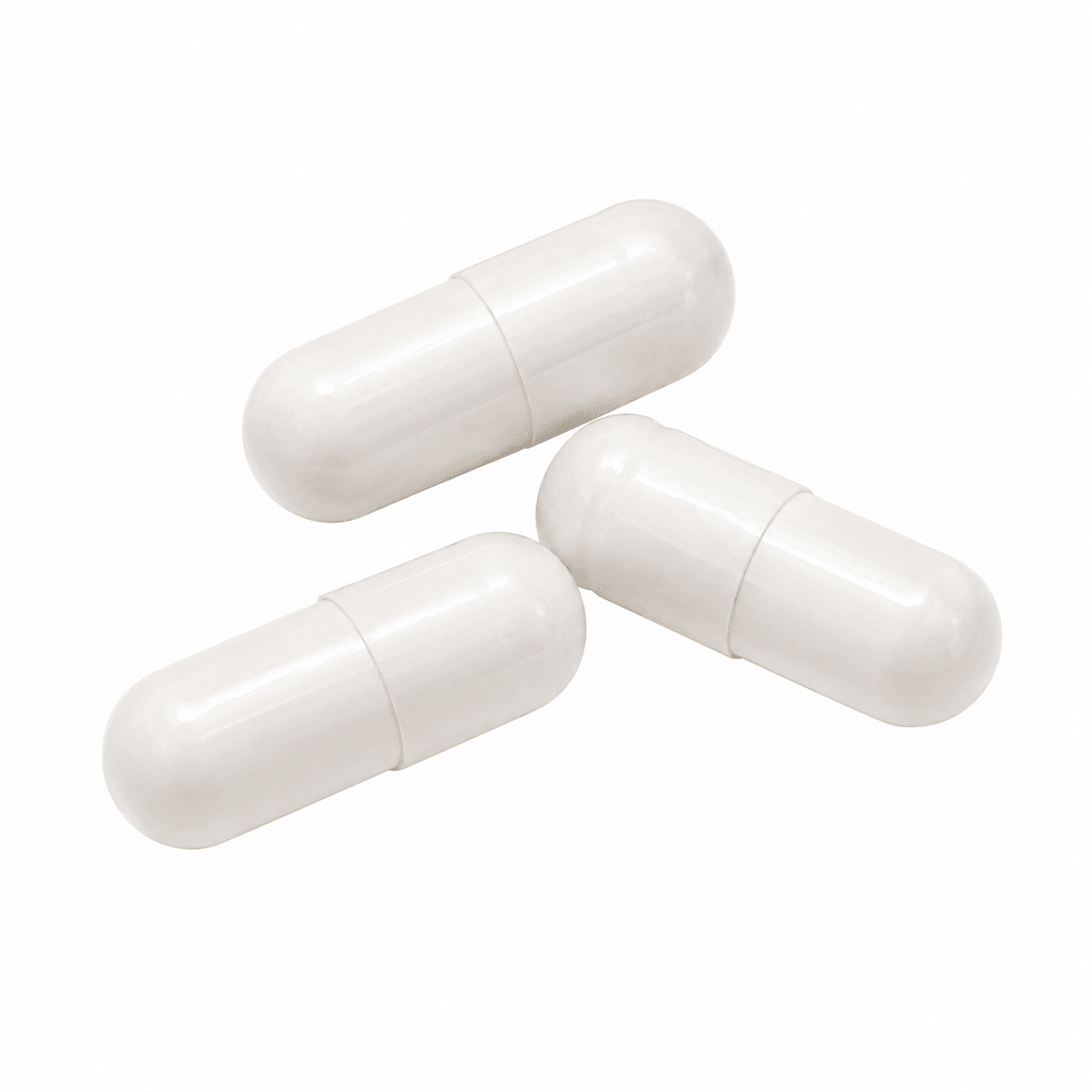
Capsules
Gelatin & HPMC vegetarian
Sachets
Single-dose powder blends
Stick packs
Convenient single-serve
Pouches
Flexible, shelf-ready
Ready to bring your supplement to market?
Free consultation · 24-hour quote · No minimum commitment to get started