Plant-Based Protein vs. Whey Protein Isolate: Solving the Solubility and “Grittiness” Problem in Sports Nutrition
Compare plant-based protein and whey protein isolate for solubility, mouthfeel, grit reduction, flavor, and sports-nutrition powder development.
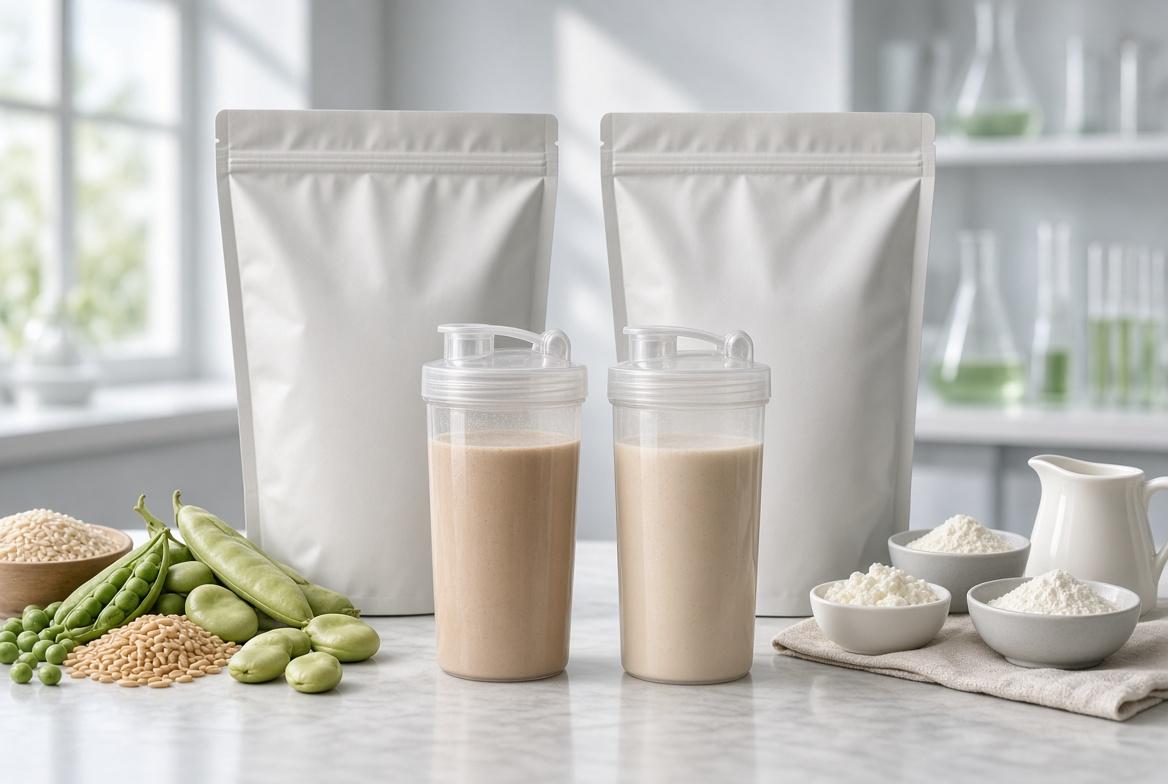
For sports-nutrition brands, the choice between plant-based protein and whey protein isolate is no longer only about protein content, dietary positioning, or amino-acid profiles. It is also a product-experience decision. A protein powder can have an excellent nutrition panel and still disappoint users if it clumps in a shaker, leaves sediment at the bottom, feels sandy on the tongue, or creates an overly thick drink.
At River Pharm Inc., we work with brands developing capsule, sachet, stick-pack, pouch, and powder-based nutritional products. In protein powder development, one issue appears repeatedly: how to create a high-protein formula that delivers both a credible sports-nutrition position and a smooth, repeatable drinking experience. This is especially important for brands comparing plant-based protein powder vs. whey protein isolate or developing hybrid formulas that need to balance taste, texture, protein quality, and manufacturing practicality.
Whey protein isolate is often easier to formulate into a clean-tasting, fast-mixing beverage. Plant-based proteins, meanwhile, can support vegan, dairy-free, and diversified nutrition positioning, but they may require more careful ingredient selection and process development to reduce grittiness, bitterness, sedimentation, and poor dispersion. The solution is not simply choosing one protein source over another. It is designing the right protein system.
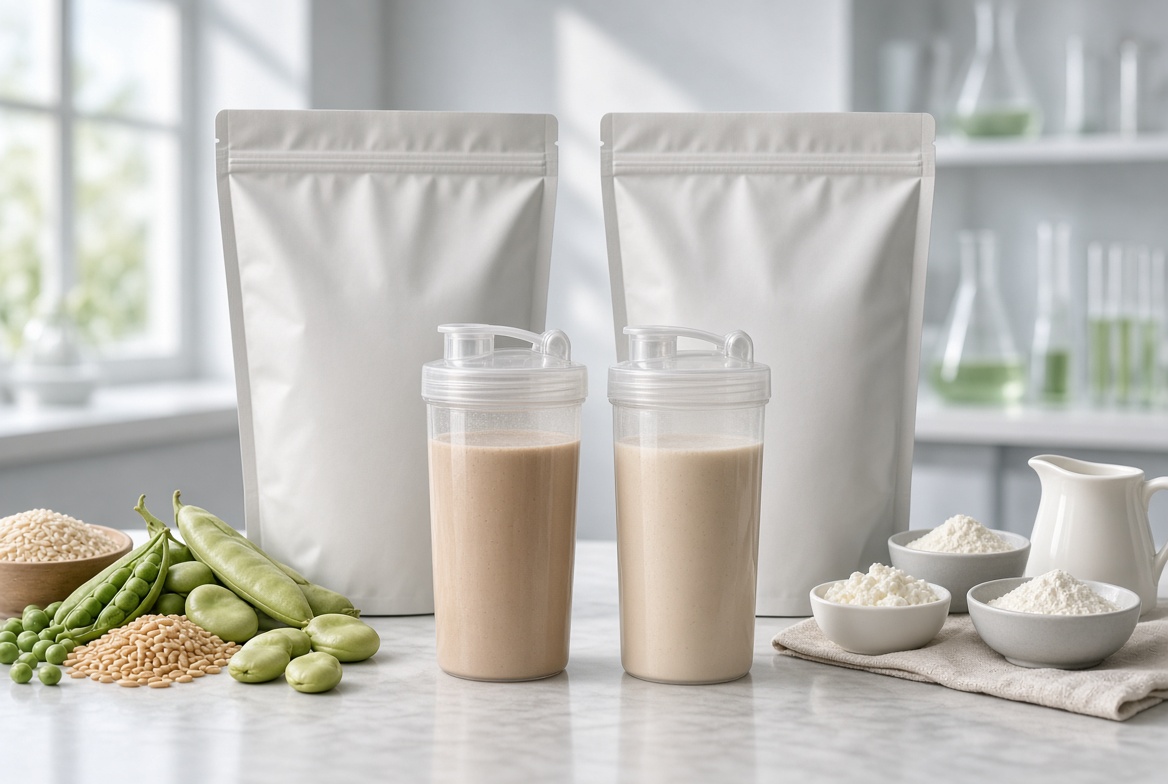
Why Solubility Matters in Sports Nutrition Powder
Solubility is often used casually in protein-powder marketing, but product developers should distinguish between several related performance outcomes:
- Dispersibility: How easily powder distributes through water after shaking or stirring.
- Wettability: How quickly water penetrates the powder particles.
- Suspension stability: How well particles remain suspended instead of settling at the bottom.
- Sedimentation: The amount of visible residue left after mixing and drinking.
- Mouthfeel: The user's sensory perception of smoothness, thickness, dryness, chalkiness, or grittiness.
- Foaming behavior: The amount and stability of foam created during shaking.
- Flavor release: Whether the protein matrix amplifies bitterness, beany notes, dairy notes, or sweetener aftertaste.
For an athlete or active consumer, these factors affect more than convenience. A powder that does not mix consistently can lead to an inconsistent serving experience. A gritty protein shake may be perceived as lower quality, even when its analytical protein content is high.
The NIH Office of Dietary Supplements notes that protein helps build, maintain, and repair muscle, and that protein intake can support training response and recovery. Its professional guidance also cites sports-nutrition recommendations of approximately 0.3 g/kg of high-quality protein in the period from zero to two hours after exercise, with additional servings distributed every three to five hours.
This means a sports protein powder must perform in real life. Users may mix it in cold water at the gym, shake it briefly, and consume it immediately. Formulation decisions must therefore be tested under realistic use conditions—not only in a controlled laboratory setting.
Plant-Based Protein vs. Whey Protein Isolate: Core Differences
Plant protein and whey protein isolate can both be used in sports nutrition, but their physical and sensory behavior differs significantly.
Whey protein is commonly considered a high-quality protein source in exercise nutrition. Research also shows that appropriately designed plant-protein systems can be viable for muscle-support applications. For example, a controlled study found that soy and whey supplementation matched for leucine produced comparable improvements in lean mass and strength among untrained participants completing resistance training.
Another study reported that plant-based protein isolate with added leucine stimulated muscle protein synthesis similarly to whey protein in young adults. These findings do not mean all plant proteins behave identically. Instead, they reinforce an important formulation principle: the source, dose, amino-acid profile, and finished-product design all matter.
Why Plant Protein Powders Can Feel Gritty
The "gritty" sensation in a plant-based protein shake is rarely caused by one single factor. It usually results from a combination of insoluble particles, hydration behavior, protein aggregation, fiber carryover, flavor interactions, and insufficient stabilization.
Particle Size and Insoluble Fractions
Plant protein ingredients may contain larger particles or insoluble fractions that do not fully hydrate in cold water. Even when a powder looks fine and uniform before mixing, consumers may perceive residual particles as sandiness, chalkiness, or graininess after drinking.
The challenge is especially visible in high-protein formulas. As protein loading increases, formulators have less room for supporting ingredients that can improve suspension, flavor masking, or mouthfeel.
Protein Aggregation During Processing
Plant proteins can aggregate under certain pH, temperature, mineral, and processing conditions. Aggregated particles may resist hydration, form visible clumps, or settle more quickly in the finished drink.
This is why a formula cannot be evaluated based only on the raw material specification sheet. A protein may disperse well on its own but perform differently once combined with cocoa, electrolytes, fibers, flavors, sweeteners, minerals, and functional ingredients.
Beany, Bitter, and Astringent Notes
Pea protein isolates are widely used in sports nutrition because of their protein content and market familiarity. However, research on pea-protein-based formulated foods has identified persistent beany, bitter, and astringent sensory notes as challenges that can reduce consumer acceptance. The same research found that protein type and gellan gum content influenced bitterness and astringency, while beaniness was affected by gellan gum and oil content.
This is a useful development lesson: texture and flavor are connected. A stabilizer, oil phase, or sweetener system may affect not just viscosity but also how bitterness, dryness, or beaniness is perceived.
Plant Matrix Complexity
Compared with whey protein isolate, plant proteins may contain more naturally occurring components that affect functionality, including fiber, starch, minerals, lipids, and residual compounds from the original plant material. A review of plant proteins notes that lower solubility can limit functionality in food systems, including foaming, emulsifying, and gelling performance. It also describes the use of polysaccharides combined with processing or modification approaches to improve overall biopolymer solubility.
For B2B brands, this means "plant protein" is not a single ingredient category. A pea isolate, pea concentrate, rice protein, fava protein, soy isolate, or multi-source blend can behave very differently in a sports powder.
Why Whey Protein Isolate Usually Mixes More Easily
Whey protein isolate is not automatically perfect, but it often offers favorable functionality for ready-to-mix sports beverages. Its protein structure and commercial processing history make it familiar to formulators developing shakes, recovery powders, meal-replacement products, and high-protein beverages.
Whey protein isolate generally provides several formulation advantages:
- High protein concentration with relatively low lactose and fat.
- Fast dispersion in many cold-water beverage systems.
- Cleaner visual appearance in light-colored shakes and flavored drinks.
- Less visible sediment when paired with an appropriate agglomeration and flavor system.
- Familiar sensory expectations among established sports-nutrition users.
- Strong amino-acid positioning for muscle-support products.
However, whey isolate still requires careful development. Poor powder agglomeration can cause floating powder islands. Excessive shaking can create undesirable foam. Certain sweeteners can make dairy notes more noticeable. Acidic systems may destabilize protein. Some hydrolyzed whey materials may introduce bitterness. High mineral loads can also affect flavor and stability.
In other words, whey protein isolate may give a formulator a more forgiving starting point, but it does not replace proper product development.
The Most Effective Ways to Improve Protein Powder Solubility
For brands building a premium sports-nutrition powder, the goal should not be merely "no clumps." The goal is a repeatable product experience across different shaker bottles, water temperatures, mixing times, and customer habits.
1. Select Protein Ingredients for the Intended Use
A protein designed for baked goods or bars may not perform well in a cold-water shake. Ingredient selection should account for:
- Target serving size.
- Protein grams per serving.
- Desired liquid volume.
- Water, milk, or plant-based beverage use.
- Flavor system.
- Target pH.
- Added minerals and electrolytes.
- Fiber content.
- Desired viscosity.
- Packaging format.
For example, a 20 g protein serving in 250 mL of water may need a different ingredient system than a 35 g protein serving intended for 400 mL of oat beverage.
2. Use Strategic Protein Blending
A single plant protein source may create more sensory limitations than a properly designed blend. Combining complementary plant proteins can support amino-acid positioning while helping manage flavor and texture.
Potential blend concepts include:
- Pea protein plus rice protein.
- Pea protein plus fava protein.
- Soy isolate plus pea protein.
- Potato protein combined with legume-based proteins.
- Plant protein plus targeted amino acids where appropriate.
- Whey isolate combined with selected plant proteins for flexitarian products.
A plant-protein blend should not be selected only for label appeal. It should be evaluated for hydration speed, sedimentation, flavor, viscosity, and post-swallow mouthfeel.
3. Control Particle Engineering and Powder Flow
Powder processing strongly influences consumer perception. Particle size distribution, density, agglomeration, and surface characteristics can affect wettability and mixing behavior.
A well-developed powder may be engineered to reduce:
- Floating particles.
- Dry clumps.
- Uneven flavor distribution.
- Dusting during filling.
- Sediment after standing.
- Inconsistent scoop weight.
This is particularly relevant for high-dose sports nutrition powders packed in stand-up pouches, stick packs, sachets, or single-serve formats. A formula that performs well in a large tub should also be validated in the intended final package.
4. Build a Mouthfeel System, Not Just a Protein System
A smooth shake is often the result of a coordinated system rather than a single "magic" ingredient. Depending on the target product, a developer may assess suitable stabilizers, emulsification support, flavor carriers, fat powders, cocoa systems, and sweetener combinations.
The correct approach depends on the target label, regulatory market, flavor profile, and customer expectations. A clean-label vegan chocolate shake may need a different design strategy than a fruit-flavored recovery drink or a creamy vanilla meal-replacement powder.
5. Test Under Consumer-Realistic Conditions
A formula should be tested beyond bench-top mixing. Useful evaluations include:
1. Shake testing at cold, ambient, and moderately warm water temperatures.
2. Mixing in water, dairy milk, and selected plant-based beverages.
3. Sedimentation checks at 30 seconds, 5 minutes, and 15 minutes.
4. Sensory review immediately after mixing and after standing.
5. Foam-height observation after standardized shaking.
6. Powder flow testing during production and packaging.
7. Accelerated stability evaluation for flavor, color, and physical consistency.
This testing process can reveal issues that may not be visible in a standard laboratory sample. A powder that seems smooth after high-speed mixing may still be difficult for a consumer using a handheld shaker bottle.
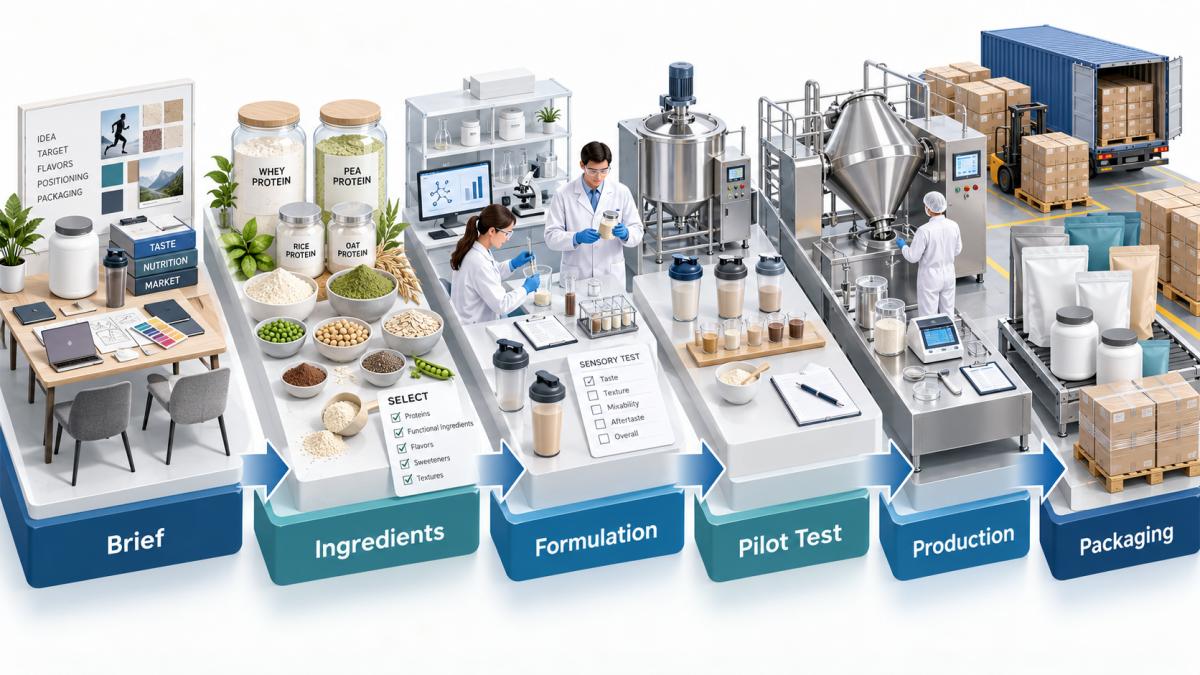
Expert Development Insight: Grittiness Is Often a System Failure
From a formulation perspective, "grittiness" should not be treated as a simple raw-material defect. It is often a system-level mismatch among protein source, particle characteristics, liquid volume, pH, stabilizers, flavor system, sweeteners, minerals, and target use instructions.
For example, a high-protein vegan chocolate powder may become gritty because:
- The protein dosage is too high for the intended water volume.
- The selected protein blend has poor cold-water hydration.
- Cocoa adds additional insoluble solids.
- Mineral fortification increases perceived dryness or bitterness.
- The powder has insufficient instantizing characteristics.
- The product instructions do not specify an adequate shaking method.
- Sediment is being mistaken for "poor flavor," when the real issue is suspension stability.
The best solution is therefore diagnostic. Instead of immediately adding more sweetener or thickener, the development team should identify the root cause through structured formulation trials.
Plant-Based Protein vs. Whey Protein Isolate: Which Is Better?
Neither option is universally better. The stronger choice depends on the brand's target customer, product promise, label requirements, price position, flavor direction, and sensory standard.
Choose a whey protein isolate approach when the brand prioritizes:
- A familiar sports-nutrition format.
- High protein concentration with relatively low lactose.
- Fast mixing in water.
- A smooth, light beverage texture.
- Traditional performance and recovery positioning.
- A dairy-based protein proposition.
Choose a plant-based protein approach when the brand prioritizes:
- Vegan or dairy-free positioning.
- Plant-forward product architecture.
- Flexitarian consumer appeal.
- Ingredient diversification.
- Specific allergen or dietary preferences.
- Differentiated flavor and ingredient storytelling.
Choose a blended approach when the brand wants:
- Improved plant-protein texture.
- More balanced flavor.
- A broader amino-acid strategy.
- Flexitarian positioning.
- A differentiated sports-nutrition experience.
A 2024 study reported that a novel plant-protein blend stimulated post-exercise myofibrillar protein synthesis to an equivalent extent as whey protein, supporting the potential of carefully designed plant-protein blends in post-exercise nutrition. The practical message for brand owners is clear: formulation quality matters as much as category selection.
How River Pharm Inc. Supports Protein Powder Development
River Pharm Inc. provides OEM manufacturing for brands that already have a finalized formula: the client supplies the formula, and we manufacture the product.
For brands that need formulation support, our customized ODM service begins with a reference product, target ingredients, nutritional direction, flavor concept, or intended benefit direction. Our team can then support the research, formulation, and manufacturing process for an original product concept. This is a tailored development process rather than a public-mold or simple private-label approach.
For sports-nutrition powder projects, development discussions can include:
- Plant-based protein powder concepts.
- Whey protein isolate powder concepts.
- Protein blend design.
- Single-serve sachets and stick packs.
- Larger powder pouch formats.
- Flavor and sweetness direction.
- Solubility and mouthfeel targets.
- High-protein serving requirements.
- Added amino acids, vitamins, minerals, fiber, or functional ingredients.
- Trial evaluation for clumping, sediment, texture, and mixing behavior.
Manufacturing quality also matters throughout the process. The FDA states that dietary-supplement manufacturers, packagers, and holders must follow current good manufacturing practices designed to help ensure identity, purity, quality, strength, and composition. Product development should therefore connect formulation goals with robust production controls, raw-material specifications, process consistency, and appropriate finished-product testing.
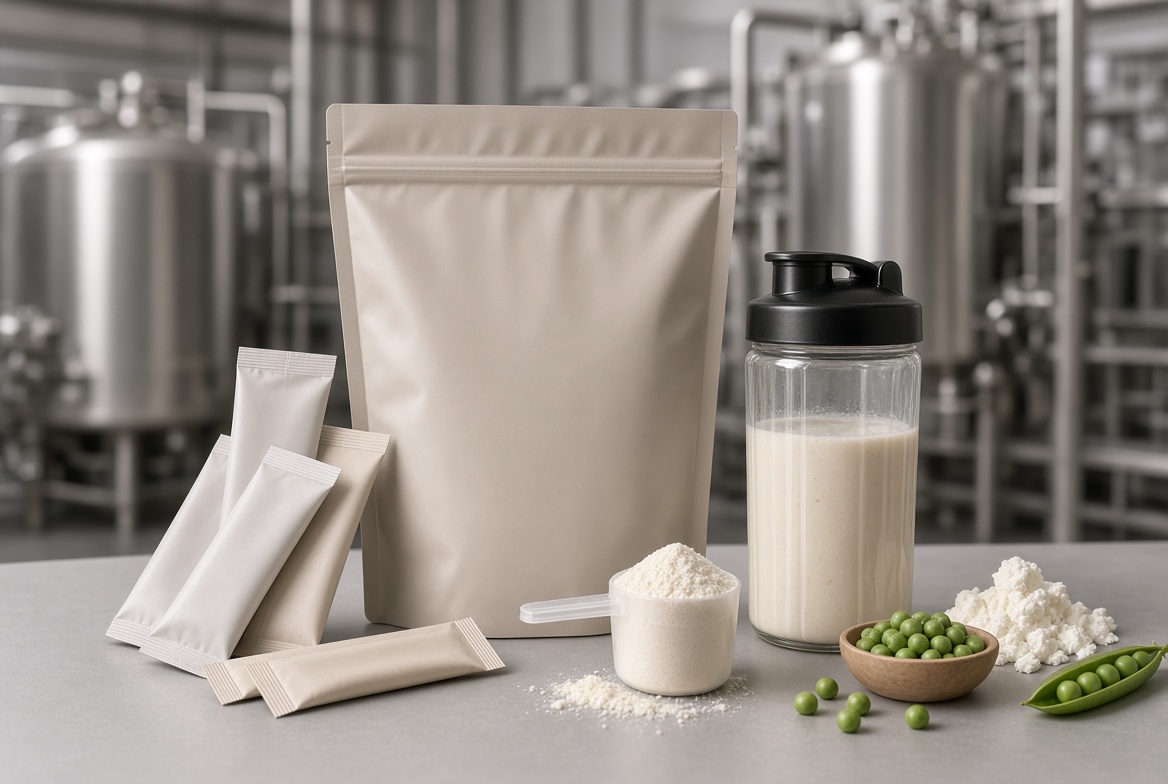
Final Takeaway
The debate between plant-based protein vs. whey protein isolate should not end with protein source alone. Whey isolate can offer a strong starting point for smooth, fast-mixing sports-nutrition powders. Plant proteins can support compelling vegan and dairy-free concepts, but they often require more deliberate work on dispersion, suspension, flavor masking, and mouthfeel.
The brands that win in sports nutrition are not simply those that claim the highest protein number. They are the brands that deliver a shake consumers want to drink again tomorrow.
If you have an existing protein formula ready for production, River Pharm Inc. can support OEM manufacturing. If you have a benchmark product, target protein source, ingredient direction, or performance concept but need a distinctive formula developed and manufactured, contact our team to discuss a customized ODM protein powder project.
FAQ
1. Is whey protein isolate more soluble than plant-based protein?
In many cold-water sports-nutrition applications, whey protein isolate can be easier to disperse and may leave less visible sediment than some plant proteins. However, final performance depends on ingredient quality, powder processing, serving size, flavor system, and the full formula.
2. Why does plant protein powder feel gritty?
Grittiness may result from insoluble particles, large particle size, incomplete hydration, protein aggregation, fiber or starch residues, poor suspension stability, or interactions with cocoa, minerals, flavors, and other formula components.
3. Can plant protein powder be made smoother?
Yes. A smoother result may be achieved through better protein-source selection, strategic protein blending, particle engineering, optimized agglomeration, stabilization systems, flavor masking, and realistic shake-and-sedimentation testing.
4. Can plant protein support sports-nutrition products?
Yes. Plant proteins can be used in sports-nutrition products, especially when protein dose, amino-acid composition, total dietary intake, and training context are considered. Research indicates that selected plant-protein blends and leucine-matched formulations can support muscle-protein responses comparable to whey in certain study conditions.
5. Does whey protein isolate contain lactose?
Whey protein isolate is typically processed to contain less lactose than whey protein concentrate, but the exact lactose level varies by ingredient and product specification. Brands should verify the specification of the specific raw material used and ensure that labeling is appropriate for the intended market.
6. What packaging works best for sports protein powder?
The best format depends on serving size, usage scenario, shelf-life needs, and brand positioning. Pouches suit multi-serving products, while sachets and stick packs can support travel, sampling, gym use, and portion-controlled formats.
7. Can River Pharm Inc. develop a vegan protein powder based on a reference product?
Yes. Under customized ODM service, a brand can provide a reference product, target ingredients, intended functionality, flavor direction, or market positioning. River Pharm Inc. can then support original formula development and manufacturing. This is not a public-mold private-label service.
References
1. National Institutes of Health, Office of Dietary Supplements. "Dietary Supplements for Exercise and Athletic Performance: Health Professional Fact Sheet." Covers protein's role in muscle maintenance and repair, exercise response, recovery, and protein-intake guidance for athletes. [Read the NIH resource]. [ods.od.nih]
2. U.S. Food and Drug Administration. "Questions and Answers on Dietary Supplements." Explains that dietary-supplement manufacturers, packagers, and holders must follow current good manufacturing practices to help ensure product identity, purity, quality, strength, and composition. [Read the FDA resource]. [fda]
3. U.S. Food and Drug Administration. "Current Good Manufacturing Practices (CGMPs) for Food and Dietary Supplements." Provides information on sanitation, equipment, facility design, process controls, and other manufacturing practices. [Read the FDA resource]. [fda]
4. Hevia-Larraín, V. et al. "No Significant Differences in Muscle Growth and Strength Development When Consuming Soy and Whey Protein Supplements Matched for Leucine Following a 12 Week Resistance Training Program in Men and Women." International Journal of Environmental Research and Public Health. [Read the PubMed record]. [pubmed.ncbi.nlm.nih]
5. Pinckaers, P. J. M. et al. "Muscle Protein Synthesis in Response to Plant-Based Protein Isolate with Added Leucine Compared with Whey Protein in Young Men and Women." Journal of Nutrition. [Read the PubMed record]. [pubmed.ncbi.nlm.nih]
6. Kutzli, I. et al. "Plant Protein Blend Ingestion Stimulates Post-Exercise Myofibrillar Protein Synthesis Comparable to Whey Protein." [Read the full article]. [pmc.ncbi.nlm.nih]
7. Lins, K. et al. "Using Multiple Sensory Profiling Methods to Gain Insight Into Temporal Perceptions of Pea Protein-Based Formulated Foods." Journal of Food Science. Discusses beany, bitter, and astringent notes associated with pea-protein formulations. [Read the PubMed record]. [pubmed.ncbi.nlm.nih]
8. Loveday, S. M. "Plant Proteins: A Roadmap for Future Foods." Foods. Reviews functional limitations of plant proteins, including solubility and related performance characteristics. [Read the full article]. [pmc.ncbi.nlm.nih]
9. NutraIngredients. "AminoLabs Plant Protein Blend Aims to Optimise Taste, Texture and Nutrition." Industry reporting on consumer challenges involving plant-protein graininess, texture, and aftertaste. [Read the article]. [nutraingredients]
Hot Tags: Plant Based Protein Powder, Whey Protein Isolate, Sports Nutrition Manufacturing, Protein Powder OEM, Custom Protein Powder, Plant Protein Formulation, Protein Powder Solubility, Gritty Protein Powder, Dietary Supplement ODM, Sports Nutrition Supplements
Did you find this helpful?
Comments (0)
No comments yet. Be the first to comment!
Leave a comment
Related Posts
Riverpharm · Supplement Contract Manufacturing
Your supplement brand, manufactured to the highest standard
From first formula to finished product — we handle manufacturing, packaging, and fulfillment so you can focus on building your brand.
Core services
Contract Manufacturing
GMP-certified production with full batch testing and certificate of analysis on every run.
Custom Formulation & R&D
In-house scientists develop your formula from scratch or refine existing blends for efficacy.
Packaging & Labeling
Design-to-print label service — shelf-ready, FDA-compliant, and retail-tested.
FBA Prep & Fulfillment
Amazon-ready prep and direct-to-warehouse shipping — no extra steps on your end.
By the numbers
NSF
NSF/ANSI 455-2 certified
cGMP
Certified environment
24 hr
AI-accelerated quote turnaround
600K
cGMP+ encapsulator capacity per run
Why Riverpharm
Quality systems with higher standards
- NSF/ANSI 455-2 certified
- cGMP-certified environment
- In-house + third-party testing
- Source-locked ingredients
Production capacity with faster execution
- Heavy-duty hardware
- In-house core reserves
- AI-accelerated quotes
- In-house expert hub
Delivery formats we produce
Capsules
Gelatin & HPMC vegetarian
Sachets
Single-dose powder blends
Stick packs
Convenient single-serve
Pouches
Flexible, shelf-ready
Ready to bring your supplement to market?
Free consultation · 24-hour quote · No minimum commitment to get started