Private Label vs Custom Formulation: Which Path Is Right for Your Supplement Brand With River Pharm Inc
Private label or custom formulation? Learn how River Pharm’s OEM/ODM services help build differentiated, evidence‑based supplement brands for long‑term growth.

Introduction: A Strategic Choice for Modern Nutrition Brands
If you are building or scaling a dietary supplement brand today, one of the most important strategic decisions you will make is whether to launch with private label products or invest in custom formulation through an OEM/ODM partner like River Pharm Inc. This choice shapes how quickly you can go to market, how differentiated your products will be, how you manage regulatory responsibilities, and ultimately how much long‑term brand equity you can build.
River Pharm Inc is a specialist in the research, development, and manufacturing of dietary and nutrition supplements, providing end‑to‑end OEM/ODM services for capsules, small sachets, stick packs, and soft pouches. Our current focus is on custom formulation rather than generic private label catalog products, because we see the greatest value for serious brands in owning formulas, controlling quality, and aligning with scientific and regulatory best practices.
This article approaches the topic from both a practitioner's and an industry expert's perspective. It will walk you through the fundamental differences between private label and custom formulation, how OEM and ODM models work in practice, and how to decide which approach fits your brand's stage, capabilities, and ambitions.

What Is Private Label Supplement Manufacturing?
Private label supplement manufacturing is a model in which you select pre‑developed formulas from a manufacturer's catalog, apply your own branding and packaging, and then sell those products under your label. The manufacturer owns and controls the formulas and production process. You typically choose from standardized products across common categories such as multivitamins, probiotics, omega‑3 oils, sports performance blends, or general wellness formulations.
The primary attraction of private label is speed and simplicity. You do not need to invest heavily in R&D, formulation testing, or iterative product design. Instead, you leverage a ready‑made formula and focus your resources on branding, marketing, and distribution. For new brands or retailers entering the supplement category, this can be a pragmatic way to test demand or build a basic product line.
However, private label has clear limitations. Because many brands can purchase the same formulas, your product may be only marginally different from competitors. Your ability to fine‑tune ingredient dosages, delivery forms, or synergistic combinations is often restricted to minor tweaks. Over time, this can make it harder to justify premium pricing or foster strong loyalty among discerning consumers and healthcare professionals.
What Is Custom Formulation Through OEM and ODM?
Custom formulation is a more advanced manufacturing approach in which your products are designed, engineered, and produced specifically for your brand. With River Pharm, this happens through two closely related models: OEM (Original Equipment Manufacturer) and ODM (Original Design Manufacturer).
In an OEM relationship, you bring the formula to the table. Your team or collaborators have already designed the ingredient profile, dosage levels, and intended health benefits. River Pharm then translates that formula into a robust manufacturing process, validates its feasibility, sources appropriate raw materials, and produces finished products at scale in the dosage forms you require, such as capsules or stick packs. OEM is ideal if you already have a strong formulation and need a reliable partner to handle the technical and operational side.
ODM goes a level deeper. In this model, you provide the concept, direction, and target outcomes rather than a fully defined formula. You may share reference products, core ingredients you care about, or a particular health domain such as immune support, cognitive performance, weight management, or healthy aging. River Pharm's R&D team then designs a custom formula for your brand, balancing efficacy, safety, regulatory constraints, and manufacturability. ODM is particularly valuable for brands that want to innovate and differentiate but do not have full in‑house formulation capability.
River Pharm does not offer public‑mold ODM or simple "label‑slapping" services. Our ODM is genuinely custom. Each formula is designed to reflect your positioning, your target population, and your business goals, rather than being repackaged from generic stock.
Private Label vs Custom Formulation: Strategic Differences
From an experienced content strategist's and product owner's perspective, the most critical differences between private label and custom formulation fall into several strategic dimensions:
First, there is formula ownership and control. With private label, the manufacturer controls the formula. You may change flavors or small cosmetic features, but the underlying composition is shared across multiple clients. With custom formulation, the formula is created specifically for your brand. That gives you meaningful control over ingredients, dosages, and future iterations.
Second, consider differentiation and brand equity. Private label can get you into the market quickly, but it rarely delivers a truly unique product. Custom formulation allows you to build proprietary blends, unique ingredient synergies, and tailored delivery systems. Over time, these elements become part of your brand's identity and narrative, supporting stronger loyalty and positioning.
Third, time‑to‑market versus long‑term value. Private label wins on speed. You can often go from concept to launch within weeks if you choose from an existing catalog. Custom formulation takes longer. You need time for R&D, pilot batches, stability testing, and iterations. That upfront investment, however, often pays off in the form of sustainable differentiation and more defensible pricing.
Fourth, regulatory and quality oversight. With private label, you rely heavily on the manufacturer's existing documentation and standards. With custom formulation, you have the opportunity to build quality and regulatory alignment into the formula from day one, working with a partner like River Pharm that understands how to design products consistent with regulatory expectations for dietary supplements.
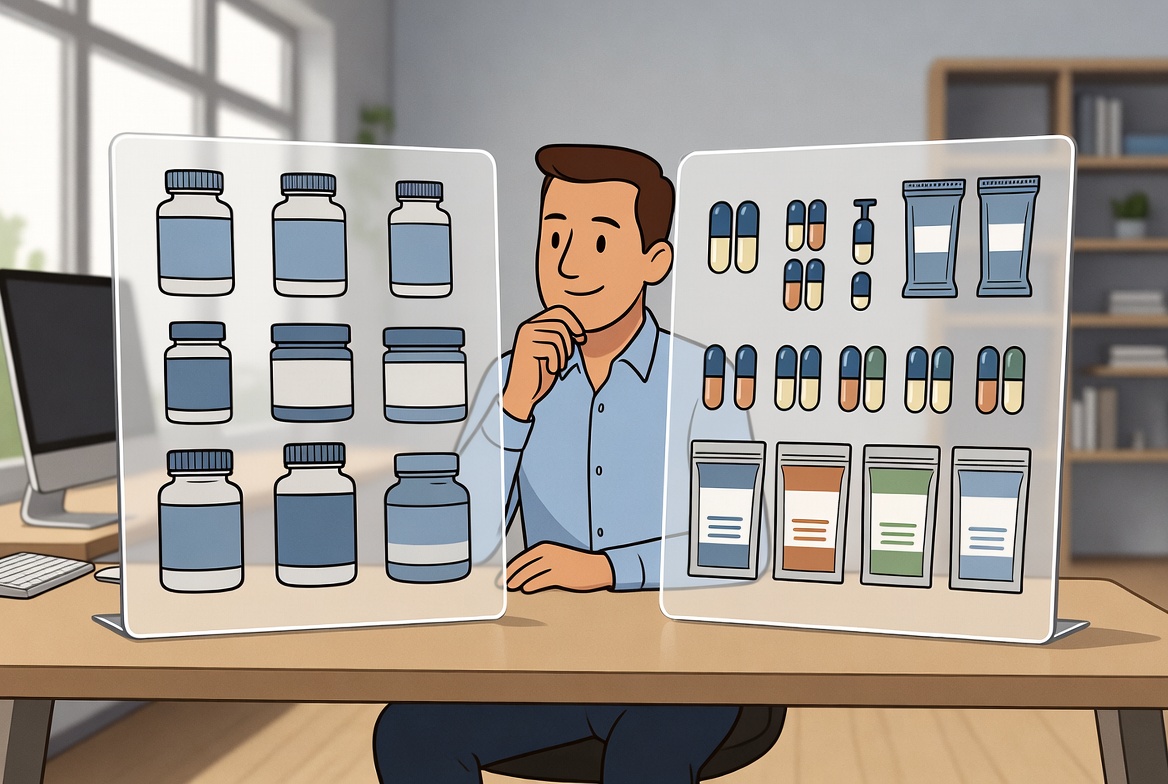
How Much Control Do You Need? OEM vs ODM at River Pharm
Once you decide that custom formulation is the right path, the next question is how much control and expertise you already have in‑house. This is where choosing between OEM and ODM becomes important.
If you already work with nutrition scientists, clinicians, or experienced formulators, and you have clear formulas ready to be manufactured, OEM is often the most efficient model. You retain creative and scientific control over the formula while River Pharm focuses on scaling production, optimizing the manufacturing process, and ensuring consistent quality across batches and packaging formats. This division of responsibilities allows you to be deeply involved in product design while leveraging professional manufacturing capabilities.
If you have strong market insights, brand positioning, and customer segmentation data but limited internal formulation expertise, ODM offers a different route. Here, River Pharm's team becomes your extended R&D department. You share your concept, target customer profile, desired claims, and any constraints such as cost, dosage form, or dietary preferences. River Pharm then designs a formula that meets those requirements, validates its feasibility, and prepares it for scaled manufacturing.
In both models, you benefit from River Pharm's experience with capsules, small sachets, stick packs, and soft pouches, along with a deep understanding of how formulation choices interact with dosage forms, stability, and user experience.
The Role of R&D and Formulation Science
For brands aiming to be taken seriously by informed consumers and healthcare professionals, formulation science is central. In practice, this means understanding not only what ingredients to include but also how they interact, how they are absorbed, and how they fit into realistic usage patterns.
A private label approach often treats formulation as a black box. You choose a product category, agree to the standardized formula, and focus on marketing the result. You have limited input into how the formula was originally designed, which trade‑offs were made, or how future scientific developments will shape revisions.
Custom formulation with River Pharm allows you to make R&D a visible, deliberate part of your brand strategy. You can work with our team to:
- Align ingredient selection with current scientific understanding of efficacy and safety.
- Design formulas targeted to specific demographics or usage scenarios, such as athletes, office workers, or older adults.
- Avoid combinations and dosing patterns that may not be appropriate for your audience.
- Incorporate new evidence or regulatory developments into future iterations of your product line.
This level of collaboration not only improves product quality but also creates richer storytelling opportunities. You can speak credibly about why a product was designed in a certain way, why particular ingredients were chosen, and how those choices relate to your customers' real‑world needs.

Supply Chain, Ingredient Integrity, and Manufacturing Discipline
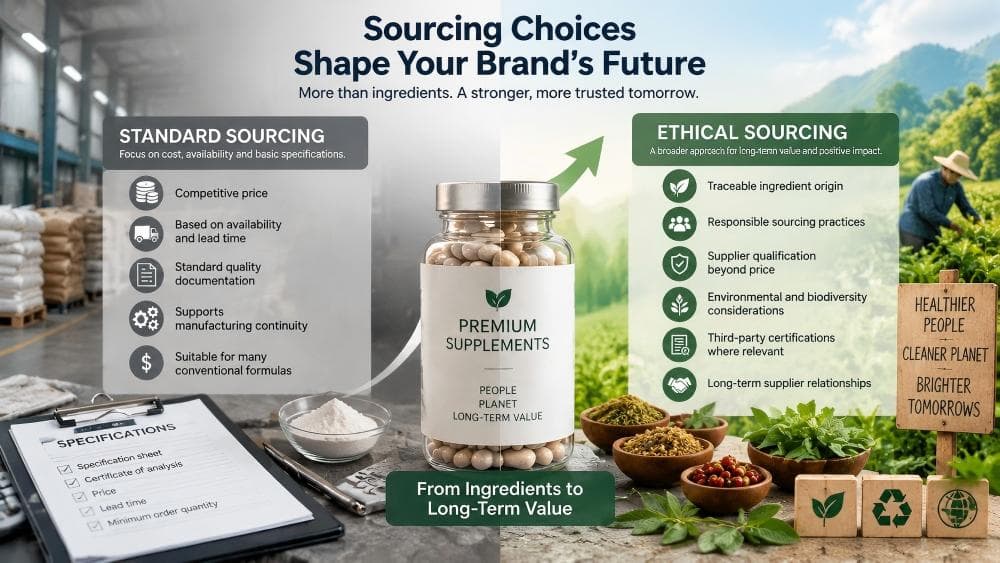
Another important area where custom formulation stands apart from private label is supply chain and ingredient integrity. Dietary supplements rely heavily on global supply chains for botanicals, vitamins, minerals, and specialized compounds. The quality and consistency of these ingredients can vary widely, and managing that variability is a core manufacturing responsibility.
With private label, many decisions about ingredient sourcing, testing, and qualification happen behind the scenes. You may receive basic documentation, but you typically have limited influence over the upstream supply chain unless you are a major client.
In a custom OEM/ODM relationship with River Pharm, supply chain design becomes part of the conversation. You can specify preferred regions of origin, certifications, and testing standards. You can work with River Pharm to implement traceability from raw materials through to finished goods. You can ensure that purity and potency remain consistent as volumes increase or as you expand into new markets.
Manufacturing discipline is equally crucial. Turning powders and extracts into stable, reliable capsules, sachets, stick packs, or pouches requires control over blending, filling, sealing, and environmental conditions. River Pharm invests in process engineering that is adapted to each custom formula rather than applying one generic set of procedures to every product. This is particularly important for formulas containing sensitive ingredients that are affected by moisture, heat, or oxygen.
Time‑to‑Market vs Long‑Term Brand Equity
From a brand owner's standpoint, there is a constant tension between launching quickly and building deep value. Private label usually wins the time‑to‑market race. If your primary objective is to test a new channel or fulfill a specific short‑term opportunity, private label can be the logical choice.
However, time‑to‑market is only one dimension. When you evaluate the next three to five years, factors like customer loyalty, word‑of‑mouth, practitioner trust, and pricing power often matter more. Custom formulation positions you to compete in those areas. You can build messaging around unique formulas, long‑term product roadmaps, clinical collaborations, and iterative improvements.
In addition, custom products can support more advanced content strategies. You can publish deeper educational articles, expert interviews, and evidence‑based guides that explain the rationale behind your formulas. That type of content not only serves your customers but also aligns well with modern search engine expectations for expertise, experience, and trustworthiness.
Real‑World Scenarios: When Each Path Makes Sense
In practice, there is no single "right" answer for all brands. A realistic, expert view recognizes that both private label and custom formulation can be appropriate in different scenarios.
Private label may be suitable when:
- You are launching a brand for the first time and want to validate demand without heavy upfront R&D investment.
- You need basic products to complement other offerings in your portfolio, such as a retailer building a house brand line.
- You are running a seasonal or short‑term campaign where speed and volume matter more than deep differentiation.
Custom formulation with River Pharm is usually the better choice when:
- You aim to build a long‑term, evidence‑based brand with a clear point of view on health and wellness.
- You want to target specific issues or populations with tailored formulas rather than generic blends.
- You are ready to invest in product IP, quality infrastructure, and detailed documentation.
- You envision future clinical collaborations, practitioner partnerships, or expansion into demanding regulatory environments.
Many brands move along this spectrum over time. Some start with private label to test the category, then shift toward custom OEM/ODM as they grow and seek deeper value. Others begin with custom formulation from day one to position themselves immediately as premium, expert‑driven brands.
UX‑Driven Decision Framework for Brand Owners
For founders, marketing leaders, and product managers, it helps to have a simple decision framework that reflects not only technical factors but also user experience and brand storytelling. Consider the following questions:
1. What is your primary strategic goal over the next three years: speed or sustainable differentiation?
2. How much formulation and regulatory expertise do you have in‑house today?
3. How important are transparency and evidence‑based messaging to your brand identity?
4. How comfortable are you with investing time and resources into R&D and supply chain design?
If your answers lean strongly toward speed, limited internal expertise, and short‑term campaigns, private label may be acceptable. If, however, you place high value on evidence, transparency, and long‑term differentiation, the case for custom formulation with an OEM/ODM partner like River Pharm becomes compelling.
User experience should also guide your decision. Products that reflect thoughtful formulation and clear, honest communication create smoother experiences for consumers: fewer surprises, clearer usage guidance, and more trust. That translates into lower churn, better reviews, and more organic advocacy.
Why River Pharm Focuses on Custom OEM/ODM
River Pharm has chosen to focus its resources on custom OEM/ODM services rather than generic private label offerings because we believe that is where we can deliver the greatest value for serious supplement brands. Our team brings together expertise in formulation science, process engineering, and practical regulatory knowledge to support brands that want to build credible, differentiated products rather than simply enter the market quickly.
By specializing in capsules, small sachets, stick packs, and soft pouches, we can pay close attention to how dose forms influence user experience and product performance. We work with each client to align the choice of dose form with their product concept, target user, and practical constraints such as portability, dosing frequency, and packaging aesthetics.
This focus also means we are a better partner for brands that care about consistency and scalability. Instead of trying to be everything to everyone, we commit to doing custom supplement manufacturing at a high level and continuously refining our processes as science and regulations evolve.
Plan Your Next Custom Supplement With River Pharm
If you are at the point where generic private label formulas feel limiting, or you are planning a new product line that needs a clearer scientific and strategic foundation, it is time to explore custom formulation.
Start by articulating your product vision: which health domains you want to address, which audiences you want to serve, and how you want your brand to be perceived. Then, reach out to River Pharm to discuss how OEM or ODM models can translate that vision into capsules, sachets, stick packs, or soft pouches that your customers will trust and use consistently.
Choosing custom formulation is more than a manufacturing decision. It is a statement about the kind of brand you want to build and the depth of value you intend to deliver. River Pharm is ready to be your partner in that journey, helping you move beyond generic private label offerings into a portfolio of supplements that reflect your expertise, your values, and your long‑term ambitions.
References
1. U.S. Food and Drug Administration – Dietary Supplements https://www.fda.gov/food/dietary-supplements
2. U.S. Food and Drug Administration – FDA 101: Dietary Supplements https://www.fda.gov/consumers/consumer-updates/fda-101-dietary-supplements
3. U.S. Food and Drug Administration – Questions and Answers on Dietary Supplements https://www.fda.gov/food/information-consumers-using-dietary-supplements/questions-and-answers-dietary-supplements
4. U.S. Food and Drug Administration – Supplement Your Knowledge https://www.fda.gov/food/information-consumers-using-dietary-supplements/supplement-your-knowledge
5. National Institutes of Health, Office of Dietary Supplements – Dietary Supplement Fact Sheets https://ods.od.nih.gov/factsheets/list-all/
6. National Institutes of Health, Office of Dietary Supplements – Health Information https://ods.od.nih.gov/HealthInformation/healthinformation.aspx
7. Nutrition.gov – Dietary Supplements https://www.nutrition.gov/topics/dietary-supplements
8. River Pharm Inc – Custom Supplement Contract Manufacturing vs Private Label https://www.riverpharm.com
Hot Tags: Private Label Supplements, Custom Formulation, OEM Manufacturing, ODM Services, Dietary Supplement Manufacturing, B2B Nutrition Brand, Contract Manufacturing, Capsule Stick Pack Production, Soft Pouch Packaging, Supplement Brand Strategy
Did you find this helpful?
Comments (0)
No comments yet. Be the first to comment!
Leave a comment
Related Posts

Riverpharm · Supplement Contract Manufacturing
Your supplement brand, manufactured to the highest standard
From first formula to finished product — we handle manufacturing, packaging, and fulfillment so you can focus on building your brand.
Core services
Contract Manufacturing
GMP-certified production with full batch testing and certificate of analysis on every run.
Custom Formulation & R&D
In-house scientists develop your formula from scratch or refine existing blends for efficacy.
Packaging & Labeling
Design-to-print label service — shelf-ready, FDA-compliant, and retail-tested.
FBA Prep & Fulfillment
Amazon-ready prep and direct-to-warehouse shipping — no extra steps on your end.
By the numbers
NSF
NSF/ANSI 455-2 certified
cGMP
Certified environment
24 hr
AI-accelerated quote turnaround
600K
cGMP+ encapsulator capacity per run
Why Riverpharm
Quality systems with higher standards
- NSF/ANSI 455-2 certified
- cGMP-certified environment
- In-house + third-party testing
- Source-locked ingredients
Production capacity with faster execution
- Heavy-duty hardware
- In-house core reserves
- AI-accelerated quotes
- In-house expert hub
Delivery formats we produce
Capsules
Gelatin & HPMC vegetarian
Sachets
Single-dose powder blends
Stick packs
Convenient single-serve
Pouches
Flexible, shelf-ready
Ready to bring your supplement to market?
Free consultation · 24-hour quote · No minimum commitment to get started