Proprietary Blends vs. Transparent Labeling: Building Consumer Trust in the Competitive Keto Supplement Market
Compare proprietary blends and transparent labeling for keto supplements. Learn how to protect formulas, build consumer trust, and select the right label strategy.

In the crowded keto supplement market, proprietary blends vs. transparent labeling is not simply a packaging decision. It is a formulation, compliance, positioning, and consumer-trust decision that can shape whether a keto brand looks credible—or difficult to evaluate.
For brands developing keto capsules, stick packs, sachets, or soft pouches, the label is often the first proof point consumers see. A proprietary blend can help protect a distinctive formula. Transparent labeling can help buyers understand exactly what they are taking and why. The strongest choice depends on the brand’s product strategy, target customer, substantiation plan, and long-term market position.
This guide compares proprietary blends and transparent labeling for keto supplements, explains their practical trade-offs, and outlines how brands can develop a label strategy that protects innovation without sacrificing credibility.

What Is a Proprietary Blend?
A proprietary blend is a group of dietary ingredients listed under one blend name in the Supplement Facts panel. The label generally discloses the total weight of the blend and identifies the ingredients it contains, but it does not have to disclose the exact amount of every ingredient in that blend.
For example, a keto product might list:
Keto Metabolic Support Blend — 1,500 mg
Beta-hydroxybutyrate salts, MCT powder, L-carnitine, green tea extract, chromium picolinate
Under U.S. labeling requirements, ingredients in a proprietary blend must be listed in descending order of predominance by weight, and the total quantity of the blend must be declared. However, the individual quantity of each eligible ingredient does not necessarily need to appear.
This approach can help a brand protect its formula architecture, especially when the value of a product comes from a carefully designed ingredient ratio, processing method, flavor system, or delivery format.
However, it also creates a natural consumer question:
How much of each ingredient am I actually getting?
That question matters especially in keto supplements, where consumers may compare ketone salts, MCTs, electrolytes, botanical extracts, amino acids, and metabolic-support ingredients across multiple brands.
What Is Transparent Labeling?
Transparent labeling means disclosing the specific amount of each active ingredient per serving rather than hiding individual dosages within a blend.
A transparent keto supplement label may look like this:
Calcium beta-hydroxybutyrate: 1,000 mg
Magnesium beta-hydroxybutyrate: 750 mg
Sodium beta-hydroxybutyrate: 750 mg
MCT powder: 1,500 mg
L-carnitine L-tartrate: 500 mg
Chromium: 100 mcg
This format enables consumers, retailers, health professionals, and formulation teams to evaluate the product more easily. It also makes it easier to compare a formula’s active ingredients with the amounts used in published research.
The U.S. Food and Drug Administration requires dietary supplement labels to include serving size, servings per container, dietary ingredients, and ingredient amounts per serving in most cases. Proprietary blends are a permitted exception for certain ingredients, but they do not remove the need to list the blend’s total weight and constituent ingredients.
For keto brands competing on ingredient quality, research alignment, and clean-label positioning, transparent labeling is often a powerful way to communicate confidence.
Why This Debate Matters in Keto Supplements
Keto supplements frequently sit at the intersection of weight-management goals, fitness performance, energy support, electrolyte replenishment, and low-carbohydrate lifestyles. These are high-interest categories, but they also require responsible communication.
The NIH Office of Dietary Supplements notes that there is little scientific evidence supporting many weight-loss supplements, and some products may interact with medications or present safety concerns. This does not mean that every keto supplement lacks value. It means brands should avoid implying that an ingredient list alone guarantees a specific body-composition or health outcome.
A clear label can help brands present their formula honestly:
It shows what is in the product.
It helps consumers identify ingredients they may wish to avoid.
It supports informed comparisons between serving sizes.
It reduces confusion around “clinically studied” ingredient claims.
It gives customer-service teams a stronger foundation for answering questions.
For keto brands, clarity is particularly important when a formula includes minerals, stimulant-containing botanicals, exogenous ketones, electrolytes, or ingredients associated with metabolism support.
The Case for Proprietary Blends
A proprietary blend may be appropriate when a formula has a genuinely distinctive structure that would be easy to copy if every ingredient amount were disclosed.
For example, a brand may develop a keto drink-stick formula combining exogenous ketones, electrolyte minerals, flavor-masking technology, and a specialized MCT powder system. The performance of that product may depend on more than one ingredient. It may depend on the balance between taste, solubility, sweetness, mouthfeel, serving size, mineral load, and active ingredients.
In this situation, a proprietary blend can help protect the commercial value of the finished formulation.
When a Proprietary Blend Can Make Sense
A proprietary blend may be a practical choice when:
The formula contains a unique multi-ingredient system.
The brand has invested in extensive product development.
The product’s differentiation comes from ingredient ratios, not one headline ingredient.
The formula has clear quality-control specifications.
The brand can explain the product without exaggeration.
The blend still provides a meaningful total amount per serving.
The company has substantiation for its product claims.
A blend should not be used merely to make a formula look more complex than it is. Consumers increasingly recognize that a long ingredient list does not necessarily mean meaningful inclusion levels.
A 2023 paper on proprietary blends noted that individual ingredient amounts are unavailable from the label, which can make it difficult for consumers and researchers to calculate exposure or compare the formula with doses used in clinical studies.
That limitation does not make proprietary blends inherently misleading. But it raises the standard for how carefully a brand communicates the product’s purpose, intended use, and quality controls.
How to Use a Proprietary Blend Responsibly
If a keto brand chooses a proprietary blend, it should strengthen trust through other forms of transparency:
Clearly state the total blend weight per serving.
List all blend ingredients using their proper names.
List ingredients in the required descending order by weight.
Identify stimulant sources and allergen-related ingredients clearly where applicable.
Avoid unsupported claims about fat loss, ketosis, appetite, or energy.
Provide clear directions, warnings, and serving guidance.
Use batch-level specifications and documented quality checks.
Train customer-service teams to explain the product without revealing protected trade secrets.
A proprietary blend can protect a formula. It should never be used to hide a nutritionally insignificant amount of an ingredient that appears prominently on the front label.
The Case for Transparent Labeling
Transparent labeling is often the strongest option for keto brands that want to compete through ingredient credibility.
This model works especially well when a brand wants customers to see precise amounts of familiar ingredients, such as MCT powder, magnesium, sodium, potassium, beta-hydroxybutyrate salts, L-carnitine, alpha-lipoic acid, or specific botanical extracts.
A transparent label gives a brand a direct answer to the most common shopper question: “What am I getting per serving?”
Why Transparent Labels Can Strengthen Trust
Transparent labeling can help a brand:
Make product comparisons easier.
Show confidence in the formula.
Support clear use instructions.
Explain why a serving contains a certain amount of an ingredient.
Help customers identify dietary restrictions or personal preferences.
Facilitate conversations with retailers and practitioners.
Reduce uncertainty around multi-ingredient keto formulas.
The NIH Dietary Supplement Label Database contains current and historical information from supplement labels marketed in the United States. It exists in part because label data is valuable to researchers, consumers, clinicians, and policymakers. Brands that disclose clear ingredient amounts create information that is easier for the marketplace to evaluate.
For a premium keto brand, this can become a competitive advantage. Instead of asking consumers to “trust the blend,” the label gives them the information needed to assess the product on their own terms.
A Practical Decision Framework for Brands
Before selecting proprietary blends or transparent labeling, brand owners should answer five questions.
1. What Is the Product’s Real Differentiator?
If the formula’s strength comes from a patented ingredient, distinct dosage, verified raw-material standard, or well-designed delivery format, transparent labeling may reinforce that advantage.
If the differentiation rests on a confidential multi-ingredient ratio, a proprietary blend may offer better protection.
2. Does the Ingredient Story Depend on Dose?
Some ingredients are strongly associated with specific amounts used in research. If a brand wants to discuss the evidence surrounding a particular ingredient, it should consider whether the disclosed serving amount allows the claim narrative to remain clear and responsible.
A blend can make dose-based storytelling more difficult because consumers cannot see the amount of the individual ingredient.
3. Who Is the Target Consumer?
A first-time keto consumer may prefer simple language and an easy-to-read label. A fitness-focused consumer may expect detailed milligram amounts. A practitioner-oriented audience may demand higher formulation visibility.
The more informed and comparison-driven the audience, the more valuable transparent labeling usually becomes.
4. Is the Brand Making a Clean-Label Promise?
“Clean label” is not a single legal definition. In practice, consumers often use it to describe products with recognizable ingredients, fewer unnecessary additives, clearer sourcing, and straightforward product information.
If a keto brand promotes a clean, simple, or science-led identity, transparent labeling often aligns more naturally with that position.
5. Can the Brand Support Its Claims?
The label strategy must be consistent with claim substantiation. FDA does not approve dietary supplements or their labeling before products are marketed, and companies remain responsible for ensuring that their products and claims comply with applicable requirements.
For keto products, avoid treating a structure/function statement as a promise of weight loss, disease treatment, or guaranteed metabolic results.
Formulation Insight: Transparency Begins Before Label Design
The label should not be the first time a brand decides what its product stands for.
In our experience supporting supplement development, the most successful projects begin with a formula brief, not a label brief. A useful formulation brief establishes:
The target consumer.
The intended format: capsules, sachets, stick packs, or soft pouches.
The desired sensory experience.
The daily serving size.
The active-ingredient priorities.
The preferred label strategy.
The target market and applicable compliance requirements.
The claim boundaries the brand is prepared to maintain.
For instance, a keto electrolyte stick pack may prioritize taste, portable use, mineral balance, and low sugar. A keto capsule may prioritize concentrated active ingredients, convenience, and a simplified Supplement Facts panel. A soft pouch may emphasize ready-to-consume convenience and a more lifestyle-oriented user experience.
These are not just packaging decisions. They affect feasible dosage levels, ingredient compatibility, stability, and the level of transparency a brand can realistically provide.

Common Labeling Mistakes to Avoid
Whether a keto supplement uses a proprietary blend or transparent labeling, several mistakes can weaken credibility.
Front-Label Overstatement
Do not feature an ingredient prominently on the front panel if it is present only in a minimal amount. The consumer expectation created by the front label should match the Supplement Facts panel.
Confusing “Keto” With Guaranteed Outcomes
Keto positioning should not imply guaranteed fat loss, medical treatment, or a guaranteed state of ketosis. Product language should reflect the actual role of the ingredients and the available evidence.
Hiding Important Context
If a product contains caffeine, significant electrolyte levels, or ingredients that may not suit every consumer, the label and supporting materials should provide clear directions and warnings.
Treating Compliance as the Entire Trust Strategy
A compliant label is essential, but it is only the starting point. Trust also comes from product consistency, responsible claims, accurate specifications, meaningful customer support, and reliable manufacturing documentation.
Copying a Reference Product Too Closely
A reference product can help define a target format, sensory expectation, or ingredient direction. It should not become a shortcut for copying another brand’s trade dress, formula identity, or label messaging.
The stronger approach is to build a distinct formula around your own commercial strategy.
How River Pharm Inc. Supports Keto Formula Development
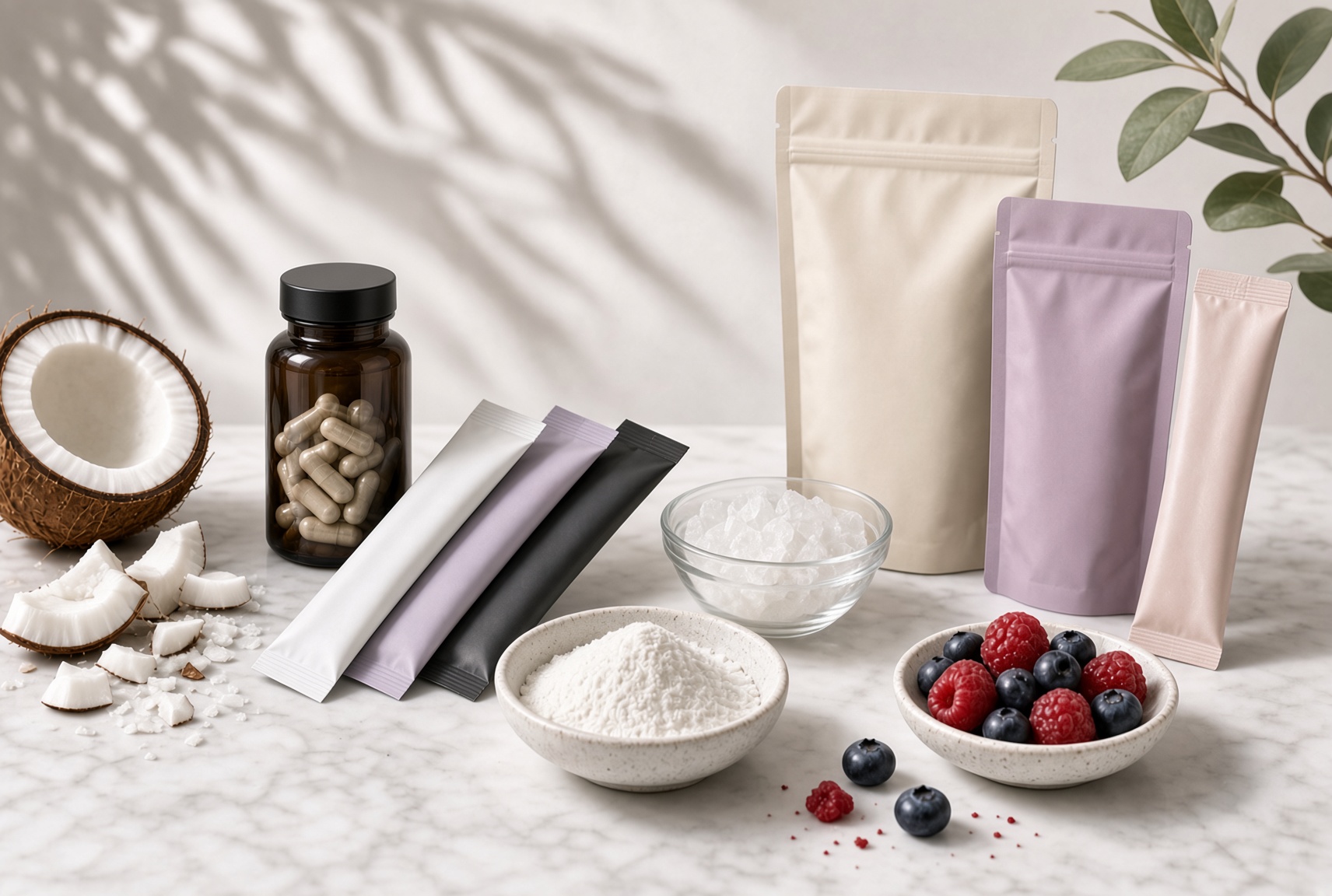
River Pharm Inc. provides OEM and customized ODM development for dietary and nutritional supplement brands. Our role is to help brand owners turn an existing formula, a reference product, or an ingredient and benefit direction into a manufacturable product.
For OEM projects, the client provides the formula and River Pharm Inc. manufactures it.
For customized ODM projects, the client may provide a reference product, ingredient concept, target consumer need, or desired functional direction. Our development team then works toward a customized formula and manufacturing solution.
We do not offer public-mold private-label ODM programs. This approach allows each brand to build a more differentiated product rather than relying on a widely shared, generic formula.
For keto supplement development, we can support projects involving:
Keto capsules.
Single-serve sachets.
Stick packs.
Soft pouch formats.
Ingredient-led metabolic-support concepts.
Electrolyte-oriented keto products.
Customized flavor and format development.
Label-information planning based on the chosen formulation strategy.
Final Recommendation
For most emerging keto brands, transparent labeling is the stronger long-term trust strategy. It gives consumers clearer information, supports a premium ingredient story, and makes the formula easier to evaluate.
A proprietary blend can still be the right choice when a brand has a genuinely differentiated formula worth protecting. The key is to use it responsibly: disclose the total blend weight, list every ingredient correctly, avoid exaggerated claims, and build confidence through testing, documentation, and clear consumer communication.
The best keto supplement label does not merely meet minimum requirements. It makes the product easier to understand, easier to trust, and easier to choose.
Ready to develop a differentiated keto supplement? Share your formula, reference product, preferred ingredients, or target benefit direction with River Pharm Inc. Our team can help assess the right format, formulation path, and labeling approach for your brand.
FAQ
1. Are proprietary blends allowed in keto supplements?
Yes. Proprietary blends are permitted in U.S. dietary supplements when they are labeled according to applicable requirements. The blend name, total weight, and ingredients must be declared, while individual amounts for eligible ingredients may remain undisclosed.
2. Does transparent labeling mean a keto supplement is better?
Not automatically. Transparent labeling makes ingredient amounts easier to evaluate, but product quality also depends on formulation design, raw-material standards, testing, manufacturing controls, and responsible claims.
3. Can a keto supplement use both a proprietary blend and individual ingredients?
Yes. A formula may list certain ingredients individually while grouping eligible ingredients into a proprietary blend, provided the label follows applicable requirements.
4. Why do consumers question proprietary blends?
Consumers may be unable to determine the amount of each ingredient in the blend. This can make it difficult to compare the formula with research, assess ingredient exposure, or compare products across brands.
5. What should a keto brand disclose beyond the Supplement Facts panel?
Brands should provide accurate directions, warnings where appropriate, allergen information when applicable, storage guidance, and clear product claims. They should also ensure the front-label messaging matches the actual formula.
6. Can River Pharm Inc. develop a custom keto supplement from a reference product?
Yes. River Pharm Inc. can support customized ODM development when a client provides a reference product, desired ingredients, functional direction, or market concept. The outcome is a customized formulation and manufacturing solution rather than a public-mold private-label product.
References
U.S. Food and Drug Administration. Dietary Supplement Labeling Guide: Chapter IV—Nutrition Labeling.
U.S. Food and Drug Administration. Small Entity Compliance Guide: Statement of Identity, Nutrition Labeling and Ingredient Labeling of Dietary Supplements.
U.S. Food and Drug Administration. Questions and Answers on Dietary Supplements.
Electronic Code of Federal Regulations. 21 CFR § 101.36—Nutrition Labeling of Dietary Supplements.
National Institutes of Health Office of Dietary Supplements. Dietary Supplement Label Database.
National Institutes of Health Office of Dietary Supplements. Dietary Supplements for Weight Loss: Consumer Fact Sheet.
National Institutes of Health Office of Dietary Supplements. Dietary Supplements for Weight Loss: Health Professional Fact Sheet.
Geyer, H. et al. Perspectives on the Use of Proprietary Blends in Dietary Supplements. Nutrients, 2023.
Dwyer, J. et al. Characteristics and Challenges of Dietary Supplement Databases Derived from Label Information. Journal of Nutrition, 2018.
Starr, R. et al. Label Accuracy of Weight Loss Dietary Supplements Marketed Online. JAMA Network Open, 2024.
Hot Tags: Keto Supplement Manufacturer, Custom Keto Formulation, Keto Supplement OEM, Keto Supplement ODM, Dietary Supplement Manufacturing, Transparent Supplement Labeling, Proprietary Blend Formulation, Exogenous Ketone Supplements, BHB Supplement Manufacturing, MCT Powder Manufacturer, custom, private label, manufacturing company, manufacturers, suppliers, factory, Customized, Bulk, quotation, oem
Did you find this helpful?
Comments (0)
No comments yet. Be the first to comment!
Leave a comment
Related Posts

Sep 20, 2026
Carbohydrate Powder Benefits: A Practical Guide to Sports Nutrition Formulation and Powder Manufacturing

Sep 17, 2026
Pharmaceutical Grade vs. Food Grade Ingredients: Which Is Necessary for Medical-Grade Nutritional Supplements?

Sep 16, 2026
US-Based Manufacturing vs. Overseas Supplement Contract: Navigating Supply Chain Reliability in 2026
Riverpharm · Supplement Contract Manufacturing
Your supplement brand, manufactured to the highest standard
From first formula to finished product — we handle manufacturing, packaging, and fulfillment so you can focus on building your brand.
Core services
Contract Manufacturing
GMP-certified production with full batch testing and certificate of analysis on every run.
Custom Formulation & R&D
In-house scientists develop your formula from scratch or refine existing blends for efficacy.
Packaging & Labeling
Design-to-print label service — shelf-ready, FDA-compliant, and retail-tested.
FBA Prep & Fulfillment
Amazon-ready prep and direct-to-warehouse shipping — no extra steps on your end.
By the numbers
NSF
NSF/ANSI 455-2 certified
cGMP
Certified environment
24 hr
AI-accelerated quote turnaround
600K
cGMP+ encapsulator capacity per run
Why Riverpharm
Quality systems with higher standards
- NSF/ANSI 455-2 certified
- cGMP-certified environment
- In-house + third-party testing
- Source-locked ingredients
Production capacity with faster execution
- Heavy-duty hardware
- In-house core reserves
- AI-accelerated quotes
- In-house expert hub
Delivery formats we produce
Capsules
Gelatin & HPMC vegetarian
Sachets
Single-dose powder blends
Stick packs
Convenient single-serve
Pouches
Flexible, shelf-ready
Ready to bring your supplement to market?
Free consultation · 24-hour quote · No minimum commitment to get started