Soil-Based Probiotics vs. Lacto-Bifido Blends: Choosing the Right Strain for Extreme-Shelf-Life Custom Capsules
Compare soil-based probiotics and Lacto-Bifido blends to select stable strains, packaging, and custom capsule strategies for long shelf life.

For brands developing a probiotic capsule intended to remain potent through long storage, international transport, and variable retail conditions, the central formulation question is often soil-based probiotics vs. Lacto-Bifido blends. The right choice is not simply about selecting the microorganism with the highest starting CFU count. It is about choosing documented strains, designing a suitable capsule system, controlling moisture and oxygen exposure, and validating viable counts at the end of the stated shelf life.
At River Pharm Inc., we support brands that already have a probiotic formula as well as brands that begin with a reference product, target ingredient list, or intended product direction. For custom capsule development, the formulation should be built around the actual commercial objective: ambient stability, target consumer group, market requirements, dosage format, claim strategy, and distribution route. A spore-based formula may be a strong candidate for an extreme-shelf-life capsule, while a Lactobacillus–Bifidobacterium formula may be more appropriate when the brand's concept depends on established, strain-specific research and a broader multi-strain positioning.
The key is to avoid treating all probiotics as interchangeable. A probiotic's performance depends on its full strain identity, dosage, formulation environment, packaging, storage conditions, and clinical relevance—not just its genus name or a large number printed on the front label.

What Makes a Probiotic Capsule Shelf-Stable?
A probiotic is a live microorganism intended to provide a health benefit when consumed in adequate amounts. Because the microorganisms must remain viable, probiotic manufacturing differs fundamentally from producing ordinary vitamin or mineral capsules. The product must protect living cells from processing stress, water activity, oxygen, temperature swings, and time.
For an extreme-shelf-life custom capsule, the practical goal is not merely to fill a high initial count. The goal is to ensure that the capsule retains its labeled viable count under the stated storage conditions through the end of its shelf life.
The U.S. National Institutes of Health notes that probiotics can lose viability during storage and that consumers should look for products that identify CFU at the end of shelf life, rather than only at the time of manufacture.
Several factors drive probiotic survival in capsules:
- Water activity: Residual moisture and moisture ingress can reduce survival during storage.
- Temperature exposure: Heat during warehousing, shipping, or retail display can accelerate viability loss.
- Oxygen exposure: Some probiotic strains, particularly certain Bifidobacterium strains, are sensitive to oxygen.
- Strain biology: Spore-forming bacteria and vegetative lactic-acid bacteria behave very differently under stress.
- Excipients: Fillers, fibers, prebiotics, botanical extracts, enzymes, minerals, and flavors can affect stability.
- Capsule and packaging design: Capsule material, bottle barrier performance, desiccants, induction seals, blisters, and headspace control all matter.
- Verification method: Reliable, repeatable microbial testing must confirm viable counts throughout stability testing.
Research reviews consistently identify water activity and storage temperature as key factors affecting probiotic stability. Packaging must help preserve the low-moisture environment created during manufacturing.
For this reason, an "extreme shelf life" claim should never be assumed based only on ingredient brochures or an initial CFU specification. It should be supported by a finished-product stability program that reflects the exact formula, capsule, pack configuration, and recommended storage condition.
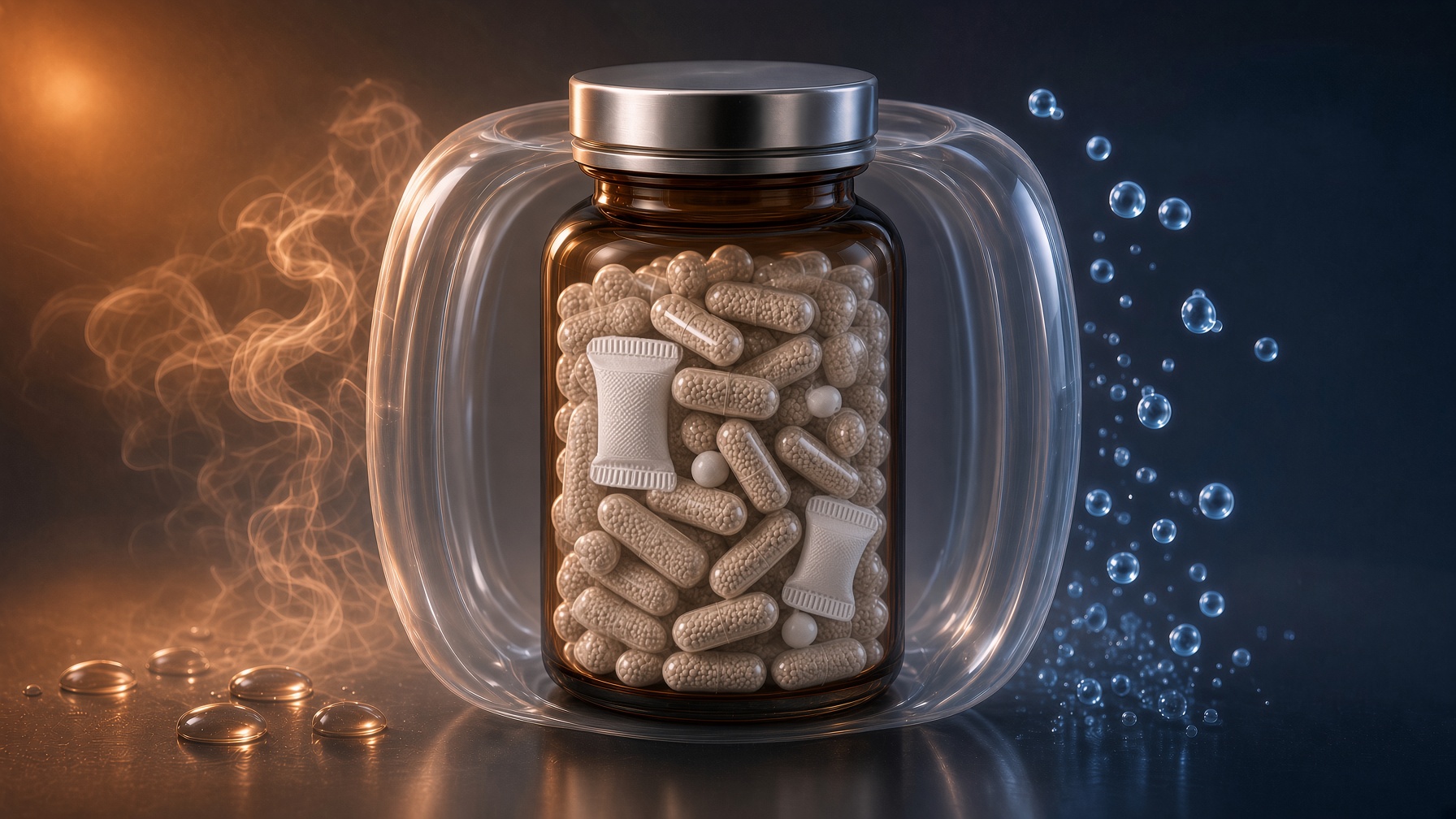
Soil-Based Probiotics: The Spore-Forming Advantage
"Soil-based probiotics" is a market-facing term commonly used for certain spore-forming bacteria, frequently from the Bacillus genus. In professional formulation discussions, it is more precise to identify the exact genus, species, and strain rather than relying on the phrase "soil-based."
Many Bacillus probiotics are supplied as dormant endospores. These spores are biologically distinct from active vegetative cells. Their dormant state can provide high resistance to environmental stress, including heat, dehydration, moisture variation, and acidic conditions.
Scientific reviews report that Bacillus probiotic strains, particularly when used in spore form, can show high environmental stability. However, the same literature emphasizes that safety and suitability must be assessed case by case at the strain level.
Why spore-formers work well for long shelf life
For brands prioritizing broad ambient distribution, e-commerce fulfillment, travel-friendly positioning, or products likely to face warm climates, spore-forming strains can offer major operational advantages.
Potential strengths include:
- Strong ambient stability in dry dosage forms.
- Lower sensitivity to ordinary temperature fluctuations than many non-spore-forming strains.
- Better resistance to processing and packaging stress when properly handled.
- Potential compatibility with longer target shelf lives, subject to finished-product validation.
- More flexible global logistics, especially where cold-chain control is not realistic.
- Potentially lower need for excessive initial overage, although overage decisions must be based on stability data.
For a capsule designed for extended storage, a spore-based probiotic may allow the brand to build a simpler, more resilient product architecture. It can be particularly useful where the intended sales model includes online marketplaces, export distribution, warehouse storage, or hot-season last-mile delivery.
Important limits of soil-based probiotic formulas
Shelf stability alone does not determine whether a strain is the best choice. A highly durable organism is not automatically the best option for every positioning strategy.
A responsible spore-based formulation should address:
- Exact strain identification: The label and technical documentation should specify genus, species, and strain.
- Safety documentation: Not every Bacillus strain has the same safety profile or intended use history.
- Antimicrobial-resistance assessment: The strain evaluation should consider relevant resistance concerns.
- Evidence alignment: Health-oriented messaging should match evidence available for the specific strain, dosage, and intended use.
- Consumer positioning: Some consumers may recognize Lactobacillus and Bifidobacterium more readily than Bacillus species.
- Formula compatibility: A strain's stability can still be affected by hygroscopic ingredients, incompatible extracts, or poor packaging.
A spore-former may be a technically strong route for an extreme-shelf-life capsule, but it should not become a shortcut around strain documentation, quality testing, or responsible product positioning.
Lacto-Bifido Blends: A Research-Familiar Capsule Platform
A Lacto-Bifido blend typically combines strains from the Lactobacillus-related group and the Bifidobacterium genus. These groups are among the most familiar probiotics in consumer supplements and are widely represented in human probiotic research. The National Center for Complementary and Integrative Health identifies Lactobacillus and Bifidobacterium among the most common bacterial groups used in probiotics.
For brands seeking a traditional digestive-health capsule, women's wellness formula, children's probiotic, synbiotic concept, or multi-strain premium blend, Lacto-Bifido combinations often provide considerable formulation and marketing flexibility.
Why brands choose Lacto-Bifido blends
Lacto-Bifido blends are frequently selected because they can support a familiar and research-oriented product story. Depending on the specific strains, the blend may be designed around digestive support, occasional irregularity, travel support, microbiome balance, immune-focused positioning, or a broader daily wellness concept.
Potential advantages include:
- High consumer recognition of Lactobacillus and Bifidobacterium.
- Wide availability of strain-specific scientific literature for selected commercial strains.
- Flexible multi-strain positioning for brands that want diversity rather than a single-organism product.
- Compatibility with synbiotic concepts, such as formulas containing selected prebiotic fibers.
- Strong fit for premium category architecture, especially when the brand emphasizes transparent strain naming and end-of-shelf-life potency.
However, the formulation challenge is higher. Lacto-Bifido strains are generally non-spore-forming organisms, and many are more vulnerable to heat, humidity, and oxygen than Bacillus spores. Bifidobacterium species can vary in oxygen sensitivity, meaning raw-material handling and packaging choices deserve particular attention.
The stability challenge of Lacto-Bifido capsules
A Lacto-Bifido blend can absolutely be developed as a shelf-stable capsule. But "shelf stable" should not be confused with "indestructible." The formulation team must anticipate viability loss and design the product accordingly.
Key considerations include:
- Selecting strains with documented dry-form stability
- Confirming raw-material CFU specifications and storage conditions
- Managing initial overage based on real stability data
- Reducing moisture exposure during blending and encapsulation
- Avoiding unnecessary oxygen exposure
- Evaluating excipient compatibility before scale-up
- Using high-barrier packaging with an appropriate moisture-control strategy
- Testing the final product rather than relying only on ingredient-level data
Research on probiotic production and delivery indicates that oxygen concentration and package oxygen permeability can influence probiotic viability. Moisture-barrier packaging is equally important for maintaining a low-water-activity environment.
For many premium Lacto-Bifido products, an opaque high-barrier bottle with an induction seal and desiccant may be appropriate. In some concepts, blister packaging may offer another route for unit-dose moisture protection. The best format depends on the specific strains, target shelf life, capsule shell, production environment, distribution route, and cost target.
Soil-Based Probiotics vs. Lacto-Bifido Blends: Decision Factors
The practical decision should begin with the brand's business model and technical requirements, not with a generic statement that one category is universally superior.
Choose a soil-based probiotic approach when:
- The product requires strong ambient stability.
- The brand expects challenging storage or transport conditions.
- The commercial target includes export, e-commerce, travel retail, or hot-climate distribution.
- A compact single-strain or low-strain-count capsule supports the positioning.
- The brand wants to prioritize resilience during handling and shelf life.
- The selected Bacillus strain has suitable safety documentation and strain-level support.
Choose a Lacto-Bifido blend when:
- The brand wants a familiar, conventional probiotic category position.
- The formula is built around documented Lactobacillus or Bifidobacterium strains.
- A multi-strain formula is central to the product concept.
- The intended customer values strain transparency and research-oriented differentiation.
- The brand can invest in appropriate packaging, stability testing, and storage management.
- The distribution conditions are compatible with the formula's validated shelf-life profile.
Consider a hybrid strategy when:
A hybrid formula combining selected spore-formers with selected Lactobacillus or Bifidobacterium strains can sometimes offer a differentiated position. Yet hybrid development should be approached carefully. The formula is only as stable as its most vulnerable component, and the testing program must be designed to verify the viability of each relevant organism or blend component.
A hybrid product should not be built simply to maximize the number of strains on a label. More strains can create a more complicated analytical, stability, sourcing, and quality-control challenge. Every added strain should serve a clear product purpose.
Building an Extreme-Shelf-Life Capsule: A Practical Development Path
For a custom probiotic project, the most effective workflow is to make stability a design input from the beginning rather than a final-stage test.
1. Define the commercial brief
Start with the real product requirements:
- Target markets and climate exposure
- Planned shelf life
- Bottle, blister, sachet, strip pack, or pouch format
- Capsule size and serving size
- Vegan, allergen, or clean-label requirements
- Single-strain, multi-strain, or synbiotic direction
- Desired storage instruction
- Target CFU at the end of shelf life
- Intended consumer group and product positioning
A 24-month capsule sold primarily through temperature-controlled domestic retail requires a different strategy from a product expected to travel internationally through non-refrigerated channels.
2. Select strains before selecting claims
Choose strains based on documentation, dosage feasibility, stability profile, supply reliability, and formulation compatibility. The strain name should be more than a marketing detail; it should connect the ingredient identity to the supporting evidence and quality specifications.
Avoid designing claims first and searching for strains afterward. The better route is to identify suitable strains, verify the available substantiation, then develop compliant and supportable product language.
3. Screen the complete formula
Probiotic survival can be affected by more than the bacteria themselves. Fibers, minerals, botanical extracts, acids, enzymes, flavors, sweeteners, and anti-caking agents may affect moisture behavior or create other formulation challenges.
A formulation screen should assess:
- Moisture sensitivity of each ingredient
- Bulk density and flow for capsule filling
- Compatibility with the selected capsule shell
- Potential interactions with prebiotic ingredients
- Packaging requirements
- Sensory and odor considerations
- Stability risk under intended storage conditions
4. Match packaging to the strain system
For extended-shelf-life capsules, packaging is an active part of the formulation strategy.
Possible measures include:
- High-barrier containers
- Properly selected desiccants
- Induction sealing
- Controlled headspace where appropriate
- Moisture-resistant blister materials
- Opaque packs for light-sensitive systems
- Clearly defined storage instructions
Do not assume that a premium-looking bottle is automatically an effective probiotic package. The relevant questions are its moisture-vapor barrier, oxygen transmission performance, closure integrity, headspace design, and compatibility with the product's validated storage conditions.
5. Validate end-of-shelf-life potency
This is the point where a credible probiotic capsule separates itself from an attractive concept formula.
The FDA states that while a dietary-supplement expiration or shelf date is not required in every case, firms should have data supporting any date they place on the label. The FDA has also issued draft guidance addressing when firms may declare live microbial quantities in CFUs in Supplement Facts labeling in addition to quantitative amount by weight.
A robust finished-product program should include:
- Initial potency testing
- Real-time stability testing
- Defined storage conditions
- Appropriate microbiological enumeration methods
- Testing at planned intervals
- Verification of the stated end-of-shelf-life CFU target
- Documentation supporting the label and product specifications
Industry guidance from the Consumer Healthcare Products Association recommends that probiotic quantities reflect live microorganisms at the end of the stated shelf life, with stability testing conducted under the same temperature conditions recommended on the label.
Common Formulation Mistakes to Avoid
Even well-intended probiotic concepts can underperform when development decisions are made too late or based on incomplete data.
Avoid these common mistakes:
- Selecting by CFU alone: A high initial count does not guarantee meaningful end-of-shelf-life potency.
- Using only genus and species names: Strain-level identity matters for evidence, quality control, and product differentiation.
- Treating all Bacillus strains as equivalent: Each strain requires its own evaluation.
- Assuming Lacto-Bifido formulas require refrigeration: Some dry capsule systems can be validated for ambient storage, but proof must come from finished-product data.
- Copying an existing label without checking the formulation basis: Reference products can guide direction, but a custom formula requires its own technical and documentation pathway.
- Adding too many strains: Formula complexity can increase stability risk and make quality verification more difficult.
- Ignoring packaging until after formula completion: Packaging should be selected alongside the strain and excipient system.
- Making broad health claims without adequate support: Product messaging should be consistent with the specific strains, dosage, evidence, and applicable market requirements.

Custom Capsule Development with River Pharm Inc.
River Pharm Inc. develops and manufactures dietary and nutritional supplement products for brands seeking capsule, sachet, stick-pack, and pouch solutions. For probiotic capsules, the most productive starting point is a clear custom-development brief.
For OEM projects, the client provides the formula and River Pharm Inc. manufactures it according to the agreed technical requirements.
For custom ODM projects, the client may provide a reference product, preferred ingredients, a desired function direction, target dosage form, or market brief. River Pharm Inc. then supports formulation development and manufacturing. This service is built around customized development rather than generic private-label catalog products.
For an extreme-shelf-life probiotic capsule, share the following at the beginning of the project:
- Reference formula or product benchmark
- Target markets
- Desired shelf-life target
- Preferred strains or ingredient direction
- Target CFU at the end of shelf life
- Capsule size and daily serving
- Packaging preference
- Special requirements such as vegan, allergen-free, sugar-free, or non-GMO positioning
- Expected order volume and launch timeline
Ready to develop a probiotic capsule designed for real-world shelf life—not just high day-one CFU? Contact River Pharm Inc. with your formula, reference product, strain brief, or intended product direction to begin a custom OEM or ODM feasibility review.
FAQ
1. Are soil-based probiotics better than Lactobacillus and Bifidobacterium?
Not universally. Soil-based, spore-forming probiotics may be advantageous for ambient stability and challenging supply chains. Lacto-Bifido blends may be better suited to brands that want familiar strains, multi-strain positioning, and specific strain-related scientific support. The best choice depends on the exact strain, commercial goal, dosage, packaging, and validated shelf-life requirement.
2. Can a Lacto-Bifido probiotic capsule have a long shelf life without refrigeration?
Yes, potentially. A dry Lacto-Bifido capsule can be developed for ambient storage when the selected strains, manufacturing process, excipients, packaging, and stability program support that outcome. The final shelf life should be confirmed through finished-product testing under the stated storage conditions.
3. What does CFU mean in probiotic capsules?
CFU means colony-forming units. It is a commonly used measure of viable microorganisms capable of forming colonies under defined testing conditions. For probiotic products, the most meaningful target is the viable CFU level at the end of the stated shelf life, not merely the amount added during manufacturing.
4. Why is end-of-shelf-life CFU more important than manufacturing CFU?
Probiotics are living microorganisms that can lose viability over time. A capsule may begin with a high count but decline during storage. End-of-shelf-life CFU helps demonstrate the viable amount that remains available to the consumer when the product is used as directed.
5. Can soil-based probiotics and Lacto-Bifido strains be combined in one capsule?
Yes, a hybrid approach may be technically possible. However, the formula must be evaluated carefully because the non-spore-forming strains may determine the overall stability risk. The final product should undergo appropriate stability testing to support the combined formula and label claims.
6. What packaging is best for probiotic capsules?
There is no single package that is best for every formula. High-barrier bottles with desiccants, induction seals, and appropriate closures are commonly considered for moisture-sensitive products. Blister systems can also be useful for unit-dose protection. The correct choice depends on strain sensitivity, storage conditions, target shelf life, and distribution route.
7. Does River Pharm Inc. offer generic private-label probiotic products?
River Pharm Inc. focuses on OEM manufacturing and customized ODM development. Clients can provide an existing formula for manufacturing or provide a reference product, ingredients, or intended function direction for customized research, development, and manufacturing. Generic catalog-style private-label ODM is not supported.
References
1. National Institutes of Health, Office of Dietary Supplements. "Probiotics—Health Professional Fact Sheet." Covers probiotic definitions, safety considerations, research context, and the importance of viable CFU through shelf life. [Read the NIH fact sheet]. [ods.od.nih]
2. U.S. Food and Drug Administration. "Small Entity Compliance Guide: Current Good Manufacturing Practice in Manufacturing, Packaging, Labeling, or Holding Operations for Dietary Supplements." Explains requirements under 21 CFR Part 111 and notes that dates placed on labels should be supported by data. [Read the FDA guidance]. [fda]
3. U.S. Food and Drug Administration. "FDA Issues Draft Guidance for Labeling of Dietary Supplements Containing Live Microbials." Discusses the agency's draft policy regarding CFU declarations for live microbial ingredients. [Read the FDA update]. [fda]
4. National Center for Complementary and Integrative Health. "Probiotics: Usefulness and Safety." Provides an overview of probiotics and notes the common use of Lactobacillus and Bifidobacterium groups. [Read the NCCIH overview]. [nccih.nih]
5. Tripathi, M. K., and Giri, S. K. "Probiotic Functional Foods: Survival of Probiotics During Processing and Storage." Research reviews identify water activity, temperature, and packaging moisture barriers as important factors in probiotic stability. [Read the review]. [pmc.ncbi.nlm.nih]
6. Elshaghabee, F. M. F., et al. "Bacillus as Potential Probiotics: Status, Concerns, and Future Perspectives." Discusses Bacillus probiotics, their stability, and the importance of strain-specific safety evaluation. [Read the PubMed record]. [pubmed.ncbi.nlm.nih]
7. Cutting, S. M. "The Use of Bacterial Spore Formers as Probiotics." Reviews spore-forming probiotics and highlights the need to assess safety and licensing issues for Bacillus strains individually. [Read the PubMed record]. [pubmed.ncbi.nlm.nih]
8. Consumer Healthcare Products Association. "Best Practices Voluntary Guidelines for Probiotics." Recommends CFU expression, strain identification, real-time stability testing, and end-of-shelf-life quantity verification. [Read the guidelines]. [chpa]
9. NutraIngredients. "LactoSpore: The Versatile, Clinically-Validated Probiotic with a Long Shelf Life." Industry coverage illustrating the commercial interest in shelf-stable spore-forming probiotic ingredients. [Read the industry article]. [nutraingredients]
Hot Tags: Probiotic Capsule Manufacturer, Custom Probiotic Capsules, Probiotic OEM Manufacturing, Probiotic ODM Development, Shelf Stable Probiotics, Spore Based Probiotics, Bacillus Probiotic Capsules, Lactobacillus Bifidobacterium Blend, Dietary Supplement Contract Manufacturing, Probiotic Supplement Packaging
Did you find this helpful?
Comments (0)
No comments yet. Be the first to comment!
Leave a comment
Related Posts


Riverpharm · Supplement Contract Manufacturing
Your supplement brand, manufactured to the highest standard
From first formula to finished product — we handle manufacturing, packaging, and fulfillment so you can focus on building your brand.
Core services
Contract Manufacturing
GMP-certified production with full batch testing and certificate of analysis on every run.
Custom Formulation & R&D
In-house scientists develop your formula from scratch or refine existing blends for efficacy.
Packaging & Labeling
Design-to-print label service — shelf-ready, FDA-compliant, and retail-tested.
FBA Prep & Fulfillment
Amazon-ready prep and direct-to-warehouse shipping — no extra steps on your end.
By the numbers
NSF
NSF/ANSI 455-2 certified
cGMP
Certified environment
24 hr
AI-accelerated quote turnaround
600K
cGMP+ encapsulator capacity per run
Why Riverpharm
Quality systems with higher standards
- NSF/ANSI 455-2 certified
- cGMP-certified environment
- In-house + third-party testing
- Source-locked ingredients
Production capacity with faster execution
- Heavy-duty hardware
- In-house core reserves
- AI-accelerated quotes
- In-house expert hub
Delivery formats we produce
Capsules
Gelatin & HPMC vegetarian
Sachets
Single-dose powder blends
Stick packs
Convenient single-serve
Pouches
Flexible, shelf-ready
Ready to bring your supplement to market?
Free consultation · 24-hour quote · No minimum commitment to get started