US-Based Manufacturing vs. Overseas Supplement Contract: Navigating Supply Chain Reliability in 2026
Compare US-based and overseas supplement manufacturing in 2026. Learn how quality controls, lead times, documentation, and logistics affect supply reliability.
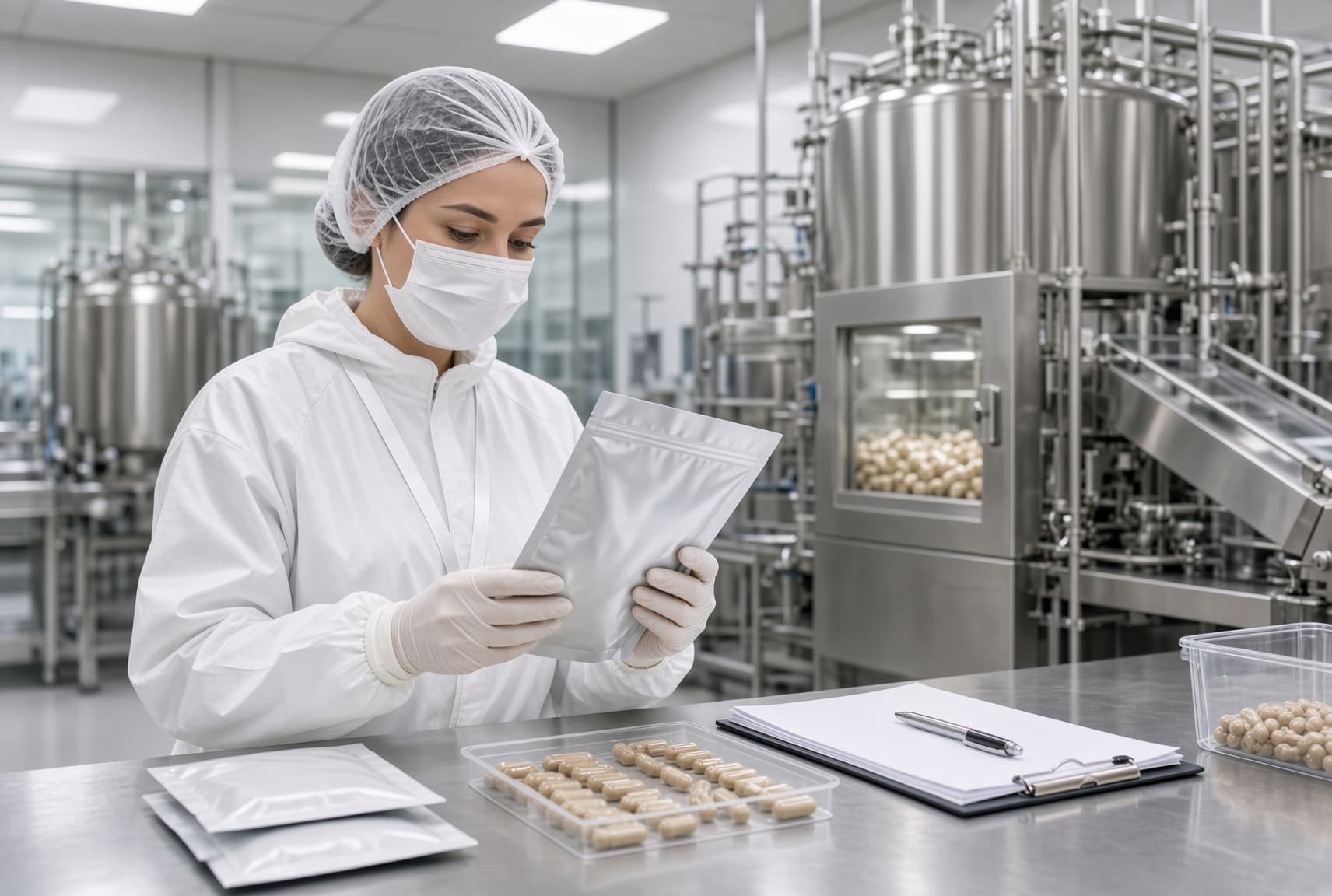
In 2026, choosing between US-based supplement manufacturing and an overseas supplement contract manufacturer is no longer only a unit-cost decision. For dietary supplement brands, supply chain reliability increasingly depends on documentation control, ingredient traceability, testing readiness, production communication, regulatory accountability, and the ability to respond quickly when a batch, label, or shipment requires attention.
At Riverpharm, we work with brands that need more than a production quote. They need a manufacturing partner that can turn an existing formula into finished capsules, sachets, stick packs, or pouch products—or develop a custom formula from a reference product, ingredient concept, or intended benefit direction. The practical question is not simply "domestic or overseas?" It is: which manufacturing model gives your brand the most dependable path from formulation to market?
For brands selling in the United States, domestic manufacturing can reduce operational distance between product development, quality review, production, and delivery. Overseas manufacturing can still be appropriate in some situations, particularly for mature, high-volume programs with stable specifications. But it often requires a stronger supplier-verification system and more contingency planning.
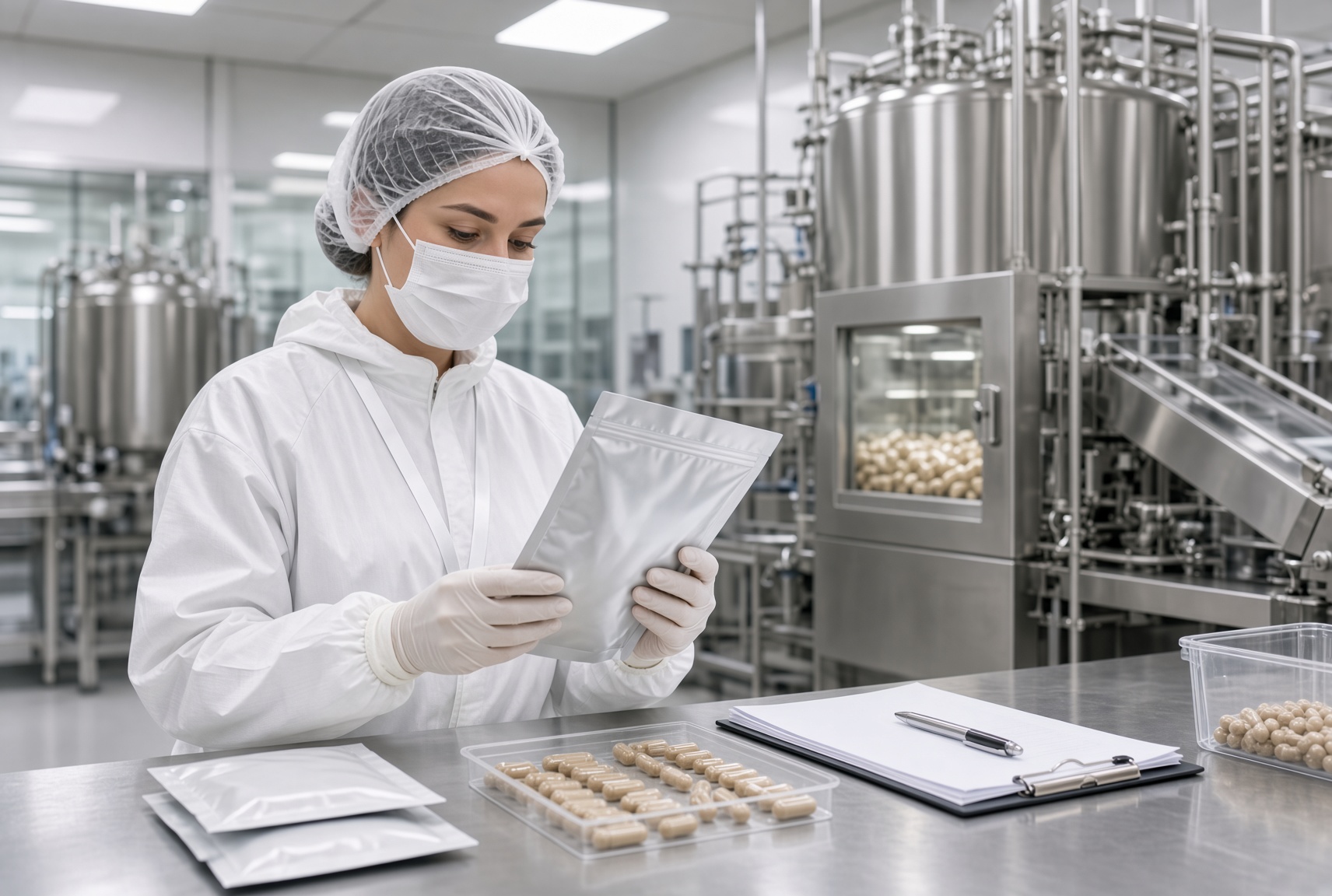
Why Supply Chain Reliability Matters More in 2026
Supply chain reliability is the ability to deliver the right product, at the required quality level, with complete documentation, within the expected lead time.
That definition matters because a delayed supplement launch is not always caused by one missed production date. Delays can begin much earlier:
- A botanical ingredient fails identity testing.
- A supplier's certificate of analysis does not match internal specifications.
- A packaging component arrives late or is printed incorrectly.
- A formula needs a processing adjustment after pilot production.
- A shipment is delayed at a port or held for document review.
- A brand cannot obtain complete batch records quickly enough for a retailer, distributor, or internal quality review.
The supplement sector is operating in an environment shaped by changing trade conditions, sourcing uncertainty, and increased scrutiny of supplier performance. Industry leaders interviewed by NutraIngredients in 2026 described supply chain resilience and forward-looking sourcing decisions as core operating priorities, particularly where tariffs and geopolitical volatility affect procurement planning.
For a brand owner, the lesson is clear: reliability is not a promise; it is a system.
US-Based Manufacturing: What Brands Gain
US-based supplement manufacturing is often most valuable when a brand prioritizes speed, communication, audit readiness, and supply continuity for the US market.
A domestic manufacturer may shorten the physical and administrative distance between your team and the people responsible for formulation, purchasing, quality assurance, packaging, and release decisions. That proximity does not eliminate every risk, but it can make risks easier to see, discuss, and correct.
Faster Communication and Technical Decisions
When product development, production, and brand teams operate in similar business hours, decisions can move more quickly. This becomes especially important for custom ODM projects.
For example, a brand may provide a competitor reference product and request a similar format, ingredient direction, and consumer experience. Before manufacturing begins, the formulation team may need to assess:
- Whether the desired ingredient level is practical in a capsule, sachet, stick pack, or pouch.
- Whether the flavor system can mask bitter or mineral-heavy ingredients.
- Whether the powder flow is suitable for high-speed filling.
- Whether the packaging provides appropriate moisture and oxygen protection.
- Whether the proposed claims and labeling language align with the product's intended positioning.
With a US-based partner, the brand can typically review formulation options, samples, production constraints, and documentation questions with fewer handoffs.
Better Visibility Into Quality Systems
Dietary supplement quality relies on more than a finished-product test. It requires control across receiving, ingredient approval, manufacturing, packaging, labeling, documentation, and batch release.
US dietary supplement manufacturers are subject to current good manufacturing practice requirements under 21 CFR Part 111. These requirements are designed to help ensure the identity, purity, strength, and composition of dietary supplements. FDA inspections and warning letters show why written specifications, master manufacturing records, finished-batch testing, equipment controls, and documented quality procedures are essential.
For brands, a reliable domestic manufacturing relationship should make it easier to request and review:
- Ingredient and finished-product specifications.
- Certificates of analysis.
- Identity-testing procedures, where applicable.
- Master manufacturing records.
- Batch production records.
- Packaging and label controls.
- Stability or shelf-life support.
- Deviation, investigation, and corrective-action documentation.
Important distinction: FDA registration or facility oversight should not be presented as FDA approval of an individual dietary supplement. Dietary supplements generally do not receive premarket approval for safety or effectiveness in the way drugs do. Instead, manufacturers are responsible for meeting applicable requirements, and FDA may inspect facilities and take enforcement action when products are not manufactured in compliance with applicable rules.
Shorter Logistics Exposure
A domestic production model can reduce exposure to ocean freight schedules, port congestion, international customs processes, and long transit times for finished goods.
This can be particularly useful for:
- New product launches with narrow retailer deadlines.
- Seasonal wellness campaigns.
- Promotional bundles that depend on synchronized packaging.
- Products with a limited shelf-life window after production.
- Brands that need frequent smaller production runs.
- Fast-moving formulas that require frequent revisions.
A shorter physical route may also make inventory planning more flexible. Instead of ordering a larger amount months ahead to compensate for transit uncertainty, a brand may be able to build a more responsive replenishment plan.
Overseas Supplement Contract Manufacturing: Where Risk Increases
Overseas supplement manufacturing can offer attractive pricing, access to specialized raw materials, or high-volume production capacity. It may be a sensible option when a formula is stable, demand is predictable, and the brand has strong internal purchasing, regulatory, and quality-management resources.
However, lower quoted manufacturing cost should not be confused with lower total supply-chain cost.
The Hidden Cost of Distance
The financial impact of overseas production may include more than the invoice price. Brands should account for:
- International freight and insurance.
- Customs brokerage and duty exposure.
- Longer cash-conversion cycles.
- Higher safety-stock requirements.
- Third-party inspection or audit costs.
- More complex supplier verification.
- Rework, relabeling, or disposal risk if a batch does not meet specifications.
- Delays caused by incomplete or inconsistent documentation.
A product that costs less per unit but arrives late, cannot clear internal quality review, or requires emergency air freight can become more expensive than a domestic alternative.
Importer Responsibilities Are Not Optional
For finished dietary supplements imported into the United States, the importer must establish appropriate supplier-verification activities under the Foreign Supplier Verification Program framework. Depending on the risk assessment, verification may include onsite audits, sampling and testing, review of supplier records, or other appropriate activities. These activities must be documented.
This means the overseas model requires brands to ask more demanding questions:
1. Who is legally responsible for supplier verification?
2. Can the manufacturer provide records in a usable and timely format?
3. Has the facility's compliance history been reviewed?
4. Are product and component specifications aligned with US requirements?
5. Are test methods, laboratory qualifications, and acceptance criteria defined?
6. Can the supplier support an investigation if a quality complaint emerges months later?
7. What happens if a shipment is delayed, rejected, damaged, or held?
If these answers are vague, the brand is not buying a dependable supply chain. It is buying uncertainty.
Domestic vs. Overseas: A Practical Decision Framework
Rather than choosing based on a single factor, brands should evaluate the manufacturing model against their commercial reality.
US-Based Manufacturing Is Often Stronger When You Need:
- Custom formulation support rather than an off-the-shelf private-label product.
- Faster formulation feedback and pilot-sample iterations.
- More direct access to quality and production teams.
- Shorter shipping routes for US distribution.
- Better control over label revisions and packaging changes.
- Smaller or more frequent production runs.
- Faster response to retailer, distributor, or customer questions.
- A clear documentation trail for each batch.
Overseas Manufacturing May Fit Better When You Have:
- A validated, stable formula with minimal expected changes.
- Large and predictable order volumes.
- A qualified supplier with a proven audit history.
- An experienced internal quality team.
- A documented foreign-supplier verification program.
- Sufficient safety stock and cash flow to accommodate long lead times.
- A contingency plan for freight, customs, supplier, and raw-material disruptions.
The right model depends on your product and operating capacity. But for emerging brands, complex formulas, and fast-changing product portfolios, a domestic partner can reduce the number of variables that must be managed simultaneously.
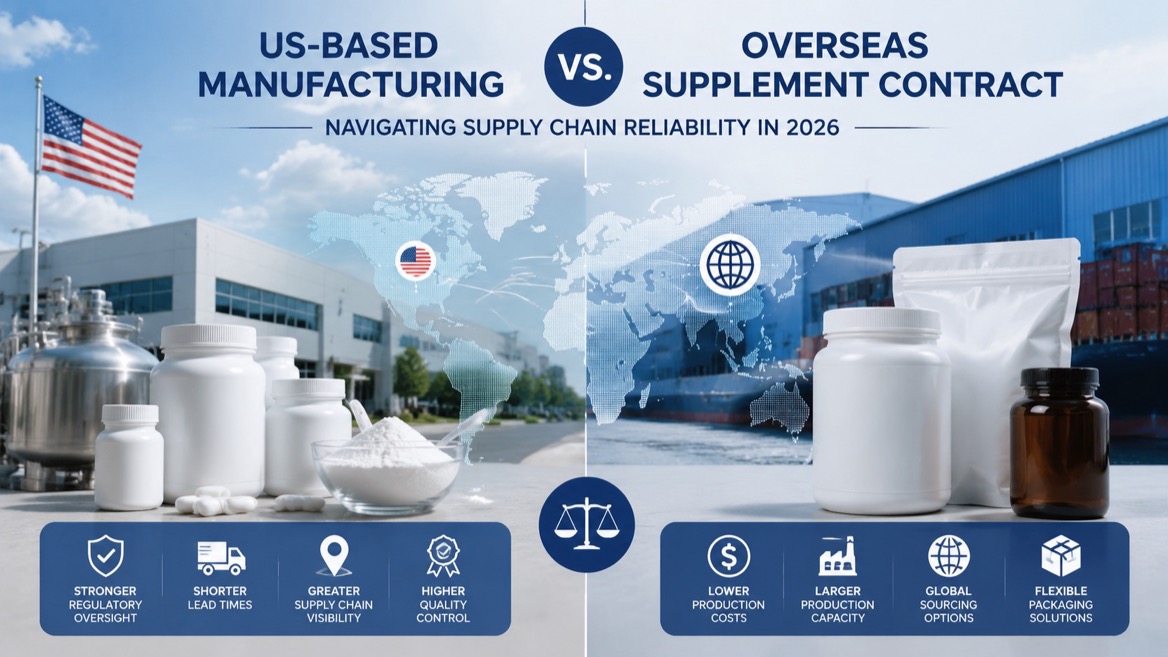
A Reliability Checklist Before You Sign
Before selecting any supplement contract manufacturer, use the following checklist.
1. Confirm the Manufacturing Scope
Ask whether the manufacturer can support your intended pathway:
- OEM manufacturing: You provide the complete formula and the manufacturer produces it.
- Custom ODM manufacturing: You provide a reference product, ingredient list, target benefit direction, or product concept; the manufacturer develops and produces a custom formula.
- Packaging compatibility for capsules, sachets, stick packs, and pouches.
- Pilot runs, scale-up support, and commercial production.
For Riverpharm's custom ODM service, the goal is formulation development and manufacturing based on your product direction—not public-mold, ready-made private-label products.
2. Request the Quality Documentation Early
Do not wait until the first batch is complete. Ask early for the documentation package your brand will need.
At minimum, clarify access to:
- Ingredient specifications.
- Finished-product specifications.
- Certificates of analysis.
- Batch records.
- Testing protocols and acceptance limits.
- Stability approach.
- Allergen and contaminant controls.
- Label-review responsibilities.
- Complaint and recall procedures.
FDA warning letters repeatedly identify failures involving product specifications, manufacturing records, and verification that finished batches meet identity, purity, strength, and composition requirements.
3. Evaluate Packaging as a Quality Decision
Packaging is not simply a design decision. It can affect moisture protection, oxygen exposure, powder stability, transport durability, and consumer usability.
For example:
- Capsules may be suitable for precise serving sizes and convenient daily use.
- Sachets can work well for single-use powdered products.
- Stick packs can support portable, portion-controlled formats.
- Pouches may suit larger powder volumes or multi-serving products.
The best format should be chosen after considering formula density, particle size, flavor profile, hygroscopicity, serving size, and intended distribution conditions.
4. Build a Disruption Plan
A dependable supplier should help you plan for disruption before it occurs.
Your plan should identify:
- Approved alternative ingredient sources where feasible.
- Minimum safety-stock levels for critical materials.
- Packaging backup options.
- Batch-release timelines.
- Escalation contacts for quality issues.
- Decision authority if a production deviation occurs.
- A communication plan for delayed or constrained supply.
The strongest supply chains are designed before the first purchase order—not after the first delay.
Why Independent Certification Matters
Independent certification can add useful assurance, but brands should understand what each certification covers.
NSF offers GMP registration and NSF/ANSI 455 certification for dietary supplement manufacturing facilities. The certification process evaluates a facility's prerequisite programs, manufacturing practices, and quality-management systems.
Product certification is different from facility certification. NSF's dietary supplement product certification program can evaluate whether products contain the ingredients listed on the label and do not contain unsafe levels of certain contaminants. A facility-level GMP certification does not automatically mean every product has received independent product certification.
For brands, the practical question is not only, "Does the facility have a certification?" It is also:
- What standard applies?
- Is the certification current?
- Does it cover the relevant production site?
- Does it apply to the facility, ingredient, or finished product?
- What routine surveillance or audit process supports it?
Partner With a Manufacturer Built for Control
Riverpharm supports dietary supplement brands with US-based manufacturing for capsules, sachets, stick packs, and pouch formats. Whether you bring a finished formula for OEM manufacturing or a product concept for custom ODM development, the objective is the same: create a commercially practical supplement with a clear path through development, production, quality review, and delivery.
A reliable manufacturing relationship begins with an honest feasibility discussion. Share your formula, target ingredients, reference product, serving format, packaging preference, target market, and expected order volume. Our team can help assess the practical manufacturing path before you commit to production.
Talk with Riverpharm about your next OEM or custom ODM supplement project and build a supply plan designed for quality, documentation, and delivery confidence.

FAQ
1. Is US-based supplement manufacturing always more expensive?
Not necessarily. The per-unit manufacturing price may be higher in some cases, but the total cost can be more competitive when you include freight, duties, inventory carrying costs, communication time, quality oversight, and the cost of delayed launches.
2. What is the difference between OEM and custom ODM supplement manufacturing?
With OEM manufacturing, the brand provides the formula and the manufacturer produces it. With custom ODM manufacturing, the brand provides a reference product, target ingredients, or intended benefit direction, and the manufacturer develops a custom formula and produces it.
3. Does FDA registration mean a supplement product is FDA approved?
No. Facility registration and compliance obligations are not the same as FDA approval of a specific dietary supplement product. Manufacturers are responsible for meeting applicable manufacturing and labeling requirements, and FDA may inspect facilities and take action when requirements are not met.
4. What documentation should I request from a supplement manufacturer?
Request specifications, certificates of analysis, batch records, testing information, stability support, packaging controls, label-review procedures, and complaint or recall processes. The exact package should be tailored to your product and distribution channel.
5. What are the largest risks of overseas supplement contract manufacturing?
Common risks include longer lead times, freight disruption, customs delays, communication gaps, inconsistent documentation, limited visibility into production, and added foreign-supplier verification responsibilities for US importers.
6. How do I choose between capsules, sachets, stick packs, and pouches?
Choose based on serving size, ingredient properties, consumer use occasion, flavor requirements, moisture sensitivity, shipping needs, and desired price point. A formulation and packaging feasibility review should happen before finalizing the product format.
References
1. U.S. Food and Drug Administration. [FSMA Final Rule on Foreign Supplier Verification Programs].
2. U.S. Food and Drug Administration. [Dietary Supplements Guidance Documents & Regulatory Information].
3. U.S. Food and Drug Administration. [Quality Supplement Manufacturing, Inc. Warning Letter].
4. U.S. Food and Drug Administration. [Flax & More Corporation Warning Letter].
5. National Institutes of Health, Office of Dietary Supplements. [Dietary Supplements: What You Need to Know].
6. NSF. [GMP Certification for Dietary Supplements].
7. NSF. [NSF/ANSI 455-2: Dietary Supplements GMP Certification].
8. NSF. [Dietary Supplement and Vitamin Certification].
9. NutraIngredients. [Supplement Industry COOs Talk Supply Chain Resilience, Channel Evolution and AI Agility].
Hot Tags: Dietary Supplement Manufacturer, Supplement Contract Manufacturing, Custom Supplement Formulation, OEM Supplement Manufacturing, ODM Supplement Manufacturing, US Supplement Manufacturer, cGMP Supplement Manufacturing, Capsule Supplement Manufacturer, Stick Pack Manufacturer, Nutraceutical Manufacturing, custom, private label, manufacturing company, manufacturers, suppliers, factory, Customized, Bulk, quotation, oem
Did you find this helpful?
Comments (0)
No comments yet. Be the first to comment!
Leave a comment
Related Posts
Sep 20, 2026
Carbohydrate Powder Benefits: A Practical Guide to Sports Nutrition Formulation and Powder Manufacturing
Sep 18, 2026
Proprietary Blends vs. Transparent Labeling: Building Consumer Trust in the Competitive Keto Supplement Market
Sep 17, 2026
Pharmaceutical Grade vs. Food Grade Ingredients: Which Is Necessary for Medical-Grade Nutritional Supplements?
Riverpharm · Supplement Contract Manufacturing
Your supplement brand, manufactured to the highest standard
From first formula to finished product — we handle manufacturing, packaging, and fulfillment so you can focus on building your brand.
Core services
Contract Manufacturing
GMP-certified production with full batch testing and certificate of analysis on every run.
Custom Formulation & R&D
In-house scientists develop your formula from scratch or refine existing blends for efficacy.
Packaging & Labeling
Design-to-print label service — shelf-ready, FDA-compliant, and retail-tested.
FBA Prep & Fulfillment
Amazon-ready prep and direct-to-warehouse shipping — no extra steps on your end.
By the numbers
NSF
NSF/ANSI 455-2 certified
cGMP
Certified environment
24 hr
AI-accelerated quote turnaround
600K
cGMP+ encapsulator capacity per run
Why Riverpharm
Quality systems with higher standards
- NSF/ANSI 455-2 certified
- cGMP-certified environment
- In-house + third-party testing
- Source-locked ingredients
Production capacity with faster execution
- Heavy-duty hardware
- In-house core reserves
- AI-accelerated quotes
- In-house expert hub
Delivery formats we produce
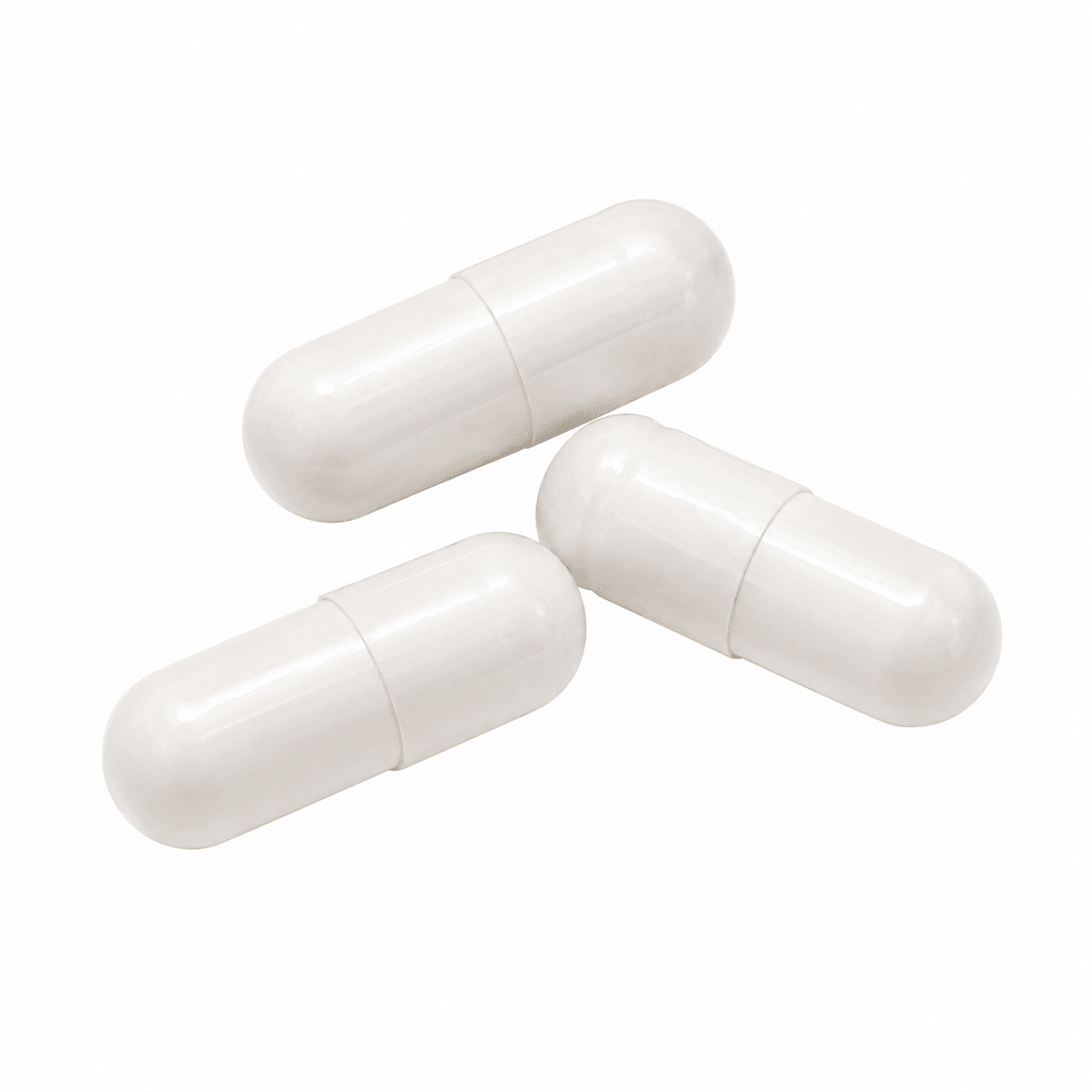
Capsules
Gelatin & HPMC vegetarian
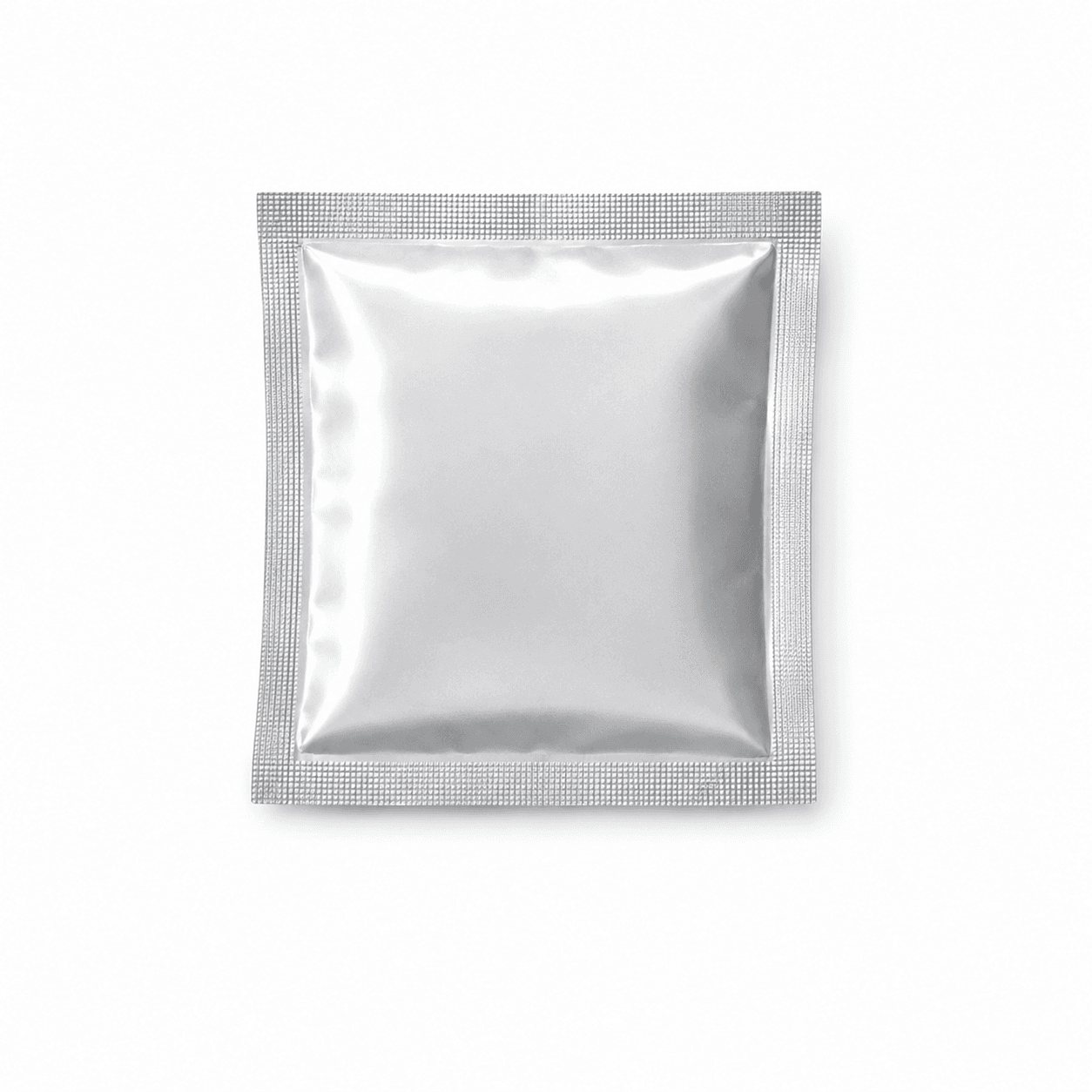
Sachets
Single-dose powder blends
Stick packs
Convenient single-serve
Pouches
Flexible, shelf-ready
Ready to bring your supplement to market?
Free consultation · 24-hour quote · No minimum commitment to get started