Water Soluble Vs Fat Soluble Vitamins For Supplement Brands
Water- vs fat-soluble vitamins for supplement brands, with formulation, stability and packaging insights for capsule and powder products.
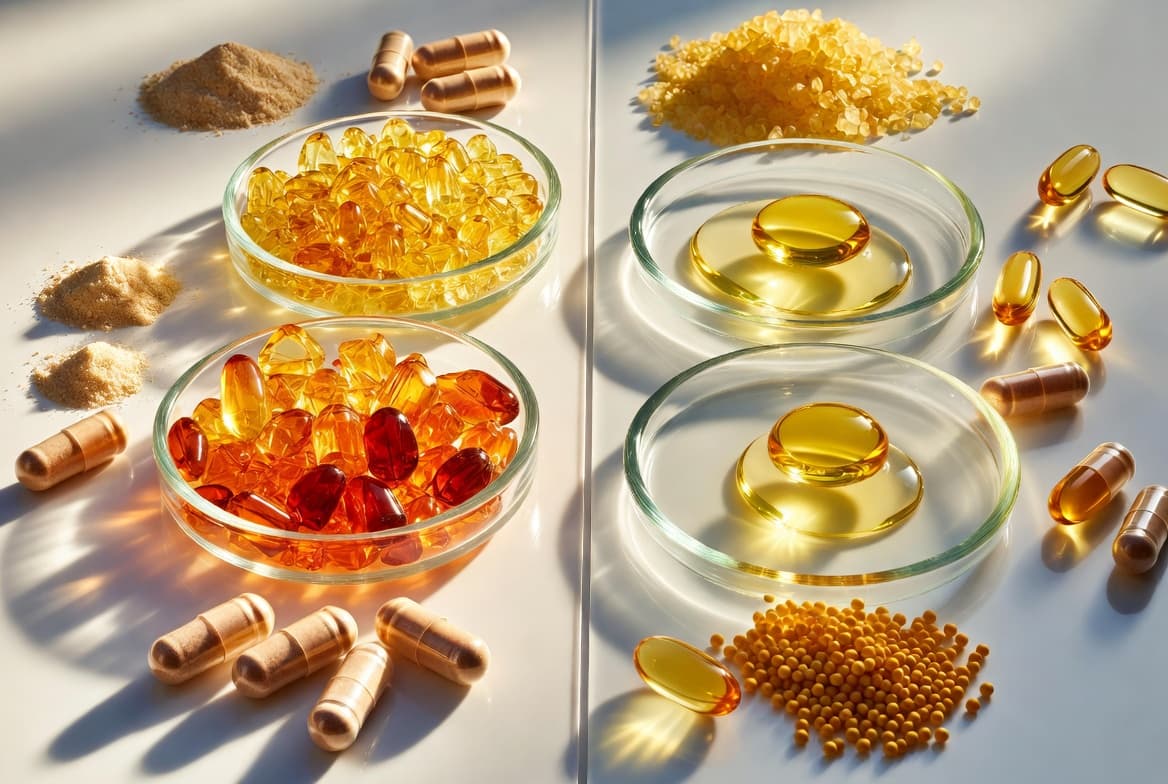
Water-soluble vs fat-soluble vitamins are not just biochemical categories – they define two very different product strategies for supplement brands. When you decide between these two vitamin groups, you are also deciding how complex your formulation needs to be, how demanding the manufacturing will become, and how much protection your ingredients require from processing, storage and packaging. For capsule and powder brands partnering with an OEM/ODM manufacturer like River Pharm Inc, understanding these differences is the foundation of a stable, market-ready product.
Understanding Water-Soluble Vitamins
Water-soluble vitamins dissolve in water and are not stored extensively in the body. Vitamin C and the B-complex family (B1, B2, B3, B6, B12, folate and others) are the most commonly used examples in dietary supplements. Because they dissolve in water and are excreted more rapidly, they are often associated with daily-use formulas that focus on energy, immunity, stress support and general wellness.
From a product development perspective, water-soluble vitamins are generally easier to work with in dry formulations. They can be milled, blended and filled into capsules, small powder sachets and stick packs with fewer stability concerns than many fat-soluble actives. This makes them a natural choice for brands that want straightforward, scalable products with predictable performance.

Understanding Fat-Soluble Vitamins
Fat-soluble vitamins, including vitamins A, D, E and K, dissolve in fats and oils and are stored more readily in body tissues. This difference in solubility and storage means they must be handled with greater care in product design. They are essential for functions such as bone health, vision, antioxidant protection and blood clotting, but their sensitivity to oxidation, light and sometimes heat can complicate manufacturing.
For brands, fat-soluble vitamins are often at the core of more targeted, "premium" formulations. These products promise specific outcomes, such as advanced immune support or high-potency antioxidant protection. To deliver on these promises, the manufacturing process must protect the vitamins from environmental stressors and ensure consistent potency across the entire shelf life of the product.
Key Differences From a Brand Perspective
Although the science behind water-soluble and fat-soluble vitamins is important, the most practical distinction for brands lies in how these ingredients behave during formulation and production.
Water-soluble vitamins:
- Typically integrate more easily into dry blends.
- Often require less complex protection in capsules and powder stick packs.
- Fit well with daily wellness and broad-market positioning.
- Are more forgiving in terms of processing conditions and packaging options.
Fat-soluble vitamins:
- Are more sensitive to oxidation and light exposure.
- Benefit strongly from protective technologies and careful packaging.
- Align naturally with targeted, higher-value product concepts.
- Demand more rigorous process design and stability planning.
When a brand team understands these differences, it can better align ingredient choices with the complexity of the manufacturing plan and the level of technical support needed from its OEM or ODM partner.
Why Stability Should Lead the Conversation
For any serious supplement brand, stability is a non-negotiable requirement. A formulation that looks good on paper but fails to retain potency under real-world storage conditions is a risk to brand equity and regulatory compliance. Water-soluble vitamins can lose strength over time in the presence of moisture or heat, while fat-soluble vitamins are especially vulnerable to oxidation and light.
The stability question should appear early in product planning. Before committing to a capsule or powder concept, brands should work with their manufacturer to review:
- Ingredient sensitivity profiles.
- Intended shelf life and market conditions.
- Likely shipping routes and climate exposure.
- Historical stability data for similar formulations.
In practice, this often means assigning different protection strategies to each vitamin group. Water-soluble blends may focus on moisture control and appropriate excipient choices, while fat-soluble blends may require more intensive measures such as microencapsulation and light-protective packaging to maintain integrity.
Using Microencapsulated Forms of Fat-Soluble Vitamins
For sensitive fat-soluble vitamins, we formulate with microencapsulated forms supplied by qualified ingredient manufacturers. The protective coating around these vitamin particles helps improve their stability during processing and throughout shelf life.
By using microencapsulated ingredients in capsules and powder sachets, formulations can benefit from:
- Improved stability by reducing exposure to oxygen and moisture.
- Better flowability and less clumping during blending and filling.
- Reduced taste and odor impact when needed.
- Improved compatibility with minerals, botanical extracts and other vitamins in multi-ingredient formulas.
For brands, selecting microencapsulated forms of sensitive vitamins makes it possible to develop more robust formulations while maintaining product quality and consistency. It also supports product positioning around protected stability or advanced ingredient technology where appropriate.

Controlled Processing and Environmental Management
While microencapsulation protects the ingredient itself, the surrounding environment during manufacturing also matters. Processing conditions such as temperature, humidity and exposure to air can influence the performance of both water-soluble and fat-soluble vitamins. For sensitive fat-soluble actives, even minor deviations in process control can translate into meaningful losses in activity.
A robust manufacturing program for vitamin capsules and powders will typically emphasize:
- Controlled blending and filling temperatures.
- Reduced oxygen exposure, especially during handling of fat-soluble premixes.
- Tight humidity management in production areas.
- Rapid, efficient transitions from blending to packaging to minimize environmental exposure.
This level of control is especially relevant for global brands that ship products across different climatic zones. A formula that survives a controlled warehouse environment may behave very differently after months of transport and storage if it was not initially designed with environmental stress in mind.
The Role of Light-Protective and Barrier Packaging
Packaging is not just a design choice or a branding exercise. For fat-soluble vitamins in particular, packaging functions as part of the delivery system. Transparent or low-barrier packaging can expose actives to light and oxygen, accelerating degradation and reducing the actual amount of vitamin delivered at the time of consumption.
Effective packaging solutions for sensitive vitamin products often include:
- Opaque bottles or blister materials that block light.
- Foil-laminate stick packs and small sachets with strong oxygen barriers.
- Closures and seals designed to minimize air ingress.
- Integration of desiccants or other moisture control components where relevant.
For water-soluble vitamins, barrier packaging is still important, but the emphasis may be placed more on moisture and temperature control than light sensitivity. The key is to match packaging performance to the specific vulnerabilities of the ingredient group instead of assuming a single packaging solution fits all products.
Choosing the Right Format for Your Audience
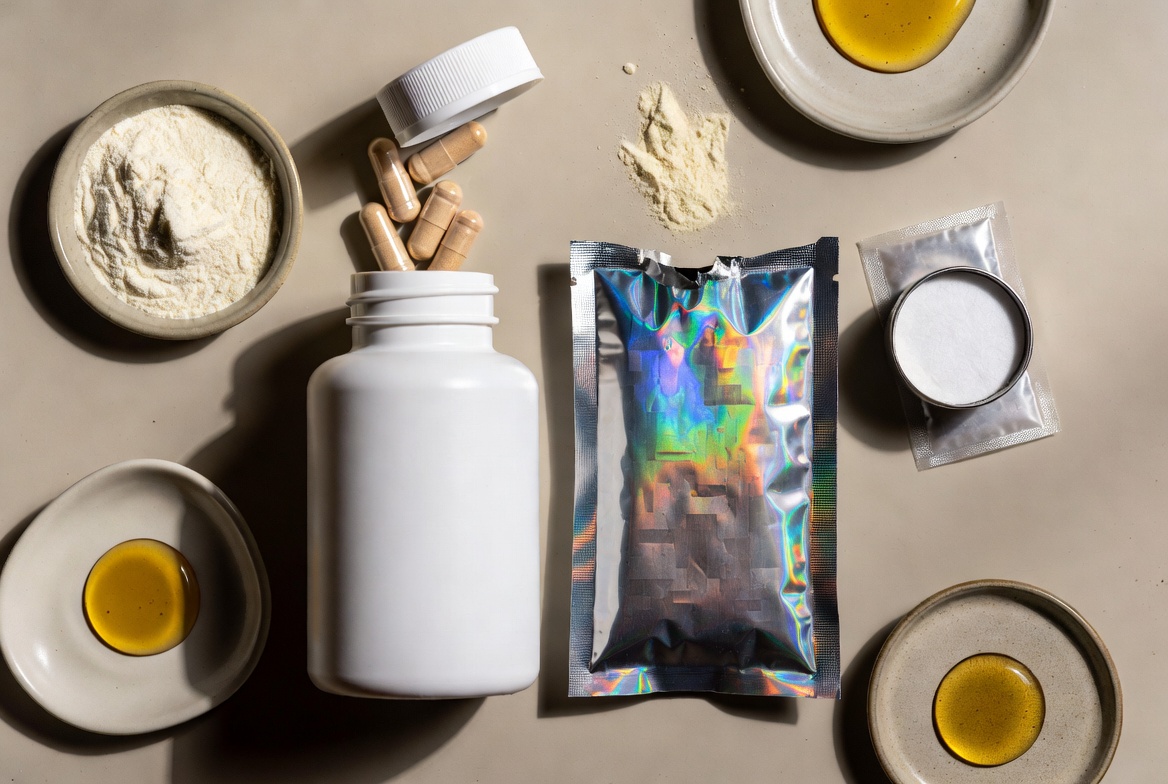
Different consumer segments respond to different dosage forms. Some prefer capsules for convenience and perceived professionalism, while others prefer powder sachets and stick packs for portability, mixability and custom dosing. When deciding between water-soluble and fat-soluble vitamins, brands should think about format not as a purely marketing decision but as part of the scientific design of the product.
Water-soluble vitamins work well in:
- Standard capsules for daily multivitamin or energy-support products.
- Powder sachets that can be mixed with water for on-the-go use.
- Stick packs aimed at busy professionals, athletes and frequent travelers.
Fat-soluble vitamins often perform best in:
- Capsules that allow precise dosing and controlled exposure.
- Powder mixes where microencapsulated forms are used and packaged in barrier-focused sachets or stick packs.
- Premium offerings positioned around bone health, immune support or antioxidant protection, where the brand can explain why extra stability measures were taken.
When format and ingredient group are aligned, the final product feels coherent both scientifically and commercially.
Strategic Questions for Brand Owners
Before committing to a new vitamin product, brand owners should step back and ask a series of practical questions. These questions are designed to reveal gaps in planning and highlight where the OEM or ODM partner can add the most value.
Key questions include:
- Which vitamin group (water-soluble or fat-soluble) best matches the product's core promise?
- Does the target consumer expect a simple daily product or a more specialized regimen?
- How sensitive are the selected ingredients to light, heat and oxygen?
- Are microencapsulation or other protective technologies needed?
- What packaging format best supports stability, convenience and differentiation?
- How will the product maintain its declared potency throughout its shelf life?
By answering these questions in cooperation with the manufacturer, brands reduce the risk of late-stage reformulation, unexpected stability issues and misalignment between marketing claims and technical reality.
OEM and ODM Collaboration for Vitamin Products
For brands working with River Pharm Inc, collaboration can take two main forms. In an OEM model, the client provides a ready formula, and the manufacturer focuses on efficient, compliant production. In a custom ODM model, the client provides a reference product or a clear functional direction, and the manufacturer develops a tailored formulation and production plan that meets those objectives.
This distinction is especially important for complex vitamin projects. Water-soluble formulas may be straightforward enough to move directly into OEM production, while fat-soluble formulas that require microencapsulation, specialized packaging and extended stability testing may benefit from an ODM approach. In that case, the manufacturer's development team becomes an extension of the brand's technical department, translating product ideas into robust, manufacturable specifications.
Building a Decision Framework for Vitamin Formulas
The most successful supplement brands rely on a structured decision framework rather than trend-driven improvisation. A simple but effective framework for choosing between water-soluble and fat-soluble vitamins could look like this:
1. Define the target user and primary benefit.
2. Select vitamin group based on physiological role and evidence.
3. Assess ingredient sensitivity and compatibility.
4. Choose capsule or powder format that fits user expectations and technical needs.
5. Decide whether protective technologies such as microencapsulation are required.
6. Select packaging that aligns with stability and branding goals.
7. Plan testing and shelf-life verification before full-scale launch.
Used consistently, this framework helps teams avoid rushed decisions and ensures that every new product concept is evaluated through both a scientific and operational lens.
Conclusion and Call to Action
Water-soluble and fat-soluble vitamins represent two distinct technical and strategic pathways for supplement brands. Water-soluble vitamins typically offer more straightforward formulation and daily-use appeal, while fat-soluble vitamins demand advanced protection but enable highly differentiated, high-value positioning. For capsule and powder products, the difference is not just which vitamins you choose, but how you design the entire chain from formulation to packaging.
If your brand is planning its next vitamin product and you want to balance scientific integrity with commercial impact, this is the right time to engage a manufacturing partner that understands both solubility groups and the engineering behind stable, market-ready supplements. A focused conversation about ingredient behavior, processing technology and packaging can transform a basic concept into a long-term asset in your portfolio.
FAQs
1. What is the main difference between water-soluble and fat-soluble vitamins for supplement products?
Water-soluble vitamins dissolve in water and are not stored extensively in the body, making them well-suited to daily-use capsule and powder formulas. Fat-soluble vitamins dissolve in fats, are stored more readily, and require more careful handling, protection and packaging to maintain stability and potency.
2. Why do fat-soluble vitamin supplements need more advanced manufacturing processes?
Fat-soluble vitamins such as A, D, E and K are more sensitive to oxidation, light and sometimes heat. To protect their activity, manufacturers often use technologies like microencapsulation, strict environmental control during blending and filling, and barrier or light-protective packaging.
3. Which dosage forms work best for water-soluble and fat-soluble vitamins?
Water-soluble vitamins are generally easier to formulate into hard capsules, powder sachets and stick packs for broad daily wellness products. Fat-soluble vitamins perform best in capsules and in microencapsulated powder formats that are then packed in high-barrier bottles, sachets or stick packs to limit exposure to light and oxygen.
4. How should a brand decide between an OEM and ODM approach for vitamin products?
If a brand already has a complete, validated formula, an OEM model allows the manufacturer to focus on compliant, efficient production. When the brand has only a reference product or a functional concept (e.g., "bone support" or "immune support"), an ODM approach is better, allowing the manufacturer to design a custom formulation, stability plan and packaging solution.
5. What questions should brand owners ask their manufacturer before launching a new vitamin supplement?
Key questions include: which vitamins are most suitable for the target benefit; how sensitive the ingredients are to light, heat and oxygen; whether microencapsulation is recommended; which capsule or powder format is technically and commercially ideal; what kind of packaging is needed for stability; and how the product's declared potency will be supported throughout its shelf life.
References
1. U.S. Food and Drug Administration (FDA). Dietary Supplement Labeling Guide. https://www.fda.gov/food/dietary-supplements-guidance-documents-regulatory-information/dietary-supplement-labeling-guide
2. National Institutes of Health, Office of Dietary Supplements. Dietary Supplement Fact Sheets. https://ods.od.nih.gov/factsheets/list-all/
3. National Institutes of Health, Office of Dietary Supplements. Dietary Supplement Label Database (DSLD). https://ods.od.nih.gov/Research/Dietary_Supplement_Label_Database.aspx
4. Fat-soluble vitamins in food supplements: do the labels follow the recommendations? https://pmc.ncbi.nlm.nih.gov/articles/PMC7888796/
Hot Tags: Water Soluble Vitamins, Fat Soluble Vitamins, Dietary Supplement Manufacturing, Vitamin Capsule OEM, Powder Stick Pack ODM, Microencapsulated Vitamins, Nutraceutical Contract Manufacturer, Vitamin Stability Packaging, B2B Supplement Brand Strategy, OEM ODM Supplement Services
Did you find this helpful?
Comments (0)
No comments yet. Be the first to comment!
Leave a comment
Related Posts

Oct 14, 2026
Why Full-Service Supplement Manufacturing Matters for Growing Brands
Oct 13, 2026
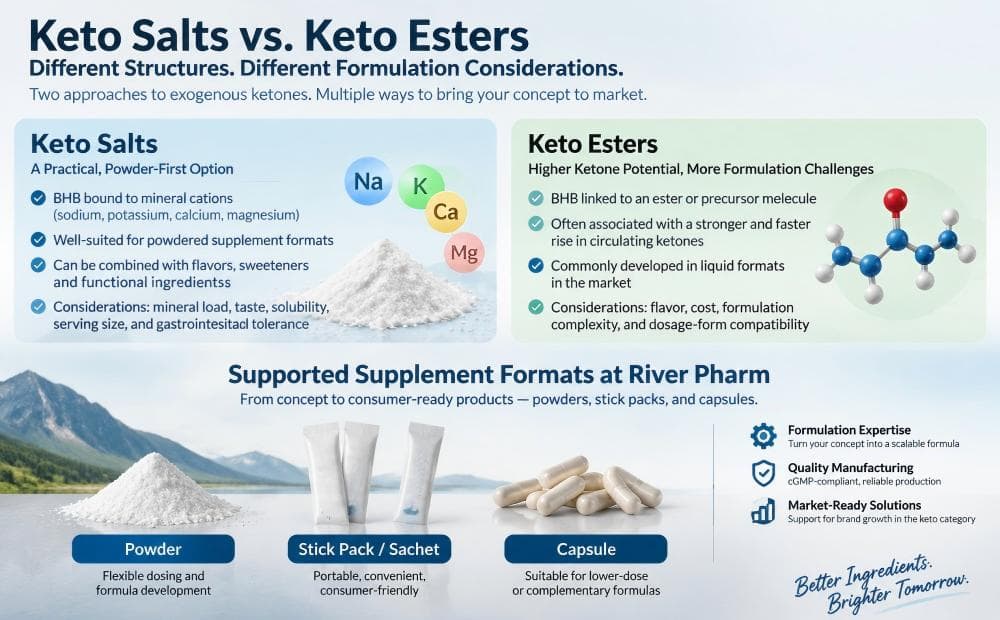
Keto Salts vs. Keto Esters: Formulation, Dose, Stability, and Manufacturing Considerations for Rapid Ketosis

Oct 13, 2026
Batch Consistency vs. Rapid Prototyping: Solving the Scaling Issues in Custom Supplement Formulation
Riverpharm · Supplement Contract Manufacturing
Your supplement brand, manufactured to the highest standard
From first formula to finished product — we handle manufacturing, packaging, and fulfillment so you can focus on building your brand.
Core services
Contract Manufacturing
GMP-certified production with full batch testing and certificate of analysis on every run.
Custom Formulation & R&D
In-house scientists develop your formula from scratch or refine existing blends for efficacy.
Packaging & Labeling
Design-to-print label service — shelf-ready, FDA-compliant, and retail-tested.
FBA Prep & Fulfillment
Amazon-ready prep and direct-to-warehouse shipping — no extra steps on your end.
By the numbers
NSF
NSF/ANSI 455-2 certified
cGMP
Certified environment
24 hr
AI-accelerated quote turnaround
600K
cGMP+ encapsulator capacity per run
Why Riverpharm
Quality systems with higher standards
- NSF/ANSI 455-2 certified
- cGMP-certified environment
- In-house + third-party testing
- Source-locked ingredients
Production capacity with faster execution
- Heavy-duty hardware
- In-house core reserves
- AI-accelerated quotes
- In-house expert hub
Delivery formats we produce
Capsules
Gelatin & HPMC vegetarian
Sachets
Single-dose powder blends
Stick packs
Convenient single-serve
Pouches
Flexible, shelf-ready
Ready to bring your supplement to market?
Free consultation · 24-hour quote · No minimum commitment to get started